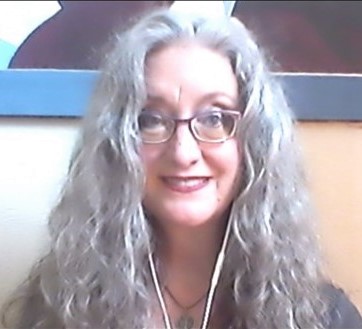
A Poet’s Life

This morning I was reminded of why poets are so often misunderstood. This reminder came in the form of an innocent enough social media post where I shared the following words:

These are sentiments of a feeling I had for one single second – no longer than the blink of an eye or an intake of breath.  The feeling surfaced. Followed by the awareness. Then I wrote about it. I felt it for a few more moments. Then it was gone. I didn’t dwell on it. I didn’t wallow in it. I didn’t self-flagellate over it. I felt it. I gave it a name. I gave the name a form.  Then it was done.

But that was not how social media understood it. Many took my sharing to mean I was feeling badly or depressed. Some thought I was sad or hurting. Others shared words of comfort or support.  I’m grateful for the expressions of support, but in that moment, I was really and truly fine. I was no longer feeling the feelings that sought form through my words. Perhaps these expressions of support were reflections of the senders’ own pain. Perhaps my words hit their own nerve. To these I offer support in return. But truly, I am fine.

Such is the life of a poet. The feelings of my words had passed. But there is truly no way for others to understand this. There is also no way that those who are not poetically inclined to understand the burning need to give expression to experience and words to what we feel. We just can’t help it.  These experiences become a burning inside that has to be released. For a poet – this release comes in the form of words. Patti Smith once said, “To be an artist is to see what others cannot.” I would suggest being a poet is to feel what others cannot and then be compelled to put that into word.

I can’t speak for other poets, but I know for myself, in addition to having no choice but to give expression to experience, I am also compelled to send it off into the world. Not because I want pity or attention, but in case there are others who have shared this experience and perhaps don’t yet have words for it, or permission to feel it. I write so others might experience validation, comfort, assent, or even consent. I hope that in sharing my words I might be giving another what they need to better know and understand themselves. For what better purpose could a poet possibly live?


Lauri Ann Lumby is the author of eleven published books, including five volumes of poetry. You can find her books on Amazon.com and other online resellers.

The Desert of Aging

The pursuit of my youth has run itself out.

Wrung out of me like the color of my hair –

Chestnut curls bleeding out leaving only silver behind.

The force of my womb gone silent.

No longer pining after love or yearning for partnership

as the potentials for life have lost their plump luster.

Raisins where there once were pearls.

Youthful excitement – the once greening branches of optimism

now bone dry and fragile like the skeleton

that formerly provided pliable and safe structure for my flesh.

Flesh that was once even, tight, and smooth,

now pock-marked and deflated –

a balloon punctured by the harsh betrayal of life’s refusals.

A boneyard of dreams turned to dust.

No refreshing rains fall in the desert of aging.

Here we turn away from our dreams and toward a friendship with Death.

Death is coming for us even as we cling to our dreams,

reminding us of the wisdom we‘ve gained,

the growth we’ve attained, and all the ways we’ve loved.

This – more than any imagined meaning or purpose – is why we’re actually here.

In releasing the pursuits of our youth,

this we’re able to remember:

the wisdom we’ve gained and all the ways we’ve loved.

Still the One

I’m still the one

who knelt before You

waiting to be of use.

The pious child.

Hands folded.

Earnestly praying:

“I offer everything to You

and for the poor souls in purgatory.”

Earth is purgatory.

Billions of poor souls crying out in pain.

Begging to be heard.

Pleading for their thirst to be quenched.

That unquenchable, eternal thirst

that is only, always and forever for You.

I am the one still praying

and wanting to be of use.

Use me.

Returning to Mundane

A long, long time ago, in a galaxy far, far away…..there was an author who dared to suggest that at the end of our spiritual journey, is a return to the mundane. This author is Richard Bach and the books is Illusions – the Adventures of a Reluctant Messiah. In this story, Donald, a messiah, quits his messiah business and becomes a pilot. He then travels the wilds, giving people rides in his three-passenger plane. As the story demonstrates, being a messiah is a tricky, stressful business that has even been shown to get people killed. This, among other reasons, is why Donald quits his spiritual business and returns to the everyday, mundane world.

I first read this book in my twenties, and several times more in my thirties (it’s a short book and can be read in a day). I got the moral of the story then, but as I’m approaching sixty, I relate to this story even more. Not because I consider myself a messiah (one sometimes suffering with a messiah complex maybe), but because I now understand that after we have completed our spiritual journey (it’s never really complete – but we do eventually arrive at a place of “enough”), life takes on a whole different feeling and flavor.

In technical terms, the spiritual journey, as it has been articulated by the ancient mystics, is comprised of four stages – spirit entering form, awakening and ascension, the great descent, and then ending in spirit leaving form and returning to source – Death. Each tradition gives these stages their own names, but the general descriptions are much the same.

Western pop-culture spirituality gives a lot of attention to the awakening/ascension stage of the journey, so with this you may be familiar. The great descent, however, is most often ignored as it is rife with challenge, struggle, ego-death, and suffering. It is the stage of the journey where after finding union with Source/God, we are plunged into the depths of our own inner hell – made up of our unhealed wounds, past traumas, spiritual fears, cultural conditioning, ego-attachments and more.  This is a hell made up of all those things within us that have forgotten our original nature as Love resulting in non-loving beliefs or behaviors about ourselves or others. It is here where we must come face to face (for example) with all our desires to be famous, rich, powerful, desirable, admired, respected, special, and needed rear their ugly face. This is also where we must confront every single lie we’ve been told and illusion we’ve created about life needing to have meaning and purpose in a way that is tangible, visible, and seen. Finally, during this descent, every illusion and need for control will be pried from the grip of our cold, dead, fingers.

There’s a reason few speak of this stage of our spiritual journey. Having been thrown into this stage somewhere around the year 2000, I know it well and can say not one single person chooses descent to make up nearly thirty years of their life!  I am also here to attest that the descent does eventually come to an end of sorts. Perhaps there are still ego attachments to confront, and pain still to be endured, but with these we have become familiar and accustomed and now we have tools for moving through these subtle layers of deepening in the important journey of ego-death.

The great descent frees us from all which imprisons us in insecurity, fear, ego-attachment, etc. While being freed, our truest nature of Love in Union with Source is increasingly liberated. Each moment we give to this transformation, we come to more and more fully live as Love, embracing all we are as Love (including our humanness) while finding the simple joy of being in the human experience. Here we are no longer bothered by life’s pursuit of meaning or purpose. Neither are we plagued by our imperfections. We are now able to return to the innocence we knew as children when we could simply enjoy the wonder of discovery, curiosity, and unbothered play. (YES, I know not every child’s childhood was great, but there was an innocence there among the pain.)

It is at this stage of our spiritual journey where many-a-messiah leave behind their work of saving the world and get on with simply living, which for those like the character in Illusions means returning to the mundane.


Beyond Ascension

online course

Learn what comes after ascension. The journey from unity consciousness to embodiment.

The Tangled Web of Grief

This weekend my heart is heavy over the many deaths this week which have been brought into my awareness, including the death of a close friend.

This has been an anxious week of vigil, waiting, and then “sitting shiva” over not only my friend’s death, but the deaths of so many others who I know either closely or by acquaintance. I’ve also been in the throes of grief – experiencing every face of grief, seemingly all at once. Denial, bargaining, anger, depression and sorrow.  In the midst of this grief, I also find myself tempted by self-judgment. I’m coming to believe this judgment may be part of the bargaining stage of grief. “If I hadn’t been foolish enough to care about this person then I wouldn’t be feeling so bad.” 

Death is hard and often brings up questions. Death is NOT a guarantee of closure. Death leaves many questions unanswered and conflicts unresolved. We can’t go back to clarify confusion or ask for explanations. All we can do is sit in the discomfort of vacancy and a whole lot of unknowns. Death brings confusion and there is nothing we can do to resolve that confusion. 

So we sit, and twitch. We pick at our wounds. We grieve. We battle our inner self-talk. We rage. We sit in the state of paralysis unable to do, or think, or even find stillness in being. In death, we are reminded of how excruciatingly human, vulnerable, and fragile we are, and we are invited to be with this humanness until we can accept this as who we are. 

Perhaps this is the stage of “acceptance” that grief experts speak of. It’s not about acceptance of the loss of the person we cared for, it’s about accepting the most vulnerable, wounded, and fragile parts of who we are and loving ourselves anyway.  

Loved a Narcissist?

If you have loved a narcissist, absolutely NOTHING was your fault. NOTHING was your responsibility. There were no lessons to learn.

Instead, EVERYTHING is the responsibility and fault of the narcissist. Narcissists prey on our tender, generous, and vulnerable hearts. They deceive us for their gain. They keep secrets to guarantee our curiosity and hope. They know their actions are manipulative and evil, but they also know the capacity of our forgiveness and our willingness to see them through the lens of compassion and understanding. They thrive on us feeling sorry for them because of the wounds that make them do the hateful things they do. They know that instead of holding them accountable, we will take responsibility for their actions, or at the very least, view every single conflict as a vehicle for learning and growth.

They also know all the ways in which we’ve been punished in the past for asking for our needs to be met or inviting another’s accountability, and they will punish us in the same way. They know we are used to being the grown up in a relationship and that we were forced to grow up early and to bear the burden of over responsibility very early in our lives.

They know of our shame and our guilt and they use these against us, for they have neither.

A narcissist has no shame. They will never apologize or take responsibility for their actions. They will never work to make things right.

With a narcissist, there is only one thing we can do: 

WALK AWAY AND NEVER LOOK BACK

You did nothing wrong. Nothing was your fault. There were no lessons to learn, except perhaps, to get the f*ck out. And I guarantee, the narcissist won’t bat and eye and will likely never think of you again – for they’re already on to the next person to harm.

The Evolution of God

Straight Talk About God Part II

Since the beginning of time, human beings have been creating God in their own image, not the other way around. In the earliest times, when humans lived close to the earth and whose survival depended on the whims of nature, it made sense that the first gods represented the movements of nature: storm gods, fire gods, water gods, all whose approval needed to be earned in order that humankind might survive. From this the evolution from nature gods to anthropomorphic deities resembling human beings in form and behavior was a natural progression.

Initially, these anthropomorphic beings were both male and female in form. At times they were primarily female as primitive human recognized that it was from woman that all humans come into being. Eventually, through events that can only be theorized, the feminine gods were supplanted by the male-only, all-powerful, warlike patriarchal god. This god, much like the nature gods, was one whose approval needed to be earned so that human beings might survive. For each human tribe, this man-god was given different names, but the qualities remained the same. Like human beings themselves, this god was jealous, vengeful, punitive, fickle, played favorites, and sometimes loved his creations. Mostly, however, this god needed to be worshiped, honored, and required sacrifice. Through “his” priests, this god delivered laws that required obedience. Straying from these laws elicited punishment, banishment from the tribe, and sometimes death.

These human-made gods have not evolved much in the last ten thousand years – at least not in the way these gods are articulated in the context of institutional religion. “The Old Man in the Sky” god still holds sway. AND YET – while this is the god created by man, this is NOT the god experienced by the mystics, and certainly not the God that Jesus came to know and tried to describe to his companions. The god of the institution is one born out of the mind. The God experienced by mystics is one born of the heart. This is the God that Jesus said “dwelled within us” and the one we can come to know by “going into our inner room.” And yet, this God was not of Jesus’ experience alone. Mystics, contemplative, and holy people since the beginning of time have described the experience of knowing versus knowing the Divine, the emphasis placed on the former.

Through the mystics, humanity has been introduced to a God beyond the anthropomorphic god of humankind’s creation. The God that the mystics experienced was one that transcended material form and human behavior. There are no real words to describe this experience of God, though attempts have been made through such words as: Presence, Being, Essence, Transcendence, Enlightenment, Nirvana, Bliss, Ecstasy, Spirit, The Void, The No-Thing.  The author of the epistles accredited to John, called this God Love.

In the Catholic church in which I was raised, the old man in the sky God was (and continues to be) the favored image of God, specifically, God the Father.  God the Father is the source of all creation, the architect of the universe, omnipotent, omniscient, loving like a father, but also one whose judgment we were taught to fear. For the majority of Catholics this father-god (specifically male) is their sole image of God, and one they will defend in spite of the fullness of Church teaching.

But the Church itself teaches that God is not exclusively male. In fact, the official teaching of the Catholic church is that God has no gender and in no way resembles humankind:

 “In no way is God in man’s image. He is neither man nor woman. God is pure spirit in which there is no place for the difference between sexes. (Paragraph 370 Catechism of the Catholic Church).”

I’m just going to leave that here for those raised Catholic to read again, and again, and again, as they/we attempt to reconcile this official teaching from what we were taught by our pastors, nuns, teachers, and parents.

God: I Have Questions! (Part 1)

Straight Talk About God Part 1

In this series, I’m going to explore the topic of “God.” As a spiritual woman rooted in science and reason, I can’t help but question that thing that some call “God,” or rather, human beings’ creation of the “God” to whom they assign all kinds of images and meanings – based more on human behavior than on God Itself. This series will address these questions, not for the sake of providing proof of God or even an answer into the nature of God, but instead, to provide support for those like me whose lives have caused them to question what they were once told they must believe.

In the Catholic religion in which I was raised, God was a mystery and yet the Church, through doctrine and dogma, provided its own beliefs about God. As a post-Vatican II Catholic, my first lessons about the nature of God were all about love.  God was Love. God loved us without condition. God was all-loving and loved every single human being wholly and equally. This unconditional love, however, was also tempered with the caveat that God did love Catholics more than those of other faiths. Additionally, while being all-loving, God was punitive, jealous and wrathful. More than God’s love, we were taught to attend to God’s judgment. Breaking one of the ten commandments or sinning against the Church would earn you an eternity in hell, or if you were lucky, an extended stay in purgatory. If you were extra lucky, you had loved ones praying for your soul’s release from purgatory so that you could enjoy an eternity in heaven (that special heaven reserved only for Catholics) that much quicker.

As you can imagine, these conflicting images of God created a fair bit of cognitive dissonance in me, and I would guess, in most Catholics. Is God loving or is God punitive? Exploring scripture didn’t help the matter. The Old Testament God was wrathful, played favorites and destroyed those who were not His chosen ones. The New Testament God was equally confusing. Was God Love, as John’s letters suggested, unconditionally forgiving like the father in the story of the Prodigal Son, or did he separate sheep from goats and cast hulls into the fiery pits of hell? The Church only compounded this confusion by heaping conditions upon God’s love. Only IF we were a Catholic in “good standing,” and free from sin could we enjoy God’s heavenly reward. Further, freedom from sin was dependent upon full participation in the sacraments. Everything, it seemed, was conditional, including your own membership and participation in the Church. Sinners weren’t welcome. The divorced were shunned. Those “living in sin” were condemned. And single persons (who didn’t choose vowed religious life) were held in contempt.

At the end of the day, God was a cause for confusion and depending on who you asked, their answers about God differed. From priest to priest, nun to nun, parent to parent, friend to friend, everyone had their own beliefs about God. What life has shown me, is that not a single one of them were correct. Here is where my reason steps in. How can any single human being comprehend the great mystery that is our origin in creation? How can anyone fathom the Source from which we came, assuming there is even a source. The scientific truth is that our planet, everything upon this earth, including humankind, could simply be a random mistake of nature. At some time in the distant past, the perfect grouping of particles came together and poof – we were made. Did some Divine hand orchestrate this creation or is it simply the workings of chance? These are the questions that come to my mind when pondering about God.

You Did Nothing Wrong! It’s Not Your Fault!

I have grown increasingly weary of the new thought, new age, la la positivity movements and their “can-do” attitude subtly laced with shame and guilt. You know the routine:

  • “Think the right thoughts and you’ll get what you want.”
  • “If you don’t have what you want it’s because you aren’t thinking the right thoughts.”
  • “Don’t like your current life state?  Change your thoughts!”
  • “The state of your life is what you agreed to before you came here.”
  • “Suffering is an example of past life karma.”
  • “You must have done something wrong in a past life for this to happen….”
  • “You created this.”
  • “You create your reality.”
  • “If you want more you have to work hard.”

Yadda Yadda Yadda

On all of this I call BULL SHIT!

Seriously, the very last thing we need in our lives is a reinforcement of the messages many of us grew up with:  “You did something wrong. There’s something wrong with you.  It’s your fault. God is punishing you. God will punish you.”

Guilt. Shame. Blame. Over-responsibility.

Again, I call bullshit on this all.

Life is life. Period.

Sometimes in life we experience joy and ease. Sometimes life sucks and we die. Sometimes good things come from hard work. Sometimes only pain comes from hard work. Somedays we feel happy and joyful. Other days we feel depressed. Sometimes it seems we have the power to create our reality……..OR……..was the creation a function of privilege?

At 59 years old, I’ve learned there is really no rhyme or reason to life. Sometimes really bad people do nothing and seem to get everything they want. Often, really good people work really hard and get nothing. Perfectly healthy, really good young people get sick and die by no fault of their own, and absolutely terrible human beings get sick with a terminal illness and live for fucking ever!  No amount of thinking the right thoughts, praying the right prayers, or so-called life contracts or past life experiences change the circumstances of the human condition.

The human condition JUST IS. We have joy. We experience suffering. We find ease. We struggle. And none of this is our fault!!!!!  Our thoughts don’t dictate our life. Prayers and spells don’t change the course of fate. Life just is. And the last thing we need in the already difficult experience of being human is someone gloating about their good fortune and then telling us we don’t have what they do because we signed a life contract or thought the wrong thoughts. F*CK that SH*T!

But here is what we can do with life: Find resources and tools that help us to survive it!

  • Find a therapist.
  • Secure a spiritual director.
  • Ask your doctor for medicinal support (Zoloft is my friend).
  • Phone a friend.
  • Cultivate a daily practice that creates the space in which you can return to a place of inner peace.
  • Exercise.
  • Do what you love when you are able.
  • Drink coffee.  Eat chocolate. Love what you love in healthy amounts.
  • Find meaningful work if you are able, and if not, find something that doesn’t kill your soul.
  • Enjoy nature.
  • Create space to be fully present to your feelings: ALL OF THEM!
  • Honor your sorrow, depression, loneliness, and sense of abandonment. They all have something to teach you.
  • Find practices to free you from any and all guilt and shame based conditioning.
  • FREE YOURSELF from any and all person/teachers/tools that try to heap shame or guilt upon you.
  • And remember this:  YOU ARE A PRECIOUS AND GLORIOUS CHILD OF LOVE/God.  And if you have forgotten this, find tools to help you remember!
  • And if all else fails, exercise my favorite mantra:  F*CK This SH*T!

Revolution Poems

I write revolution poems

because what else is there to do

when the world around us is burning.

A runaway freight train

poised for destruction.

Devastation inevitable.

The collateral damage of

a species intent on its own extinction.

Staring in horror

as human rights are stripped away

and nations commit genocide.

Where truth is silenced

and old white men wave

their fascist flags

and clenched power fists.

From history the signs are known.

Repeating again

and again

and again.

“Do you hear the people sing?”

Indeed, they sing for thee.

I write revolution poems

because I don’t know what else to do.

copyright Lauri Ann Lumby