Reaching Across the Divide

This morning, I can finally breathe after an intense week of US presidential elections, learning the results and processing those results. For some it has been a week of victory, for others shock, trauma, and grief. For all of us, we are now faced with a decision about how to move forward. Do we move forward divided, or do we move forward with love?

I choose love.

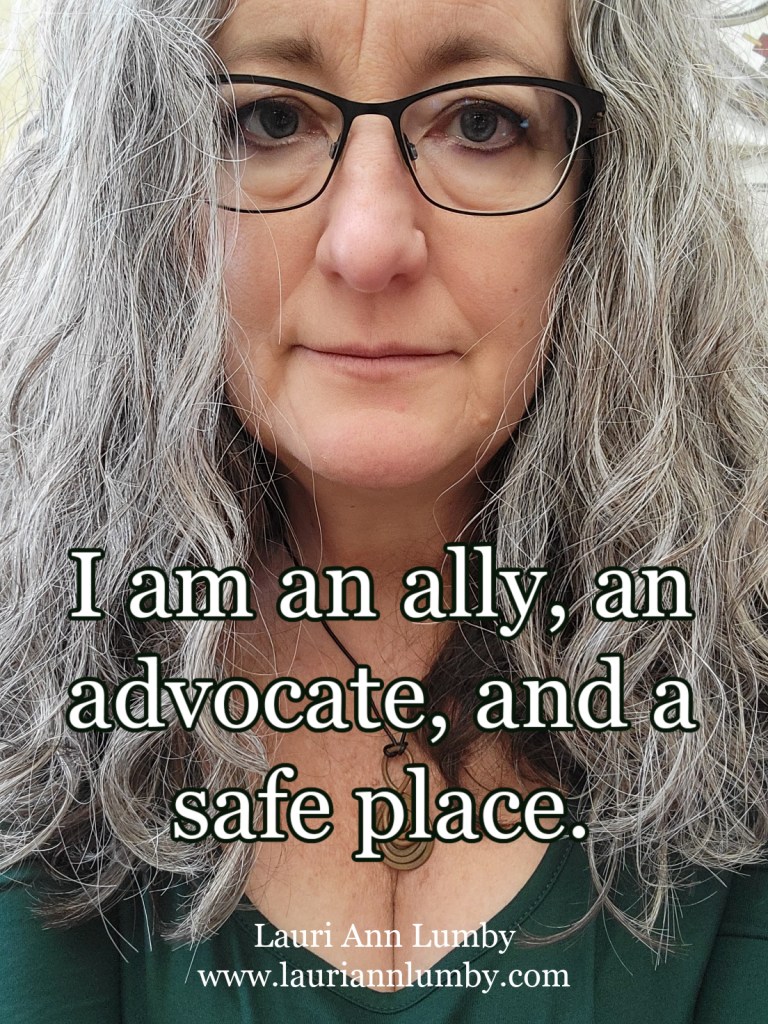
That is not to say that I am not concerned. I am concerned – especially for the safety of the vulnerable among us, perhaps even for our own safety. I also have worries about services upon which I depend being taken away. I worry about the safety of women, especially as it relates to reproductive care. I worry about my gay and trans friends. For the latter worries especially, I say, I am an ally, an advocate, and a safe place.

As those whose candidate lost processed their grief, I too have been grieving. I’ve experienced all faces of that grief – shock, denial, bargaining, anger, depression and sorrow. Thursday I couldn’t stop crying. I allowed myself space to grieve while knowing that I would survive this too.

I’ve survived a lot and always at my darkest hour, something has stepped in that gives me hope and a reason to move on.

Yesterday, that “something” came in the form of an honest and intimate discussion with a dear friend who (as it turns out) voted differently than I. We had an open and non-judgmental question and answer conversation where we each shared why we chose the way we did. I learned a lot.  I believe they did too. Through this conversation, I was able to see where “my” party failed and where “their” candidate succeeded. I could see why “my” candidate wasn’t everyone’s choice. I was also reminded of the fact that political campaigns have very little, if anything, to do with policy. “My” candidate has a very different background from “their” candidate – who is a born salesman. Salespeople purposefully speak to the perceived needs and wants of those they want to win over. They don’t always mean what they say. In the end it’s a “I guess we’ll have to wait and see,” what is actually done – if anything.

Some may accuse me of being naïve. Perhaps I am. But more than anything, I refuse to participate in the ongoing force of division. I will not, as some Facebook posts have suggested, block friends or family who voted differently than I, simply because of their vote. I know many whose values are best reflected in traditional conservative politics. They cast their vote based on what is important to them. Many have only one or two policy points that secured their vote. Upon speaking with my friend, I shared their values on those points, and they shared with me the values that secured my vote. The people I love who voted for “the other” candidate are good people who are loving, kind, and generous. Why would I block them simply because they voted differently than I?

Division is the work of the enemy. Division is how we are conquered. Division causes us to believe each other is the enemy, instead of that which is seeking to conquer us.

Throughout this presidential campaign, division has been used as a weapon to distract us from the true enemy. The enemy is not my friends and loved ones who chose a different candidate. The enemy is that which causes us to turn our backs on our fellow human beings. The enemy is that which closes our ears to another’s needs. The enemy is that which insists we are right and “they” are wrong. The enemy is that which prevents us seeing the struggle of others and how that struggle might influence their political decisions. The enemy is a system that pits one side against the other and which seeks to control us through intimidation and fear. The enemy is a system that creates “haves” and “have nots.”

The enemy is the system. And the reality is that both parties are part of that system. Neither, in the end, will accomplish the work we all truly desire – which is a dismantling of the system – because they all depend upon it and thrive within it.

The system will prevail as long as we, the American people, are divided. If we truly want change in our world, we have to defy the system and its weapon of division. We need to reach across the chasm of the perceived divide and welcome each other to the table. We need to listen – deeply – to each other’s pain. We need to ask the difficult questions and listen to understand. We need to be the love for each other that we all so desperately need.

Instead of hate, we need to BE LOVE. Instead of cultivating division, we need to seek unity.

Instead of blocking or unfriending those who voted differently, we would benefit from asking why. We might find that we have much more in common than the differences we perceive.

At the end of the day, I believe we all (most of us anyway) want the same things – food on our table, a roof over our heads, clothing on our backs, meaningful work, to feel healthy and safe, and to know that we are loved. If I can do nothing else, at least I can be love, knowing that that alone can change another person’s life – maybe even my own.

July Fourth

Today I don’t celebrate.

I grieve.

We are not,

nor have we ever been

free.

How can a nation built on genocide,

subjugation, and slavery call itself free?

The blood on our hands is the red in our flag.

White is the rage of freedoms deprived.

Blue is the bruising of eyes, and arms, and backs

of all those beaten down by discrimination, hatred, and bigotry.

We are not and we have never been free.

I weep for a nation that calls itself free

while over half a million are homeless…

where people are continually deprived of adequate food, shelter, and healthcare,

where our education system is being dismantled

and books are being banned.

Where women are no longer free to make decisions about their own health,

and where so many go without

while others bask in the wealth they could not spend if they tried.

How can we call ourselves free when

our tax dollars are going to fund another nation’s genocide and

when the blood on our hands is more than just our own?

Our nation is not free.

It never truly was.

So no – I do not celebrate July fourth.

Instead, today I grieve.

copyright Lauri Ann Lumby

Goddess of Darkness?

A funny thing happened last week that completely and totally made my day. I was stopping at my favorite local coffee shop (the one I call my second home) for my 10 am emotional support coffee. There was a newish batch of baristas working and I asked to be reminded of our new family members’ names.  One of the newish baristas reminded me of his name.  I said thank you, and was about to re-introduce myself and he interrupted, “Oh I know you as Lauri, Goddess of Darkness.” My heart melted with the fire of pure joy for being seen and known for who I truly am. 

There’s a story about my name – as it relates to The New Moon Café and Coffee Shop. The owner and I are good friends and have known each other for close to twenty-five years. Since the first day the New Moon opened, I’ve been a devoted and regular customer.  One day, I happened upon the owner as he was bringing in bags of coffee beans to be roasted. (they roast their own coffee and as a coffee connoisseur, I can attest their coffee is THE BEST I’ve ever tasted – especially their dark roasts) Aaron (my brother from another mother) says,  “Lauri, check this out, I have a new fair-trade bean, from an all-woman cooperative.”  “Oh my god, that’s so cool,” I said.   Then jokingly, “You should do two roasts – a light roast and name it Goddess of Light and a dark roast and name it Goddess of Darkness.”  I returned a couple days later to a sign announcing the latest dark roast coffee – “Goddess of Darkness” – named for and by me. (I also only drink dark roast).  I LOVE MY NEW MOON FAMILY!

That’s the story of how a coffee got named, but in having an inside joke with me, Aaron unwrapped a deep and profound truth. As my life has continued to unfold, I find myself living more and more deeply into this name – Goddess of Darkness – so dark in fact, I may as well start calling myself Death.

As those who have worked with me professionally know, my greatest gifts lie in the shadows. I’m comfortable journeying with and supporting people through the darkest parts of life. Through the places that most are afraid to go. Death. Loss. Recovery from trauma, abuse, betrayal, heartbreak. I help people exhume that which has been buried/suppressed/repressed and assist them in bringing it to the light to be healed and transformed. I accompany people in the journey of facing their own shadow – the parts of themselves they’ve rejected, suppressed, ignored, freeing them from that which keeps them imprisoned by fear. I have sat with people through the most difficult places and parts of their journey, assuring them they are not alone, providing comfort and a place where they can be unburdened of all the pain they hold within themselves.

I am humbled and honored to be called into these intimate spaces with people – family, friends, and clients/students alike.  I personally find comfort in the darkness for it is within the darkness that we find our truest selves.

Not everyone is comfortable in this dark place – especially when that dark place is defined by Death. Death holds a special kind of intimacy that requires both strength and vulnerability. More and more often, I find myself called into the most unexpected places where Death presides. Whether accompanying dear friends through the death of a child, being one of the first ones called when an acquaintance suffers a medical emergency, being invited to create and preside over a stranger’s funeral, or being invited to be confidant to one moving through a terrifying medical diagnosis, I am there – and I’m honored to be there. Death, to me is perhaps the most sacred of all human experiences for in facing Death, we are given the opportunity to see the face of God/Love. There is nothing more tender or intimate than being with another human being who finds themselves at the threshold between life and death – whether it is the person who is dying, or those who are experiencing death through the journey of one they love. Death is a holy and sacred place and I’m grateful for whatever it is in me that allows me to sit with another in that space as a source of  – whatever they need. One time, what the bereaved needed from me was to weed their garden, because it was the one thing they couldn’t find the strength to do as they sat with a loved one in their final hours. I was there for that too.

So yeah, while “Goddess of Darkness” was initially a bit of a joke, this title has born itself out as true. I’m comfortable journeying with others through the darkest times of life – even/especially (it seems) when the darkness they are facing is Death itself, and I am humbled and honored to be there.


Order New Moon Coffee!

Order whole bean or ground New Moon original roast coffees by calling (920) 232-0976.

For dark roasts, I highly recommend the Goddess of Darkness or the South 605.

Tell them Lauri the Goddess of Darkness sent you. 😉

The Tangled Web of Grief

This weekend my heart is heavy over the many deaths this week which have been brought into my awareness, including the death of a close friend.

This has been an anxious week of vigil, waiting, and then “sitting shiva” over not only my friend’s death, but the deaths of so many others who I know either closely or by acquaintance. I’ve also been in the throes of grief – experiencing every face of grief, seemingly all at once. Denial, bargaining, anger, depression and sorrow.  In the midst of this grief, I also find myself tempted by self-judgment. I’m coming to believe this judgment may be part of the bargaining stage of grief. “If I hadn’t been foolish enough to care about this person then I wouldn’t be feeling so bad.” 

Death is hard and often brings up questions. Death is NOT a guarantee of closure. Death leaves many questions unanswered and conflicts unresolved. We can’t go back to clarify confusion or ask for explanations. All we can do is sit in the discomfort of vacancy and a whole lot of unknowns. Death brings confusion and there is nothing we can do to resolve that confusion. 

So we sit, and twitch. We pick at our wounds. We grieve. We battle our inner self-talk. We rage. We sit in the state of paralysis unable to do, or think, or even find stillness in being. In death, we are reminded of how excruciatingly human, vulnerable, and fragile we are, and we are invited to be with this humanness until we can accept this as who we are. 

Perhaps this is the stage of “acceptance” that grief experts speak of. It’s not about acceptance of the loss of the person we cared for, it’s about accepting the most vulnerable, wounded, and fragile parts of who we are and loving ourselves anyway.  

What Comes After “The End?”

In this week’s gathering of the Magdalene Membership community, we explored the question, “What is on the other side of the end?”  Taking inspiration from Isaiah 64, we dove deep into our own experiences of endings and what came after? Or rather, how did we survive them?

Isaiah 64, penned not by the prophet Isaiah himself, but by a disciple of his teachings, identified by scholars as “Third Isaiah,” unveils the confusion, heartache, and sense of hopelessness and lack of direction experienced by the Hebrews as they were released from their exile in Babylon and were returning to Israel.  The home they had once known had been destroyed. The temple had been torn down, obliterating all they thought they had known of their “God” and their relationship to “Him.” The beliefs and practices that had been the center of their existence were no longer.  The slate they were left with was blank and they were forced to be present to unknowing, unbelieving and the feeling of having no guidance to draw from.

Third Isaiah gives expression to all the many layers of bewilderment and in doing so, affirms and validates the experience of the Hebrews while attempting to give them hope in the possibility of something not yet known.

When the end has come and we are left with nothing, we can be certain that there will be something on the other side of the end. Getting to that other side, however, is everything but easy! In order to get to the other side of the end, we first have to be willing to let go.  Not just “let IT go,” we have to LET IT ALL GO.  We have to let go of our attachment to everything we thought we knew, thought we believed, and hoped for of our life before the end. We have to let go so much that there is literally nothing left – including (especially) our need to control.

As we are letting go, we have to grieve. We must grieve every loss, every old belief, every past relationship, every goal and every hope. In the grieving, we are supporting ourselves in healing from the loss and inner sense of betrayal that happens as we approach the end. Further, grief allows us to continue our emptying.

We must be fully empty, and fully immersed in the VOID before we can begin to receive anything new. In order to be immersed in the VOID, however, we first have to move through the sheer terror that comes with the VOID – and this is no easy feat! 

This is the fear we encounter as we approach the void.  When we allow ourselves to be fully present to that terror, we find comfort in the state of nothingness. It only in finding this comfort that we can begin to be open to something new.

This is what the Hebrews experienced in their return from exile. In being present with the no-thing, they began to be open to the Mystery revealing itself and to simply being present with what is in this moment. This is where we too are invited when facing the many endings of our lives – learning to be present to what is and simply being present to the mystery of life. This alone, we eventually discover, is really all there is, and it is enough.

The Non-Acceptance of Grief

The only acceptance in grief is accepting the fact that we will always carry the pain of loss and accepting the fact that this pain will resurface periodically through unexpected circumstance. There will never be a day that we won’t remember the loss, the pain that it caused and continues to cause us. The idea that one day we will simply get over it is a dangerous lie that leaves us feeling guilty or that there might be something wrong with us for still being set off by the memory of that loss.

Case in point: After all the years that I’ve had to heal from the abuse I experienced at the hands of the Catholic Church, and the pain that eventually caused me to leave, you would think I’d be over it. This weekend I was reminded that I am not (over it). Instead, while watching the final episode of the final season of the British series Sex Education, all the pain came rushing back.

I had been given a vision, a mission, and a purpose. I had made a plan and had been encouraged and supported along that plan. I was on the path to give my professional life to the Church and to fulfill my mission to become “pastor” in the way that was available to women in the Catholic Church – pursuing the education to become a parish director. Then that all came crashing down.  You all know the story, and to be honest, I’m sick of hearing myself talk about it.

The short version (as if I could ever tell a short version!) is that I left the Church to forge my own path as “pastor” to a secular audience mostly made up of the Catholic diaspora. That mission failed too.

This is where I found myself while watching a character in a similar state of unwelcome hearing a calling and deciding to forge his own path within that calling. If I wasn’t on an anti-panic attack medication that suppresses crying, I would have been bawling my eyes out. Instead, all I could do was sit in a state of shock as my body tried to process the mixture of emotions brought up while watching a story similar to my own playing out in real time over Netflix. Ugh.

Grief is a harsh mistress. Standing in front of us with riding crop and pummel, always at the ready to whip us back to reality. Life is hard. We’re given visions with a sense of purpose, and that purpose is often torn from our grasp. We make plans and the Universe laughs. We fall in love and find ourselves betrayed. We believe and have faith. We pray. We discern. And still we remain the victims of fate.

Life has its own plan no matter how clearly we might discern.  Even when we fail, our discernment may have been correct. Failure and loss are part of life, and there’s nothing we can do to change or avoid this fact. The best we can do is accept. Accept that life is hard, that shit happens, that there will be disappointment and devastating loss. Accept that the pain of loss and disappointment will always be with us and will periodically rear its head, inviting us into another layer of being with that pain. We weep. We wail. We rage. We curl into ourselves. We become momentarily paralyzed. We love and comfort ourselves. And then we move on until the next reminder comes and then we do it all over again. And in between, we embrace those moments of wonder, joy, and beauty that also make up the human condition. It is also for these that we are here.