As 2024 draws to a close, I have grown especially fond of the memes that identify this past year as one of the most difficult ever! I don’t need to get into the details for you to know what I mean. While things could have been a whole lot worse, 2024 was a year I would not choose to relive! I’m weary. The whole world seems weary.
Despite what we might see on the surface of things: the conflict, the wars, the politicking, perceived division, etc.; a much greater movement is happening. That which has been born out of fear and rooted in power and control is breaking apart. On many days, it may not look like it, but it is.
Perhaps the best way to see this breaking apart is to look at the political conflicts in our world, in particular, the men with large faces and even louder voices who seem to be leading us all toward our own destruction. Interestingly, those who are the most boisterous and who garner the most attention are those who perfectly represent and embody the dying system. These are the men who have thrived in a patriarchal and hierarchical system and who are clinging and grasping after the control they believe they need to maintain their power. Damn the rest of humanity, what matters to them is their power.
While we may look upon these men as our enemies, what if instead, they are the vehicles through which the dying world will finally die so that a new world might come forth. What if, as my mom used to say, “the kitchen has to get dirtier before it can become clean.” What if what seems to be humanity moving backward, we are simply being pulled back like a sling shot so we can be hurled to our new futures?
Things are not always as they appear to be. As human beings, we see our lives and our world through the limitations of our judgment which has been formed by our preferences, previous conditioning, and societal expectations. In order to survive the breaking apart of what has been and the temporary discomfort of that breaking, we have to see through different eyes. We have to lay aside our own judgments and perceptions and allow for another view. For me, this means turning to my highest self (what some might call God) and asking to see the truth beyond the illusion. In every instance where I have asked for help in seeing so that I might understand, I have been surprised at what I’m shown and in that surprise, I have found comfort, along with the courage to keep on existing while the entire world seems to be falling apart.
As we timidly move toward 2025, let us be open to seeing beyond appearances and to the Love that is ultimately guiding it all.
Seeing through the Lens of Love
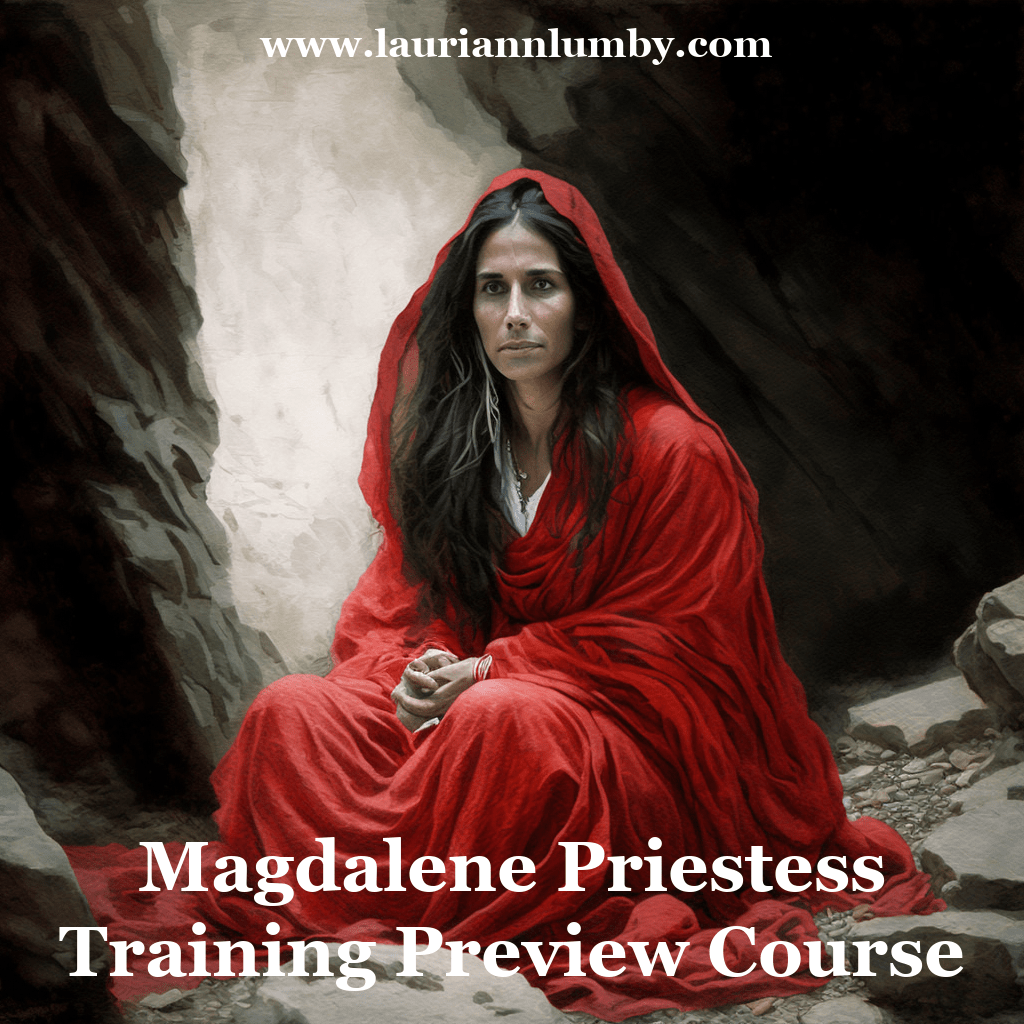
The Order of the Magdalene Formation Program provides you with resources, knowledge, and tools to support you in your own journey of self-discovery and empowerment. Through this eighteen-month training program, you will:
- Become rooted in scholarly and intuitive knowledge of the Magdalene, her role in the ministry of Jesus, and her example in the ongoing mission of Love.
- Discern your own unique giftedness and how you are called to use these gifts for the sake of your own fulfillment and in service to the world.
- Learn practical skills for uncovering and healing all that separates you from Love and from living as your most authentic self.
- Rediscover ancient knowledge and practices for self-healing.
- Cultivate and deepen your contemplative life while growing in contentment and compassion.
Created and facilitated by Lauri Ann Lumby
64 weeks of content
7 individual courses
6 private mentoring sessions


 Lauri Ann Lumby