Living in Dark Times

We are living in dark times. In the United States where I live, we are facing very real threats to our liberties and our freedoms. In the past I have hesitated to call these actions “evil” because I do not believe in an external force of evil that is set out to harm us. As I no longer believe in an anthropomorphic “devil,” I cannot believe in evil as a malevolent force outside of us.

I still don’t believe in evil as an external god-like force, but after a week of deep prayer and meditation, especially around the evils I have experienced in my own life, I arrived upon an understanding of evil that I can agree to:

When put into the context of what I believe about our human journey – its purpose and goal – which is to remember our original nature as Love/One by healing and transforming our unhealed fears, non-loving conditioning, trauma, woundedness, etc. I can believe in evil in this way.

History has shown this to be true. Nazi Germany – the Jewish Holocaust – and now the ongoing genocide in Palestine.  Naziism arose out of the unhealed fears/wounds of WW1, which led to the Holocaust.  Unhealed wounds over the Holocaust could be argued as the root of anti-Palestinian sentiments, oppression, and now genocide which has become the hallmark of Netanyahu’s hard-right Zionist movement. (to be clear…..I am not antisemitic. I am anti-genocide).

Something similar could be said of the United States – the core of our current (ongoing) troubles can be summed up in Isabel Wilkerson’s exploration of caste – a system based in the belief that “one kind of person is more deserving of freedom than another kind.” When western Europeans first settled in what later became “America,” they brought with them the wounds of the caste systems in which they were imprisoned. Never healing these wounds, they ended up inflicting the same kind of system on the indigenous who were already here, and later on every single group that was deemed “less than.” Caste, as Wilkerson argues, transcends racism. As such, Caucasians also suffer the effects of caste.

This unacknowledged caste system is at the root of our troubles and at the heart of it resides the unhealed wounds and fears of our collective past resulting in a lot of angry people who for generations have been ignored, oppressed, trod upon, denied dignity, honor and respect. When we examine this description, we see that nearly all of us qualify as suffering from caste in one way or another. The only ones who don’t suffer are those who have positioned themselves as “the ruling caste.” In the United States, these are extremely wealthy white men (and their complicit women) who have both stolen and been voluntarily given too much power.

Stolen power is easy to identify. Voluntarily given power is more difficult to comprehend. Who, in their right mind, would give an already powerful human more power? In short – those who feel most victimized by caste and who are desperately looking for someone to save them – specifically, those of the higher caste who promise to elevate another’s caste once put into power.

This is the work of evil – capitalizing on another’s unhealed wounds, vulnerability, and sense of powerlessness so that they might gain more power. The goal of evil is never to help or assist the “lesser-thans,” it is only to wrest more power from them.

But what can we do in the face of such evil? Are we indeed powerless as the powerful and victimized would have us believe? The short answer is NO!  We are not powerless and we do have tools and resources to help us combat this evil.

Yes, I said combat. I’ve never been one to jump on the “spiritual warfare” bandwagon, because that platform is rooted in the idea of a malevolent external source over which we have no power, and equally benevolent forces who we must call to our aid – again because we ourselves are powerless.

I do not believe in our powerlessness. Instead, I believe that when we understand the root cause of evil in our world, then we have an entire arsenal of weapons at our disposal – ones we can engage in and call on anytime and which are in our own power to use and through their use effect change.

To effect this change, we must first understand that the root of evil is unhealed wounds and unacknowledged fear. We must then understand that the transformation of evil occurs when we individually and collectively work to heal those fears. Finally, as  Ulrich E. Duprée reminds in his book Ho’oponopono – the Hawaiian Ritual of Forgiveness, the fears and unhealed wounds we see in others are merely a reflection of the same fears in ourselves. When we engage in practices which support our own healing, there is a ripple effect that helps to bring healing to others.

With this, I offer two solid and effective practices for healing the unhealed fears and wounds in ourselves which can then help to support healing in others:

Recite the following mantra, directing the words toward yourself and to any feelings of fear or woundedness you might feel within yourself:

I’m sorry.

Please forgive me.

I love you.

Thank you.

An oldie moldy from my Catholic upbringing. Again, pray this prayer TO the fears and unhealed wounds within yourself. Feel free to change the language to fit your own personal beliefs:

Michael the Archangel, defend us in battle.

Be our protection against the wickedness and snares of the devil.

May God rebuke him we humbly pray; and do Thou,

O Prince of the Heavenly Host, by the Power of God,

cast into hell Satan and all the evil spirits,

who prowl through the world seeking the ruin of souls.

Amen.

If you have other tools that you have found to be helpful, please share them in the comment section below!  We are all here to take part of the healing of humanity so that one day we can all truly be free!
A Day in the Life

Yesterday, while working with a client, the topic of monastic living came up. One question that emerged in the conversation was “What does living monastically look like?”  It’s a practical question – and the answer is “it depends.” I can only speak for myself, but in conversations with other friends who have embraced a similar calling/lifestyle, I imagine the answers are somewhat similar. But first, we have to define the question.

The question “what does monastic living look like,” is really a question that means “what do you do all day?”  As we live in an action-oriented world where our perceived value is defined by what we do, this is the most frequent inquiry about monastic living. Again, the answer is “it depends.” On some days there is a lot of doing. On other days, there is little to no doing. Let me give you an example from this very week.

Monday of this week was a day defined by doing. My day looked somewhat like this:

6am wake up.

6-7 am meditation practice

7-8 am check emails, finish some work tasks.

8- 8:20am get ready for yoga class

8:20 leave for yoga.

8:45 – 9:45 yoga class

10 am – shower, etc.

11am lunch

1130 am – 7pm work. Strapped to my computer doing office manager tasks for the ballet studio I work for with a dinner break squeezed in.

7-9 pm – enjoyment.  Reading. Sitting in quiet. Watching TV.

9pm. Bed

Monday was a day of a lot of doing. Tuesday, in contrast, what an entire day of NOTHING. I did my normal morning routine (minus the yoga). I put in a couple hours of admin work. I had brunch with my son. I took a nap. I read a little.  I sat in silence. I may have watched a bit of TV.  But, essentially nothing. After all the energy output on Monday, I didn’t have anything to put into Tuesday, so I didn’t.

Then Wednesday came and it was a busy day with clients, admin work, and then more nothing.

In my experience, monastic living is less about what we do and how we be. For me, the center of it all is my daily practice, and the rest unfolds from there. On some days I have things planned/scheduled, but beyond that, I take each day as it shows up with the energy that I have available to me in that moment. As a recovering compulsive planner and over-doer, my life is now more about allowing what needs to present itself to present, and then stepping into what is asked of me. When nothing is presenting, I remain with the no-thing, not pushing or forcing some sort of doing (aka productivity) out of the no-thing. Much of monastic living is about learning to live in this now moment and allowing ease. The rest seems to take care of itself.

The Practical Reality of Monastic Living

Living monastically in the modern world begins with an understanding of the practical realities of making this choice. Of course, others may have a different experience of this, but this is how it’s worked out for me (often times kicking and screaming).

Living Really Really Simply

Let’s start with the dollars and cents of it – and here I’m going to be really really transparent.  

In 2023, I made $26,000. $13,560 of that went to rent.  Out of that balance I have to pay my regular living expenses (heat, electric, phone, internet, water, groceries, car insurance, gas, renter’s insurance, health insurance,) along with the expenses related to running a business. That leaves me with very little extra. I have just enough for entertainment via a few streaming channels that I share with my children, a few simple meals out, purchasing a few books on Amazon, and that’s about it. I’m not complaining.  This is a choice I have made and my personal needs are quite low. That being said, many of the things that many Americans take for granted – vacations, new furniture, designer clothes, etc. are not available to me. Nearly everything I own is either thrifted or found deeply discounted. These are the choices I’ve made because I choose peace over the stress other choices would cause me. Not that I’ve really had a choice.

A Choice We Don’t Really Choose

Monastic living is not a choice we make. It is chosen for us – often kicking and screaming. No matter how hard we try to fit into a traditional (Institutional) model, we cannot. These models elude us – making it impossible for us to get a “real job” or live a “normal life.” Every attempt we make at creating a life that fits any sort of traditional western paradigm fails. Every time we try to pursue traditional western definitions of success (money, power, fame) we end up bloody from beating our head against the wall. Remember that story of Jesus being tempted in the desert by Satan and the temptations he is offered?  SAME!  We may be tempted with these but no matter how hard we try, we cannot have them. It’s almost like monasticism is forced upon us.  Yeah, we could go against “God,” but that never goes well does it? Instead we learn to SURRENDER to what is and let our Soul carry us.

Submission and Obedience

Talk about defying western logic!  Monastic living requires that we set aside our personal wants, desires, hopes, dreams, and ego-attachments. To fulfill this calling, we have to surrender our entire selves to some sort of creative intelligence that is not our own (that which some might call “God.”). We have to submit to the guidance of this inner force – even when we believe we aren’t receiving a single shred of guidance. And we have to obey it. What about “free will” you might ask?  I’m not sure as it relates to a monastic calling we have free will. Yes, we could defy the nature and movement of our Soul, but I’ve learned it’s not worth it. It’s so much easier to submit to this calling than to fight the “will of God” – or as one friend calls it, “Universal Intent.”

At the end of the day, living monastically in the modern world is not a choice anyone in their right mind would make – that is why to those who are free to live a regular life, we and our choices appear insane. But for us, the only way we can remain sane is to live the life of a monastic no matter how countercultural that might be.

God: I Have Questions! (Part 1)

Straight Talk About God Part 1

In this series, I’m going to explore the topic of “God.” As a spiritual woman rooted in science and reason, I can’t help but question that thing that some call “God,” or rather, human beings’ creation of the “God” to whom they assign all kinds of images and meanings – based more on human behavior than on God Itself. This series will address these questions, not for the sake of providing proof of God or even an answer into the nature of God, but instead, to provide support for those like me whose lives have caused them to question what they were once told they must believe.

In the Catholic religion in which I was raised, God was a mystery and yet the Church, through doctrine and dogma, provided its own beliefs about God. As a post-Vatican II Catholic, my first lessons about the nature of God were all about love.  God was Love. God loved us without condition. God was all-loving and loved every single human being wholly and equally. This unconditional love, however, was also tempered with the caveat that God did love Catholics more than those of other faiths. Additionally, while being all-loving, God was punitive, jealous and wrathful. More than God’s love, we were taught to attend to God’s judgment. Breaking one of the ten commandments or sinning against the Church would earn you an eternity in hell, or if you were lucky, an extended stay in purgatory. If you were extra lucky, you had loved ones praying for your soul’s release from purgatory so that you could enjoy an eternity in heaven (that special heaven reserved only for Catholics) that much quicker.

As you can imagine, these conflicting images of God created a fair bit of cognitive dissonance in me, and I would guess, in most Catholics. Is God loving or is God punitive? Exploring scripture didn’t help the matter. The Old Testament God was wrathful, played favorites and destroyed those who were not His chosen ones. The New Testament God was equally confusing. Was God Love, as John’s letters suggested, unconditionally forgiving like the father in the story of the Prodigal Son, or did he separate sheep from goats and cast hulls into the fiery pits of hell? The Church only compounded this confusion by heaping conditions upon God’s love. Only IF we were a Catholic in “good standing,” and free from sin could we enjoy God’s heavenly reward. Further, freedom from sin was dependent upon full participation in the sacraments. Everything, it seemed, was conditional, including your own membership and participation in the Church. Sinners weren’t welcome. The divorced were shunned. Those “living in sin” were condemned. And single persons (who didn’t choose vowed religious life) were held in contempt.

At the end of the day, God was a cause for confusion and depending on who you asked, their answers about God differed. From priest to priest, nun to nun, parent to parent, friend to friend, everyone had their own beliefs about God. What life has shown me, is that not a single one of them were correct. Here is where my reason steps in. How can any single human being comprehend the great mystery that is our origin in creation? How can anyone fathom the Source from which we came, assuming there is even a source. The scientific truth is that our planet, everything upon this earth, including humankind, could simply be a random mistake of nature. At some time in the distant past, the perfect grouping of particles came together and poof – we were made. Did some Divine hand orchestrate this creation or is it simply the workings of chance? These are the questions that come to my mind when pondering about God.

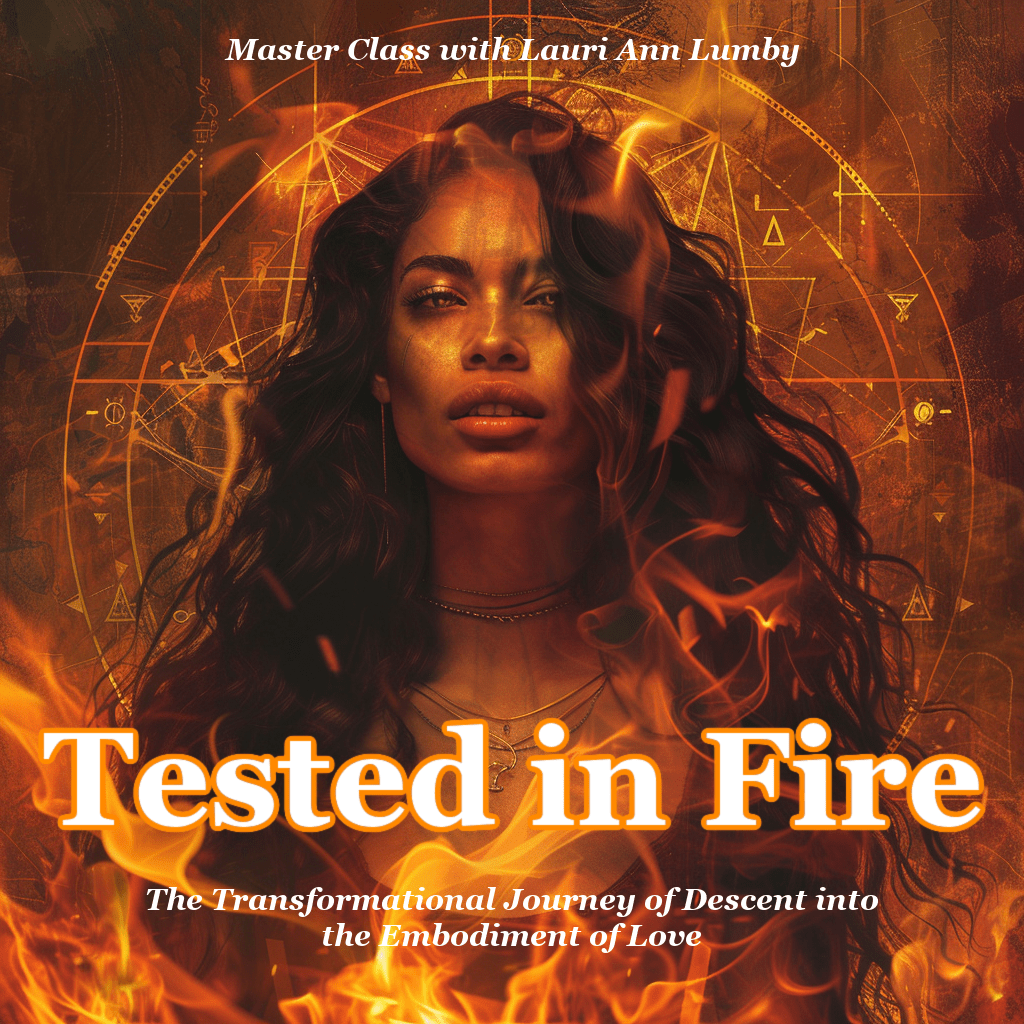
Tested in Fire: New LIVE Course

Live online course with Lauri Ann Lumby

Six sessions

Wednesdays 6:30 – 8:30 pm central time

May 8 – June 12, 2024

Live via ZOOM*

After we have tasted the unifying experience of Union with God/Source/Love that we experience at ascension (enlightenment, bliss, etc.) we are cast out of that bliss into a process in which we are “tested like gold that is tested in fire.” The ancients have called this the journey of descent.  Here we come face to face with all the aspects of ourselves that are not wholly rooted in love: our unhealed fears, past traumas, societal conditioning, and ego attachments. In this we are invited to confront our own inner “demons” and transform them into vehicles of Love so that we might fulfill the purpose of the human spiritual journey – the embodiment of Love/God.

In this six-week course, you will:

  • Explore the psychology of the journey of descent as it relates to human development.
  • Acknowledge and confront the challenges inherent in the journey of descent.
  • Learn the language and stages of descent through the Tree of Life as articulated in ancient pre-Christian mystical traditions.
  • Come to understand the Tree of Death as a vehicle of liberation from egoic attachments.
  • Find support in identifying that which limits your ability to know and be Love.
  • Provided with tools for transforming the “demons” experienced in the journey of descent into vehicles of Love.
  • Grow in becoming the embodiment of Love.

This course is:

  • Inspired by scholarship
  • Anchored in original source material
  • Grounded in sound mindfulness and creativity practices
  • Incorporating tried and tested methods for transformation
  • Rooted in the psychology of human development

** For those who have already taken the Beyond Ascension course, Tested in Fire stands on its own while going into much greater depth than was able to be covered in the Beyond Ascension class.  

The Four Pillars

The Order of the Magdalene with Lauri Ann Lumby is firmly rooted in the four pillars of:

  • Spirituality
  • Science
  • Psychology
  • Education

The Order of the Magdalene is founded on the belief that pillars are not meant to contain or control but are intended to uplift while providing ongoing encouragement and support. It is a model based on empowerment, not on oppression.

Psychology – specifically Human Development

The primary focus of the Order of the Magdalene is to provide education, resources, and tools which support human beings in becoming self-actualized. Self-actualization, a term first coined by Kurt Goldstein and then popularized by Abraham Maslow, is a process by which human beings are compelled toward reaching their full potential.  Maslow defined self-actualization as:

            Self-actualization (also referred to as self-realization or self-cultivation) can be described as the complete realization of one’s potential as manifest in peak experiences which involve the full development of one’s abilities and appreciation for life. (Maslow, 1962)

Self-actualized people know:

  • Who they are.
  • How they are uniquely gifted.
  • How they are called to live out those gifts for the sake of their own fulfillment and in service to the betterment of the world.

Furthermore, self-actualized people have found a deep sense of inner contentment, along with a sense of meaning and purpose in their lives. Becoming self-actualized is the ultimate fulfillment of the human journey.

Spirituality

Spirituality is inherent in every person. Each one of us is driven by an invisible force that compels us to seek meaning and purpose in our lives. Connecting with this invisible force (however we define or identify that force) helps us to access inner guidance, knowledge, understanding, contentment, and peace. The Order of the Magdalene supports the unique spiritual journey and spiritual development of each individual by providing tools and practices that are universal and free of doctrine or dogma.  Here western and eastern contemplative practices meet, providing a path consistent with our increasingly wholistic and secular world.  Instead of experiencing these practices through the lens of division, we find union in an open dialog and exploration of all the ways in which human beings have nurtured this inherent yearning to explore mystery. In this way, we are empowered to discover our own truth along with the path of our highest good.

Science

History has shown us the endurance of spiritual/contemplative practices including mindfulness, meditation, silence, and contemplation, and the benefits experienced by those dedicated to these practices. With recent advances in science, specifically neurobiology, we can now see the proof of what before were only theories based on subjective observation.  Through the science of such pioneers as Zinn, Davidson, and Newberg, the Order of the Magdalene has found validation and support for our methods.

Education

With training in adult education, developmental psychology, spiritual formation, and project-based learning, Lauri Ann Lumby, founder, and spiritual director of the Order of the Magdalene, has created an experiential learning model that is adaptable to the individual learning style and temperament of each participant. One-on-one support provides the additional resources that guarantee that the individual needs of each client and student are met and their formative desires fulfilled.

Putting it All Together

Through a solid foundation built upon the four pillars of psychology, spirituality, science and education, The Order of the Magdalene provides a comprehensive approach to the process of human development.  Self-actualization is supported through our online classes, workshops, books, community gatherings and one-on-one support. 


Surviving the Long Dark Night

LIVE (via ZOOM) online course

Wednesdays 6:30 – 8:30 pm central time

April 10, 17, 24, 2024

Created and facilitated by Lauri Ann Lumby

Standing Still in a Chaotic World

Standing Still

Standing still

at the epicenter of

humanity’s quickening.

The cloak of my power wrapped around me:

Metallic gold for power.

Silver for gentleness.

Red for sovereignty.

Midnight for magic.

Black for protection.

White for wisdom.

Green for sanctity and purity of intention.

Magenta for love.

Purple – the color of transformation.

Still as a deeply rooted oak.

Flexible as a willow.

Interconnected as the birch and aspen.

Afire like maple in the fall.

Standing strength as the world

whips up the storms of its dying.

The ever-present death rattle

heaving complaints and false allegations.

Desperately believing it can hide from its doomed fate.

A fate long cast when

privilege forsook unity

and fear sacrificed love.

Has it been since the beginning that the world was doomed?

Humanity, its own worst enemy –

The only species intent on its own destruction.

But in standing still, I and mine are fine.

copyright Lauri Ann Lumby

Beyond Ascension: Shadow Work

The farther we move along the path of our spiritual growth, the more our unhealed wounds, unacknowledged fears and ego-attachments rear their ugly heads.  These are the thought-forms, emotional reactions and behavior patterns that interfere with our ability to continue confidently on our path toward self-actualization.  Shadow work is the broad term that describes the spiritual practices that support us in healing and transforming these fears so that we are once again free to pursue the path of our highest good. 

Life Purpose

Our life’s purpose is to become self-actualized.  Through the process of self-actualization we are empowered to discover, nurture, cultivate and become empowered in our unique giftedness.  We are called to find meaning and purpose in our lives through the sharing of these gifts, for the sake of our own fulfillment, and in service to the betterment of the world.  Our soul is driven to pursue this path of self-actualization and it is through restlessness and longing that we are driven.

Spiritual Awakening

Somewhere around the time of our first Saturn return, we begin to awaken to the calling of our Soul, and again with renewed vigor at midlife.  We become dissatisfied with life as we know it, longing for something that is more fulfilling and which gives our life a sense of meaning and purpose.  We are awakened through restlessness, boredom, dissatisfaction, impatience and an insatiable yearning for that which we cannot yet describe.

Spiritual Growth

As we pursue this inner longing, we are led to resources and tools to support us in our spiritual growth.  In this process of spiritual growth, we seek to uncover the answer to three questions: 

Who am I?

Whose am I?

What are my gifts and how am I called to use them?

Spiritual Practices

It is through our spiritual practices that we find the answer to these questions.  Any activity that supports us in remembering peace, love and joy can be considered a spiritual practice when approached as such.  Meditation, prayer, mindfulness, contemplation, movement, rigorous physical exercise, being in nature, creative expression, the search for knowledge, our interpersonal relationships, and lovemaking can all be vehicles through which we come in contact with our Soul – our highest truth and the path toward self-actualization. It is also through these practices that we come in contact with our shadow.

The Shadow

The shadow is made up of our unacknowledged fears, ego- attachments and unhealed wounds.  It is within the shadow that we carry the pain of every rejection, criticism, condemnation, betrayal, disappointment, failure, loss, trauma, and every self-defense mechanism we ever built around this pain.  It is in the shadow where our fears reside, along with the part of us that seeks approval from or power over others.  It is also within the shadow that we carry our self-rejection – every experience or aspect of ourselves that has been set aside as imperfect, ugly, shameful, and condemnable.  The shadow contains all that we have hidden from ourselves and attempted to hide from the world.

What We Resist Persists

There is great wisdom in the Buddhist adage, “What we resist will persist.”  This is especially true of the shadow.  Ignoring our fears, unhealed wounds, ego- attachments and self-rejection allowed us the illusion of safety, or at the very least, control.  Safety and control, however, are simply illusions.  Ignoring our past hurts did not save us from future wounding.  In fact, ignoring those hurts likely caused us to become more vulnerable.  No matter how much we push these fears and unhealed wounds away, the more they tend to find their way out through passive aggressive behaviors, negative and disproportionate reactions, self-numbing and self-harming behaviors.  As we move along the path of our spiritual growth, we find that the more we try to resist what we placed in the shadows, the more it seeks to be known.

Shadow Work

This is where shadow work proves beneficial and ultimately empowering.  Shadow work is the courageous process of confronting the ghosts of our past and bringing them to the light.  Engaging in shadow work, we take the time to identify and be present to every fear, unhealed wound and ego-attachment that might try to hinder us on our path of spiritual growth.  We allow ourselves to be present to the hurt, the pain, the fear, the anger, and every emotion in between as we allow those “demons” to be healed and transformed.  As we allow ourselves to be present, we are freed from these fears and are empowered to continue in the way of our truth.


3 live, online sessions

March 6, 13 and 20, 2024

Wednesdays 6:30 – 8:30 pm (Central Time)

LIVE via ZOOM

Magdalene Deep Dive

Beyond institutional condemnation and pop-culture mythology are the documented truths of Mary, called Magdalene. Combining scholarly exegesis with deep contemplative practice, the truths of the Magdalene are revealed: the foremost among Jesus’ disciples who most fully embodied his teachings and was then called to continue Jesus’ mission of Love – catalyzing and then supporting the evolution of human consciousness – calling forth and supporting humans in becoming fully self-actualized – knowing who they are, what their unique gifts are and how they are called to share those gifts in the world for the sake of their own fulfillment and in support of the betterment of our world.

Hosted by CoCreators Convergence
FREE and Open to the public

ZOOM Access:   https://us02web.zoom.us/j/83114637833

During this Live Event, we will be taking a deep dive into scriptural evidence related to Mary Magdalene of an in-depth protocol and process for supporting human development that Jesus revealed to Mary and that she went on to share with others. Integrating ancient psychology with spiritual practice, this process supported individuals in transforming the inner obstacles to Love so that they might become “fully human” – what today we would refer to as self-realized or self-actualized.   Lauri then presents a streamlined, modern interpretation of this protocol that she has come to call “Authentic Freedom.” making this process accessible to a diverse and modern audience.

Learn more HERE

From Knowledge to Embodiment

It’s one thing to know about the teachings of Jesus. It is another thing to embody them.

For centuries, institutional religion has placed an almost exclusive emphasis on knowing about Jesus, about scripture, and about the teachings of the religion to which one belongs, while ignoring what Jesus himself modelled.

Knowing about something is limited to intellectual knowledge alone. One might be able to pass a written test on what Jesus said and taught. But can they live it?

More importantly, can they live it without having to be told, or because they’ve been threatened with damnation if they don’t. Actions that arise out of fear of threat, or because an outside perceived authority told us to are neither authentic nor sincere.

Embodiment transcends the limitations of doctrine and interpretations that have been handed down by an outside perceived authority. Embodiment clears the way for Love (God) to speak directly to our hearts, and in the way that is unique to each of us. Here we are able to access and live from the place of our own truth – not that which has been handed down by some outside perceived authority.

Jesus’ teachings were never meant to be intellectualized. His words were not meant to be blindly memorized and then spit out as proof that one is good at memorization. Instead, Jesus’ teachings were meant to be embodied in the same what that he embodied them.

Embodiment moves beyond the acquiring of knowledge, to the application of the teachings such that we are profoundly changed. In moving beyond knowledge to embodiment, we move away from the person that we were with our limited beliefs, conditioned fears, and unhealed wounds, and more and more toward Love. Love, in this instance is not an intellectual knowledge of, or idea about love. Instead, it is living as Love because we have turned Jesus’ teachings inward and have come to know, as Jesus did, ourselves as Love.

In the embodiment of Love, we move through life differently. We act, not because we are told or expected to, but because this is what Love wants from us. In embodiment, Love simply arises out of us naturally and without effort, because it is who we are and who we are meant to be.

How are you supporting yourself in being the embodiment of Love?


All of the online courses and trainings with Lauri Ann Lumby support you in embodiment. Utilizing mindfulness and creativity practices, you are supporting in moving beyond sheer knowledge, through transformation, and into the embodiment of each lesson. Check out the menu tabs above to learn more.