You, Me, and the Apocalypse

caring for ourselves during societal collapse

I don’t know how many times I have to write about this for me to get it, but here we are again. (a nod of gratitude to the Netflix series of the same name for the title of today’s musing)

We are living through the collapse of the empire – the world as we have known it – and unless we are somehow benefitting from said-collapse, we are negatively feeling it.  The impact of this collapse has a universal component – some suffering more than others from the almost nuclear fallout of an unsustainable system imploding upon itself. The recent battle over SNAP benefits and healthcare subsidies are two such examples.

As an empath, I am feeling the effects of this collapse mostly physically. My whole body hurts. I’ve had a headache and vertigo for a week. I’m exhausted. My anxiety feels palpable. It feels as if my entire system is collapsing under the weight of what I have no choice but to see, hear, and feel. This seeing, hearing, and feeling, are coming out in symptoms that might even be concerning. Is the collapsing world actually killing me?  On some days it feels like it might.

I could repeat what I have already written ad nauseum about the inevitability of this collapse. Suffice it to say, humanity brought this upon itself in creating systems built on fear, power, and control. Systems built on anything other than unity and love cannot endure. Henceforth, here we are.

Being that we have no control over this collapse and there is nothing we can do to save humanity from themselves, what are we to do? The short answer is this: CARE FOR OURSELVES. As is always true, the only person over whom we have any measure of control (even this is debatable), is ourselves.

For empaths, and others feeling the weight of societal collapse, caring for ourselves means turning the tables on the societal rules that have kept us imprisoned by achievement, duty and obedience to the system. No longer can we (or should we) attempt to continue at the pace expected of us by western society. “Drive, strive, achieve,” in and of themselves are unsustainable. For the sake of our own well-being, many of us will have to unplug from this paradigm, creating space for ourselves where we are of value, simply for who we are, not what we do. This is a difficult task as we have been conditioned by lifetimes of reproach and shame to live by society’s rules.

Caring for ourselves begins by saying no. Saying no to anything and everything that is not life-giving. Saying no to the expectations of others. Saying no to the enculturated shoulds. Saying no to manipulation, fear, power, and control.

Saying no starts with identification. How has the system attempted to manipulate you? (advertising is one obvious example, as is the entire system of politics). Where have you been told you were less-than because of something that is inherently you (skin color, gender, sexual orientation, neurodiversity, economic status, ability to work, etc.)? Where have you been taught to feel shame for your needs, emotions, way of moving through the world.

After learning to say no, the next step in caring for ourselves is learning how to say yes. Saying yes to all those things that we need to feel supported. Say yes to naps. Say yes to acts of coziness. Say yes to that which feeds you emotionally, mentally, and physically. Say yes to what feeds your soul, gives you joy, and makes you feel content.

Life is not about meaning. Neither are we here to find fulfilment. We are here to find peace in the midst of the human experiment even/especially when the experiment seems to be failing. Caring for ourselves means finding equanimity in the violent throes of societal collapse while being open to the rapturous visions of something new trying to take its place.

How are you surviving this apocalyptic time?


Support for these times:

Love is Kindness

Yesterday, nearly 7 million Americans gathered as an outward example of Love in what has been called the “No Kings” rallies. Contrary to dispersions cast, there were ZERO violent acts within or among those who gathered. Beyond the perception of politics, people of all ages and genders gathered to express their support of the freedoms promised by the US Constitution and on behalf of those who have been maligned and mistreated by those who have forgotten how to Love.

Love, in the context of the human identity, can only be understood in one way – “Do unto others as you would have them do unto you;” or as Jesus has been quoted as saying, “Love one another as I have loved you.” For those who claim to follow Jesus, or call him their savior, it is to Jesus’ words and actions that one might understand Jesus’ commandment about love. Jesus’ example is clear:

  • He treated people of all beliefs, social standing, race, and gender with love, honor, and respect.
  • He focused his attention on those who were marginalized in his culture: women, children, the poor, the sick, the ostracized, those who the culture condemned as unclean, those condemned by the culture as sinful and undeserving of God’s grace. 
  • Jesus welcomed those otherwise shunned.
  • He defined what it meant to be love: giving sight to the blind, visiting prisoners, setting captives free, care and provide for those who cannot care for themselves.

In short, Jesus’ example is one of kindness – to every single person whatever their need might be.

Also, as Bono of U2 described in the lyrics he wrote for song of the same name:

Love is Blindness.

To exercise the kindness Love requires, we must take on a sort of blindness. Blindness in this case is related to judgment. To truly Love, we must set aside the conditioning and experiences we have had which may have prejudiced us against others, or which has caused us to separate each other into “us and them.” Love sees no separation – only the fact that we are ONE human race, each deserving of love, respect, honor, and care.

This is what I saw in the “No Kings” gatherings – not a bunch of people against something, but a mass of people for humanity. We are one humanity on an individual and collective journey toward Love. Kindness is one path that helps us to get there.


Special pricing through 10/31/25

Navigating Loneliness

Loneliness is a natural consequence of spiritual awakening. As we grow spiritually, turning inward to come to know and more fully embrace our true selves, we find the world and the life we were living less satisfying. We find ourselves seeing the illusion and falsehoods of the traditional systems of the world and find these increasingly uncomfortable. We find that we no longer fit in with the jobs, people, and experiences to which we had been giving time and attention. As we grow spiritually, we find that we never really did fit into these roles, but that these were just masks we wore to be accepted and acceptable to the system.

The more we tend to our inner journey, the less interest we have in spending time or energy with anyone or on anything that isn’t supportive of our truth. We cut away the relationships that are harmful or draining while cultivating a more peaceful and gentle life. Eventually, we discover that our “friend” circle has become very small – made up mostly of other people who have done similar spiritual work on themselves – and our relationships with these people are less about a need for belonging or gaining acceptance, and more about mutual sharing, support, and respect.

The need to belong is one of the greatest hurdles to becoming whole. The need to belong arises out of a codependent need for acceptance, and the price of that belonging is often no less than our souls. We lose ourselves in our compulsive need to be loved and accepted when the only love we truly need is the love we have for ourselves. Many become stunted in their spiritual growth because they are afraid of losing that (false) sense of belonging and because they are afraid of being alone.

Being alone is in fact one of the greatest gifts we can give to ourselves. It is in solitude that we are quiet and still enough for our deepest wounds, unhealed traumas, unnamed and unmanaged fears have the room to surface. It is because of this predictable dynamic that many avoid the solitude that their soul desperately needs. Loneliness is one of the aspects of our conditioning that surfaces in that space of being alone.

Loneliness is at once natural, and a conditioned response based on fear. As a species, it has been demonstrated that we need community to survive. Being wholly alone is not healthy for anyone. We need human interaction. As a species, we are interdependent. We could not survive without the collaborative work of the pack – each individual sharing their own unique gifts for the sake of their own fulfillment, and in service to the all. Loneliness, in this case, is a gentle reminder that we need human connection.

Loneliness as a response to fear, however, is less about our natural inclination toward tribal interaction, and more about the shield that flies up in protection of the ego (false self) when we are getting closest to our deepest wounds. The ego could be said to have its own life based on conditioning and on the fears that keep us imprisoned in the system. The ego defends itself when it feels threatened. It does not want us to heal or grow because with every step toward healing, a piece of the ego dies. Loneliness is one of the shields the ego throws up in defense of itself.

When loneliness arises in our consciousness, our first inclination is to find a solution to loneliness – to make it go away. We desperately seek after anything that will fill that emptiness that accompanies loneliness. Some turn to food, drugs, or alcohol. Others turn to compulsive activity. Others seek for someone (anyone) to make them feel less alone. Sometimes, the someone arrives disguised as love, but most often proves itself to be just another face of dysfunction.

These efforts to fill the hole left behind by loneliness will always fail, as the result of these attempts are fleeting and impermanent at best. Eventually, we end up right back in a pit of loneliness, except this time, the pit has grown deeper.

The actual remedy to loneliness exists, not in resisting it or trying to make it go away, but in being with the loneliness to find out what it has to say to us. What is the fear that loneliness has hiding behind or beneath it? Is it the fear that we are not loved? Is it the fear that we are alone? Is it the fear that we are insignificant and have nothing to share in the world? Once we can identify the fear, then we can do the work of healing it, and in that healing, becoming free of that fear.

One of the greatest gifts I have given to myself, was a 30 day loneliness practice. I was somewhat newly divorced and thinking I needed to find a new person who would love me. It turned out the person I was really looking for to love me was myself. The loneliness practice supported me in arriving at that knowledge and in doing the healing work that allowed me to be mostly free of loneliness.

For the loneliness practice, I turned to Tonglen. Tonglen is a mindfulness practice from the Tibetan Buddhist practice that supports us in being with our pain, our loneliness, and our fears.  Being with these wounded aspects of ourselves allows us to be healed of them. Here are my instructions for Tonglen taken from my online course “Starting a Spiritual Practice:”

Tonglen—a Tibetan Buddhist Healing Practice

Tonglen is a simple breathing and visualization practice that helps us to release powerful,

negative feelings and emotions.  Instinctively, when we experience a negative feeling or  

emotion, we are compelled to push the feeling away.  Tonglen invites us to do the opposite – to bring the feeling in so that it can be healed, transformed and released.

1) First, we FEEL the feeling. We allow ourselves to welcome it instead of pushing it away.

2) As we feel the feeling, we identify where in our body we are feeling it. 

3) If possible, we name the feeling (is it shame, hatred, anger, resentment, sorry, guilt, betrayal, etc.)

4) After we have identified where in our body we are feeling and feeling and if possible,

identified what the feeling is, then we breathe into the feeling.  More specifically, we breathe into the place in our body where we are feeling the feeling….while allowing ourselves to feel it. 

5) After breathing into the feeling, we breathe out love. While breathing our love, we might

also visualize what love looks like—maybe it is light and it has a color, perhaps it is the shape of a heart or the wind.  

6) As we breathe out love, we imagine it going out into the world, maybe even to any person

or persons who may be somehow connected to the negative emotion we are feeling. 

7) We continue this process of feeling the feeling, breathing it into our bodies and breathing

out love until we either feel a shift, or simply run out of time.  If during the practice we find

ourselves brought to tears, this layer of pain or woundedness has been freed and released.

8) Tonglen can be turned to again and again and again for the release of negative emotional

states.  We can us it both symptomatically (as a negative feelings arises) or therapeutically

(for example, daily if working on deep seated negative emotions or old and lingering emo

tional wounds).  

To free ourselves from the imprisonment of loneliness and its resulting fear, apply Tonglen to loneliness. With this I recommend a two-pronged approach. The first is a foundational approach.  In this, set aside 10-20 minutes each day to be with loneliness, applying the practice of Tonglen. The second is the symptomatic approach. WHEN you find yourself feeling lonely, apply Tonglen to that loneliness. Tonglen can be done at any time, anywhere, no matter what activity you are engaged in. It is a powerful tool for freeing ourselves from the loneliness that might otherwise drive us to act in non-loving or unhealthy ways toward ourselves. Tonglen also allows us to be freedom of the ego’s shield of loneliness so that we might increasingly escape the system that keeps us imprisoned in the false self, thereby freeing us to live more and more as our truest self.


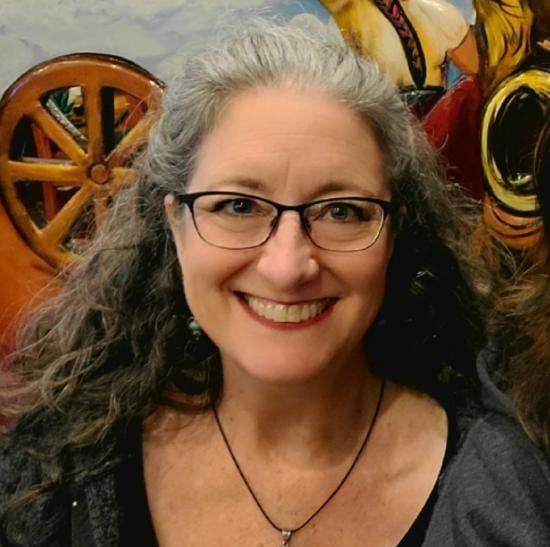
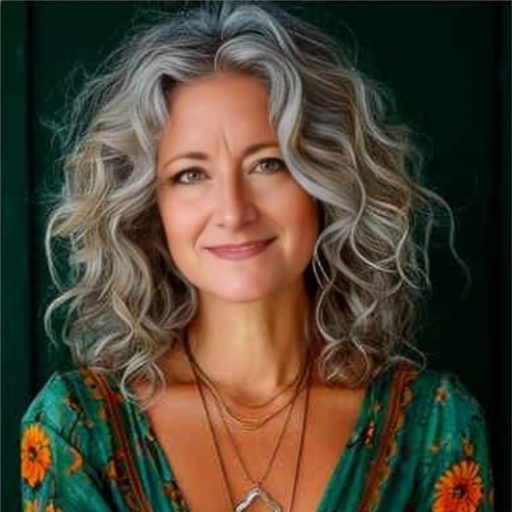
Lauri Ann Lumby, MATP, provides one-on-one mentoring and support for those who are in the process of their spiritual journey and who are awakening to their highest selves and their most authentic truth. Lauri helps you to shed the layers of the ego made up of conditioning, past wounds and trauma, and fear so that your Soul might be free to live as its truest self.

Seeking Refuge in Hell

Letters from Hell #5

Increasingly, people I know and with whom I am close are retreating from the everyday world. Me included. This retreat is partly an act of self-preservation, but even more so, it is a result of their awakening.

The self-preservation piece is obvious. People no longer want to be part of a world that is built on fear, power, and control. They no longer want to participate in the violent division that currently defines our world. They no longer want to fight or even be witness to the ignorance and hatred that fuels the fires of the hell humanity has created for itself. Instead, they are choosing peace and a sense of safety over ongoing conflict. They are choosing to separate from the noise so they may enjoy quiet. They are retreating into a sanctuary of their own making, based on what they have come to learn about themselves and their truest needs, wants, and desires.

This brings me to the awakening part. A dear spiritual brother recently shared with me a lecture given on the “disappearing” that was once predicted by Carl Jung. In short, Jung theorized that as human beings become individuated (Abraham Maslow called this self-actualization), they would come to realize that the system in which they were conditioned to participate no longer works for them. They see the system for what it is – false, abusive, and harmful and begin to find ways to detach themselves from the system. As they do so, they discover what their soul really wants and needs to feel whole, and they begin to choose that. For many, this choice leads them away from the outside world and into a space that is more quiet, peaceful, content, and gentle. This quiet place becomes their refuge from a world in which they no longer belong (if they ever really did).

This choice for refuge is available to all of us, when we so-choose it. Whether actively individuating, or simply wanting to find peace in a world at war with itself, finding refuge is simple:

  1. STOP engaging with the divisive tactics of the hell in which we are living. Don’t participate in the arguments, the projections, or the blame.
  2. Embrace the position of objective witness. Observe the dying world without reaction. See it. Observe it. Make note of it. But don’t get sucked into it.
  3. WHEN the dying world triggers your fears and unhealed wounds, instead of reacting out of those fears, STOP and engage in the many spiritual tools you have for easing and transmuting those fears.
  4. Start, or double-down on your daily spiritual practice. Make this your number one priority.  
  5. Be mindful of how and with whom you want to spend your time. Say NO to those people and activities that drain you or compel you to engage in division.
  6. Make your home a sanctuary. Gather around you the things that give you comfort and make you feel safe.
  7. Cultivate a routine of self-care. Choose at least ONE activity per day that feeds your soul – read, write, take a walk in nature, visit an art gallery, have coffee with a dear friend, watch a movie or documentary that informs or inspires. Cook a wholesome and delicious meal.
  8. Nap. The violence and discord of the dying world makes us tired. Get extra sleep and nap when you need to.
  9. Tell the “should” voice in your head to SHUT T.F. UP. “Should” is one of the strongest weapons of conditioning and is one of the ways we remain tied to the system. Cut the cord. Let it go. DO what you love and let the non-loving conditioning go.

Whether we acknowledge that the world we are living in is a kind of hell, or are simply outgrowing the conditioning that has kept us imprisoned by the system, refuge is necessary in our journey of finding peace and contentment in our lives. That refuge is available to you right now, if you so-choose.


Hell Isn’t All Bad

Letters from Hell #4

Living in hell isn’t all bad. Hell definitely has its perks:

  1. Living in hell allows us to clearly see the world humanity has created for itself – one that springs forth out of fear and which seeks after power and control in the hopes of mitigating that fear.
  2. Living in hell shows us daily the consequences of this quest for power – greed, gluttony, and the violence that humanity wields in their never-ending quest for MORE.
  3. Hell has been increasingly peeling back the layers of humanity’s corruption and all the lies that have been cultivated to justify injustice.
  4. Hell allows us to see who people truly are, including the lies they continue to tell themselves so they might benefit from the system hell created.
  5. Hell also shows us who we are not.
  6. Every second of every day, hell shows us the system that allows for its survival, along with how to escape that system – if only we would pay attention.

The doorway into hell is the same path by which we can escape. Humanity, as a collective, is not doomed to an eternity in hell. As individuals, we are not condemned to waiting for everyone else to wake up before we can make our own escape. The steps necessary for our escape are simple:

  1. We willing to see the hell-system for what it is – a system that is based on and manipulates us through fear.
  2. Harness the skills of observation required to identify all the seemingly infinite ways in which the system is attempting to manipulate you through fear (or shame).
  3. When you notice the system attempting to trigger your fear/shame – SAY NO!
  4. Instead of giving into the fear, STOP and turn your gaze inward – what is the fear that is being triggered? Where did you first experience this fear/shame?
  5. Engage in the mindfulness/meditation practices that you have for releasing/healing/transforming that fear.
  6. Wash, rinse, repeat.

As the journey into hell was created by a thousand steps, so too is the journey out. Escaping hell is all about identifying every wound, trauma, fear, and past conditioning that ties us to the system, and then unraveling ourselves from them. The journey out of hell is about healing through heightened awareness, and radical personal accountability. The more we see the ways in which the system controls us, the more power we have for making our escape.

Whereas the cacophony of the system wants us to believe otherwise, hell is not what the majority of humanity wants. At our core, most of us yearn for peace. We long for connection. We ache for compassion and kindness. And we’re driven toward justice. To escape hell, we cannot allow the system to convince us otherwise – for humanity is made of Love and it will ultimately be to Love that we will return.


2 year training package
Transforming Fears
Self-Awareness
One-on-One support

The High Cost of Othering

This post is not about Charlie Kirk – but if the shoe fits (shrug emoji)

I don’t understand why this is the case, but human beings seem to be pre-programmed to create division. I admit that I too am sometimes guilty of creating division in my mind even as my highest intention is toward unity and oneness. To some degree, I’m not sure we can help wanting to put each other into categories that define human beings by self-created divisions like religion, race, nationality, gender, etc. As much as we maybe can’t help separating ourselves, there is a cost to this dividing – as world events continue to show us.

It seems that the highest cost of this division arises out of, “othering.”  Characterized by polarizing terms like “us” and “them,” othering happens when an individual who identifies themselves as part of a particular human-made category (ie: Christian) then places this membership as higher than or better than the seemingly opposing category (ie: not Christian). Othering creates the false belief that the category/group to which one “belongs” is more right than other human categories. This othering pits those in the “favored” group against those who are not of this group. In the world as we know it today, this othering is easily recognized in such divisions as:

  • White/people of color
  • Republican/Democrat
  • Christian/everyone else (and then every us vs them division within Christianity and even within an individual Christian community)
  • Rich/poor
  • Educated/uneducated
  • Those who know/those who don’t
  • Straight/Queer
  • Male/Female

Othering arises out of ignorance (as in lack of information). Othering surfaces when one’s response to what one doesn’t understand is judgment. Judgment is one way in which humans have learned to temporarily ease the natural anxiety that arises in the face of what we do not know. Unless that judgment is corrected through curiosity and wonder, human beings will turn that judgment into a weapon. Weaponizing othering is the ultimate price of this division – the consequences of which we are seeing increasingly every day.

Us vs. them does not work. Instead, it pits humanity against humanity. Dividing human against each other results in misunderstandings at best, genocide at worst. “Us vs. Them” is what created Nazi Germany and what has led to the wholesale destruction of Palestine and its people. “Us vs. them” is what compels humans to create laws that punish anyone they perceive to be different than them. “Us vs. them” causes an individual to pick up a gun and assassinate an individual or shoot up a whole school. “Us vs them” is what causes one to celebrate a person sowing division as a martyr.

Othering, at the end of the day, is an uninformed choice. It is judgment in the face of what we do not know or understand. Judgment is a defensive reaction to anxiety, one that many have not learned to move beyond. Fear in the face of the unknown is natural, but when we allow ourselves to acknowledge the anxiety and move past it to curiosity, then we are able to seek after the knowledge we need to make the unknown known. When the unknown is known, it no longer presents a perceived threat. Coming to know the unknown helps to build a foundation of understanding that then allows us to sow harmony instead of conflict, unity instead of division, and collaboration over competition. If humanity seeks to survive it will only do so when we stop creating “the other” and seek, instead, to learn and understand our unique gifts and how that diversity is what, ultimately, makes us one.

Being Soft

For my entire life, I have been hard. I have worked hard. In school, I studied hard. I have been hard on myself by creating high expectations of myself. I have been hard on others by projecting the expectations I have for myself on them. I have tended to a strict moral code. I have been a master of discipline, persistence, tenacity, and work ethic. I hold myself to the highest of integrity – while expecting others to do the same. I have been hard on my physical, emotional, and mental self by forcing my body into my own dysmorphic idea of “perfect weight and size,” by stuffing my emotions (don’t let them see you cry), by covering deep hurt with rage and unmet needs with resentment. I love deeply, but when wronged, the ax falls. Because of life’s many heartbreaks and betrayals, I have built a shield of armor around me in an effort to keep myself safe.

All this hardness has given me the illusion of being safe and made me feel like I was meeting society’s expectations of achievement.

We are conditioned, after all, that we are only valued based on what we achieve.

Straight A students are lauded by parents, teachers and other authority figures (while being despised by their fellow students for being a smarty pants and a showoff). Valedictorians get into good schools and receive scholarships. Those who earn a doctoral degree secure positions of prestige at universities. Skinny girls are more loved and popular than those with curves.

Right!?

WRONG!

If there is anything that life has taught me, it is this:

Our value has absolutely nothing to do with how we look, what we do, or what we have achieved. Instead, our value is intrinsic in our very being.

As the prophet Isaiah quoted Source as saying:

You are precious and glorious in my sight, and I love you. (Isaiah 43: 4)

As I have increasingly come to understand this and have done the work of healing the wounds within me that have then allowed the Love within me to be more fully known, what has been hard in me has become more soft. I no longer seek after a size 6 body (menopause took care of ever thinking that would once again be a possibility). Instead, I’m working on accepting a curvaceous post-menopausal form. I’m no longer seeking after achievement, recognition, or fame. Instead, I’ve learned to embrace the gift of invisibility along with the precious few who can actually see me. I’ve come to understand that my work in the world is mostly done on invisible planes and what is done in this world, is meant for a rare and precious few. I’m still disciplined as I find I do better with a structure of some sort in place, but I’m also more flexible with my time and can even embrace DOING NOTHING (gasp!). I’m more forgiving of myself and of others (though the betrayal rule remains in place – betray me or take advantage of my generosity and I reserve the right to sever that connection). My heart is wide but fragile. I reserve the right to protect it as I see fit.

Being soft is also a mindset. Instead of walking like an elephant through the world, can I move more gently? Instead of always hurrying, can I begin to slow down? Instead of punishing myself with all of my conditioned shoulds (I should be able to drive when and where I want. I should go outside. I should take a walk. I should…..), can I be more kind in my expectations of self and allow myself to simply be?

After a life of being hard, I think it’s time I embrace being soft.

From the Eagle’s Perch

There is no doubt that we are living through troubling times. Between the chaos in the world and uncertainty around humanity’s survival, it is easy to lose hope. So much of what we have come to rely on is proving to be on shaky ground. What we once clung to for security has shown itself to be nothing more than an illusion at best, a bold-faced lie at worst. All that which has been rooted in fear is rising to be seen as the manipulation that it is.

Humanity is waking up. But in this waking up, all our dreams of security, surety, and safety are being shattered. With the death of every dream, we grieve. Grieving includes shock, trauma, terror, denial, bargaining, rage, depression/immobility/dissociation, and deep sorrow. In tending to our grief and the expected unknowns that follow death we may fall into negativity and despair, believing all is lost.

When we examine this awakening from the center of our grief, fear is a natural response. As a species, we like to believe we are in control of our fate and the unfolding of the plans we have made. When new worlds are being born, it is often difficult, if not impossible, to see glimpses of these new worlds as everything around us seems to be collapsing. Remaining too close to the symptoms of collapse can keep us from seeing the opportunities that are being born in the midst of it, and what these opportunities might bring on the other side. This is where seeing from the eagle’s perch becomes a helpful practice.

In the past, some have accused me of being a prophet. If prophet means one who knows how to read the sign of the times, then I accept that accusation as true. Life has shown me that I do see and that what I see almost always happens to be true. Some don’t like me because of this gift because they cannot stand in my presence and not be seen for who they truly are. Those with nothing to hide stand securely under my gaze. Liars, on the other hand, tend to run.

As it relates to world events, I see in a similar way. I see patterns with predictable outcomes based on similar patterns from the past. History, if not healed, DOES repeat itself (all we have to do is look to the war in Gaza to see this truth realized). Through this sight, I am able to predict an outcome of an event or experience if it follows a certain trajectory. The good news is that trajectories can change, therefore changing the outcome. Knowing this, I have often used my voice to warn of the likely outcome of a certain trajectory, hoping that humans might listen and change their own path (we have the power to do this!).

Further, I am able to see far beyond the current timeline and trajectory to the ultimate outcome. As it relates to human beings, I see two possible destinations: self-created extinction or the creation of a better world. It is entirely possible that humanity will choose extinction by refusing to rid itself of that which is rooted in fear, which then results in the human compulsions of greed, gluttony, lust for power, wrath, envy, sloth and pride.  These, if not healed will be the end of us all.

More likely, I see humanity making a different choice. I see humanity growing weary of a world created in gluttony, greed, etc. and in that weariness, seeking another way. Already, I have seen evidence of this movement from weariness to not only seeking but creating change. As much as I am often frustrated by humanity’s stubbornness and ill-will, I not only believe, but SEE that far more humans are generous, loving, peaceful, and kind. These are the humans who I see as coming together to change the tide. In fact, they already are – we just have to bring ourselves to a higher view in order to see them.  To bring ourselves to that higher view, we must transcend our own fears of the dying world, heal our conditioned fears and rise above that which would otherwise bring us down. Only in doing our own inner work are we able to clearly see the purpose of this collapse and the promise of a new world trying to be born.

An important note: Seeing from a higher perch doesn’t happen because we engaged in “positive thinking.”  Neither is it because we have become masters of spiritual bypass or disassociation. Instead, it is the result of deep, inner healing and practice where we are actively pursing the transformation and release of everything that has been made out of fear. In doing this work, WE are the ones who are coming together to choose a new world – one made out of kindness, generosity, and love; and not the one made out of fear.

How are you transforming your fears and unhealed wounds so that you can not only see, but participate in bringing forth this new world?

The Choosing

The words above are from the Book of Joshua in the Hebrew scriptures and perfectly describe where we find ourselves at this point in our human evolution as we are being given an opportunity to choose:

  • Who or what do you serve?
  • Who or what do you follow?
  • Who or what do you worship?
  • Who or what do you seek to obtain or acquire?
  • Who or what do you believe in?
  • Where do you put your time, energy or attention?
  • What or who do you give your energy to?
  • How are you using this one precious life you’ve been given?

To me, there is only one appropriate response to these questions, the answer being Love (that which some might call God). When we choose to serve the cause of Love, when we follow Love to its source, when we hold Love above all else, when we seek to know Love more fully, when we believe in the power of Love, when we focus our time, energy, and attention on knowing and being Love, when we give ourselves over to being Love, and if Love is the goal and intention of our lives, then we find ourselves authentically free – meaning peaceful, joyful, and content.

When we choose anything other than Love, we are doomed to be imprisoned by our fears, our conditioning, and our limiting beliefs. Then, we become vulnerable to the manipulations of those who seek to benefit from our fears.

The world in which we are currently living is ruled by those who seek to benefit from our fears: Corporations. Politicians. Governments. Religious authorities. The Media. Conspiracy Theorists. Propaganda creators. – just to name a few. The world is rife with those who understand that fear is an easier choice than Love and who use those fears to control us by getting us to do what they want us to do for their benefit and our detriment. The wholesale destruction of Gaza, for example, is the result of a nation capitalizing on the fear they have created and the individuals around the world who financially benefit from a nation always at war. An example closer to home are the snake-oil salespeople who are happy to take advantage of those suffering with a tragic, difficult, or terminal diagnosis by making false promises of a cure.

What the world doesn’t know is that choosing fear is easier only because it’s all we’ve been conditioned to do. From the time we are conceived, fear is the primary message and tool of control. It doesn’t, however, have to be this way. Neither are we doomed to remain in fear. Breaking away from fear begins with a choice – a choice that we are invited to make every single moment of every single day. This choice begins with a simple question:

Let me provide some simple examples:

When you are watching TV and an ad comes on for the latest “weight loss cure,” will you allow the ad to trigger your body judgement and be tempted, or even decide to purchase that product or will you see the ad for what it is – a corporation trying to make you feel bad about yourself so you will buy their product – so you can then decide to choose self-Love over fear?

When crazy sh*t is happening at the White House, do you get sucked into anxiety, fear, and the temptation to enter the spiral of doom, or do you take a breath, see it for what it is (something purposefully trying to trigger your fear), and then let it go with Love?

When a political party (or individual) uses the media to try to set apart a specific ethnic group as “the enemy,” do you buy into the fear or do you understand that in Love, there are no enemies – only those seeking to benefit from a world divided.

Choosing Love requires intention, dedication, discipline, and persistence. Choosing Love takes practice – and is a practice. Choosing Love is at once a choice and an unchoosing as we retrain ourselves from the fear we’ve been conditioned to choose to the Love that is our truest and most original nature. Only in choosing Love will we ever know peace and it is only in more choosing Love over fear that the world will ever know peace.


Choosing Love is a practice. All of the resources I provide support you in learning how to choose Love and how to unchoose fear.

An Uncommon Priesthood

Uncommon: not ordinarily encountered: unusual; remarkable, exceptional

Priest: someone who is authorized to perform the sacred rites of a religion especially as a mediatory agent between humans and God

Priesthood: the office, dignity, or character of a priest

Merriam-Webster Dictionary

On the first day of the Christology course that was part of my ministry training, our (female) professor asked those of us who felt called to ordination to raise our hands. The men in our class, as was to be expected, raised their hands as they were on the track to becoming deacons. My friend, Karen, and I also raised our hands. That got us a giggle because women, of course, are not allowed to be ordained, either as a deacon or a priest, in the Catholic Church.

That was thirty years ago, and yet still today, women are barred from priesthood in the Catholic Church. That prohibition, however, has not lessened my call to be priest. In the years since, I have discerned priesthood through two denominations outside of the Catholic Church, but in both instances, the prevalence of clericalism in those institutions dissuaded me from completing that path.

Clericalism:  a policy of maintaining or increasing the power of a religious hierarchy (to Merriam-Webster’s definition, I would add: lauding, flaunting, defending, and enforcing that power and in some cases, using it to justify non-loving acts)

To me, priesthood has never been about power. It has always been about service. Neither has it been about hierarchy. Instead, it is a collaboration of gifts in support of individual and collective need. This is the priesthood I see in Jesus and what he drew forth from those who gathered around him. Jesus was not a leader who wanted followers. Instead, he was a catalyst who empowered people in their gifts. By humbly serving those most in need, Jesus’ example challenged the religious and political institutions of his time. These institutions valued their power and privilege over the people they were meant to serve.

Sadly, Jesus’ example did not stand as the early disciples (Peter and Paul in particular) traded the collaborative empowerment that Jesus’ taught them for patriarchal and hierarchical power. This model still stands today in nearly all Christian institutions. This is why I did not, cannot, and refuse, to fit into any institution that values power over service.

Instead, it seems, I have carved out a priesthood all my own. One that has been ordained, not by a bishop’s anointing and laying on of hands, but by careful attention to the call of Love, and living out that Love in all the many ways I have been called. Sometimes this call looks priestly in the marriages and funerals I officiate. Sometimes this call looks formative as I create and facilitate classes and write books in support of participants’ personal/spiritual development. Sometimes it looks pastoral in the one-on-one spiritual counseling I provide. Sometimes the service I provide supports people in their healing, in finding direction, and in experiencing comfort.

Most commonly, however, my priesthood is confirmed in unexpected and surprising ways. It is known in the 6am phone call from a distant friend seeking support for a family member in crisis. It is known in the generous financial donations I sometimes find in my mailbox. It is known in the confidences people have shared with me during challenging times. It is in the many acquaintances who suddenly seek my support and my own wondering of why they chose me. Why would they trust me with this, I barely know them? And yet, time and time and time again, this is so. People who I know – but not really. Amazing, lovely people who I have come to know and love along the way – but we don’t really hang out. People who I know from simply being me in the small community where I live. People, in whom I’ve likely seen something (love, kindness, generosity, honesty, integrity, authenticity) who are somehow seeing me, and trusting me with the most intimate and challenging times of their lives.

This is the priesthood for which I am most grateful.  A priesthood that is unexpected and surprising and looks absolutely nothing like what we have come to associate with being priest. And yet, it is exactly what the Catholic Church preaches in its invitation to participate in the priesthood of all believers (Catechism of the Catholic Church paragraphs: 1267, 1268, 1141, 1143, 1268, 1305, 1535, 1547, 1591, and 1592). Whereas the institutional church does not recognize my priestly calling, I am profoundly humbled and grateful to all those who have invited me to serve in this role.