It’s All About Power

how we cultivate it, protect it, with whom and under what circumstances we share it

It is not a coincidence that the recent surgery I had (and from which I am still recovering) was to repair a separation of the muscles in the center of my abdomen in the area of the solar plexus and to secure that (likely genetic) weakness. Throughout my life, I have tended to be a leaky person – giving my energy and power away (governed by the solar plexus chakra) to those who don’t deserve it and allowing my energy and power to be stolen from me by ill-intended beings.

In a culture that trains us to be co-dependent, a leaky solar plexus isn’t unusual. We are conditioned to be caretakers of everyone else’s needs but our own, while also being taught it is our responsibility to make the world a better place to live by conquering evil and birthing “love and light.” Whereas I do not argue the love part, what I’ve learned is that conquering evil is less about what we do “out there” and more about what we do within.

Those who operated in our world from a place of evil, gluttony, lust, wrath, envy, greed, sloth, and pride are doing so from a place of great emptiness. Due to their brokenness, they have no power of their own. As a result, they seek to get that power from others. Think of sexual predators, abusers, manipulators, and deceivers. They all do what they do so as to steal energy and power away from the (perhaps) less broken, but decidedly vulnerable.

Let’s use the “Big Beautiful Bill” as an example. Only powerless, hateful humans would come up with a plan to deprive the most vulnerable among us of the programs that provide for their most basic needs. I had a moment of fear and allowed myself a couple days to grieve after the tentative passing of the bill. Myself, my son, my father, and other people I dearly love, stand to lose access to life-saving care should the bill be implemented as planned.

This brings me back to power. It was appropriate for me to allow a day to grieve and process, but with this, and other situations I find myself facing in this moment, I also have a choice. Will I allow my own energy and power to be drawn from me by ill-intended beings? Am I willing to give my energy to worry, fear, anger, hatred, and rage (which is exactly what the ill-intended want), or do I call my energy back to myself and anchor it deep within my own being where it belongs?

The easy answer is the latter. Accomplishing this task, however, is easier said than done. It takes years, and sometimes a lifetime, to realize that we have been giving our energy away or that it is being stolen from us. Some never learn this. I’m grateful that sometime in the last 20ish years, I came to understand the energy draining behavior with which I had become familiar. Today, I’m still working on NOT giving my energy away and keeping it to myself. It is a daily, if not a moment by moment practice.

Our energy and power was never meant for anyone but ourselves. It is ours. It is what fuels our gifts and draws those in need of our gifts toward us. Unfortunately, it also draws to us those who want our energy for their own with no intention of acknowledging or applying the gifts we so freely share. Our power serves as a magnet, drawing toward us those of like mind, our “tribe,” along with those who would use our gifts for their own ill-intended benefit. I think of it this way, fully-in-power humans draw other fully-in-power humans along with those who are lacking in true power and think they can get some by spending time with us. The mythological name for the latter of these two is succubi. You know of whom I speak – those who are draining just to be around and those who enthusiastically claim to respect and honor your gifts and drink deeply of the well you provide, but who actually learn nothing for lack of application. Equally guilty are those who say they value your gifts but do nothing to engage, utilize, or share them.

Every time we give our energy to these kinds of people, we are depriving ourselves of our own power and diminishing that which we may be called to share with those who would actually benefit. You will know this experience by how you feel exhausted, frustrated, impatient, and even angry over how you’ve given your energy away or how it’s been stolen from you.

The key, is to STOP. Stop giving away your gifts, your energy, your time, your power, to those undeserving. The politicians and constituents who supported the “Big Beautiful Bill” are not deserving of your energy or power. Engaging in worry and fear, anger and hatred, the desire to do battle, serves no one except those who want you to feel afraid. Instead of giving into the temptation of allowing your energy and power to be drained away, CALL IT BACK. When you find yourself worried, impatient, afraid, angry, STOP and call that energy back. Draw it deep into yourself and hold it there.  Allow the magic of your power to gather, grow, strengthen, and become anchored in who you are as a person of Love. SIT in that Love and allow it to radiate from within you.  Sitting in the center of your own power deprives life-force vampires from taking your energy and triggering your fears. Keeping your energy to yourself prevents succubi and other ill-intended beings from their source of nourishment. Don’t let them have it -your power or your energy. Keep it to yourself. This is how we drain the swamp – not by giving into their ministrations, chaos, and bullying tactics, but by calling our energy back to ourselves and keeping it there. When we stop giving them our power, they have nothing left to live from. Then, they will either get help for their brokenness, or die from lack of nourishment.

When we stop giving our energy away, we and our solar plexus energy center will find itself healthy and wholly intact – as it was always meant to be.

PS  Thank you to Dr. Lee Stratton and his team at Aurora Hospital for your expert care and support.
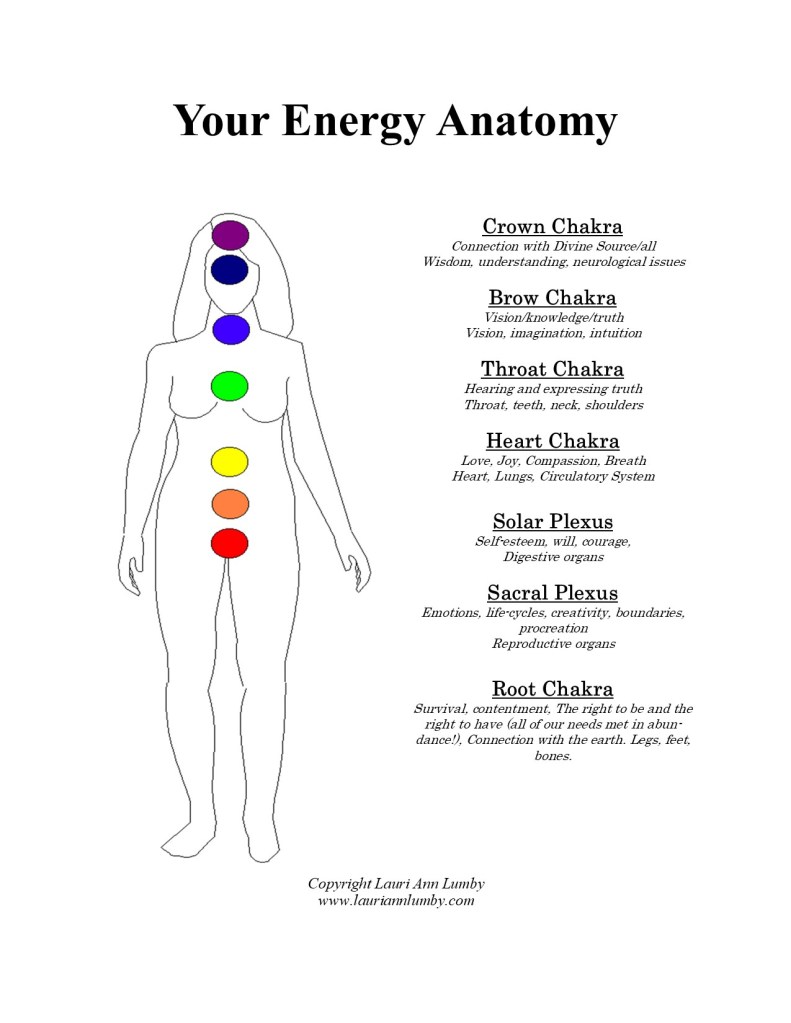

In my online course, Into the Wilderness with Authentic Freedom, we do a deep dive into the chakra system – how each chakra corresponds to our physical, mental, emotional, and especially spiritual bodies. In this course, you learn how to identify the fears that are triggering energy leaks (for example) and other non-life-giving symptoms and how to heal and transform those fears so that you might return to your most authentic self.

I Care Too Much

I have a confession to make.  I talk big about cultivating the fine art of detachment and learning not to care, but in reality, I care too much. It’s a problem:

  • I care about the state of our world.
  • I care about humanity’s wellbeing.
  • I care about the lack of peace and the pervasive nature of conflict.
  • I care that some humans are truly evil and intentionally cruel.
  • I care about the health of our environment and the safety of our water and food.
  • I care about injustice.
  • I care that people are starving, homeless, without adequate medical care, living in war-torn countries where their safety is continually threatened.
  • I care that people die in unnecessary wars.
  • I care that the best humanity can come up with for resolving conflict is war.
  • I care about ignorance and the bad decisions human beings make because of a lack of verifiable information.
  • I care that there are people in the world who thrive on manipulating and abusing others.
  • I care…I care…I care…

More than all of this, I care about the people I love. I want the best for them.  I want them to be happy, healthy, well cared for, and safe. I want them to succeed in whatever they set out to do. I want them to have peace, to know contentment and to experience joy. I want them to feel loved.

The problem with caring, is that I am not in control over any of the things I care about. That drives me insane. It is excruciating to observe humanity and to see all the unnecessary violence, conflict, and hatred. It is even more difficult to watch those you love make decisions that will cause themselves or someone else harm. It is especially challenging when you have some experience in a certain area and can predict the harm that will come when one takes a certain path. This is hundred-fold true when you have a tiny bit of pre-sentience and a thousand-fold true when you are an empath, or when someone you love asks for guidance, and you give it, and they choose the exact opposite.

It actually hurts me to see some choosing certain paths. And there’s not a damn thing I can do about any of it. So I writhe in agony. I become frustrated, angry, and impatient. I get balled up in self-righteousness. My anxiety escalates and my depression deepens. Sometimes it’s so bad my PTSD is triggered. It sucks.

Then I apply every single spiritual practice I know for detaching and letting go. Sometimes it helps. More often not. Or if it does, the effects are only temporary, and I find myself right back in the place of caring.

UGH!

There are days I want to shake my fist at God: “Why did you make me care???”  There are other days I try to bargain, “Can’t you make me NOT CARE like so many people seem to do?”  Then there are the days where I make myself not care – I have to get angry to not care, and then I feel guilty and like I’m being a complete asshole.

UGH!

Caring is a curse, but I’m not sure I would want to be any other way. Someone has to give a shit!  Right!?  If I don’t care, who will? If someone doesn’t care what will come of this world?

But then I look at what we call “God.”  Does “He” even care? I sometimes think not. Instead, it seems that God leaves us to our own devices and lets the chips fall where they may – consequences, natural law, karma, and all that jazz.

If God doesn’t care, then why do I?  It’s a serious question.

Some might call caring “codependency.” Yeah, I can own that. I do care – often too much. The too much is an ebb and a flow. Better on some days than others. When I’m feeling vulnerable, or anxious, or unwell, it might be worse. When my PTSD is triggered it’s definitely worse. Unraveling from being a first-born and certain cultural conditioning is hard. Healing from childhood wounds and forced extroverted niceness (brought about by multiple moves) takes time. People pleasing and over-responsibility have to be unlearned.

It’s a journey. But as hard as I am on others, I’m a million times harder on myself. I should have this thing down by now. Right!?

WRONG!  Not even close.  Turns out I’m human, fragile, vulnerable, and imperfect and broken just like everyone else. And more than anything else, I am not in control over the fact that I am excruciatingly human – and that just kills me.

Peace is an Act of Rebellion

We live in a world that is driven by fear and thrives on chaos. Conflict and violence have become so much a part of life that entire economies are based on the lucrative business of war. Entire family systems have been defined by the abuse they inflict and then inhabit. The relationship paradigms we have been sold are rooted in codependency and hierarchical control. Our educational systems have lost their focus on learning and are now directed toward a definition of success that is rooted in a competition to acquire the most wealth, power, and fame. Careers are no longer centered in the search for meaningful and fulfilling work which helps to provide what a society needs to survive and thrive, but are instead geared toward making billionaires richer.

Fear, chaos, conflict, competition, violence, and abuse have become so much a part of our lives that we have come to believe that all of this is not only normal, but healthy. We shrug our shoulders and walk away when anyone dare question this status quo. “It is what it is,” we hear people say. Or things like: “it’s just how things are done, it’s what we’ve always known, I have to make a living…” And if anyone dare to offer another possibility – a life, for example, that might be peaceful, gentle, and full of ease, that person becomes a pariah – accused of being a “commie” or just plain insane.

Chaos, conflict, competition, and violence are a choice. It is one the vast majority of humanity has been making for five thousand years or more. But in the same way that conflict is a choice, so too is peace. Contrary to popular belief based on centuries of conditioning, we have the power to choose peace over conflict, collaboration over competition, ease over chaos, and gentleness over violence. But more often we don’t.  And we have to ask ourselves why.

The answer is simple. Choosing peace is an act of rebellion. When we choose peace, we are putting every single system based on fear, power, and control in question. When we choose ease, we are disturbing the status quo. When we disturb the status quo, we become a threat to those who benefit from a system based in fear, power, and control. And when we choose to be gentle, we are challenging all those who have come to belief conflict and competition are not only normal, but necessary.

As a culture/species, we are addicted to conflict and chaos. For many, the idea of peace threatens this addiction. Because of their addiction, they seek more and more of what gives them a charge. Perhaps they know nothing other than trauma, so to them this feels normal. Maybe they are fueled by anger and resentment. Giving someone permission to choose peace threatens the drug to which they have become accustomed.

Choosing peace is an act of rebellion because of all that is threatened by this choice. AND, there is a way for humanity to choose peace, but it first has to recognize its addiction to violence (physical, mental, emotional, psychological, and spiritual violence), and take the critical steps in healing that violence. As that violence becomes healed, and the charge of addiction overcome, it is there that humanity will find its peace. In finding that peace, humanity will wonder, “What the heck was wrong with me that I would choose violence over this?” Choosing peace then becomes the thing that is most valued and what humanity would choose again and again over the violence it has previously come to know.

Learning Not to Care

(aka Cultivating the Fine Art of Detachment)

Life is a funny thing. First, we are taught that it is our job to care about EVERYTHING. Caring about EVERYTHING implies that it is our job to do something about it. Heaped on top of this caring is the whispered weight of responsibility. Not only is it our job to do something, it is also likely that the things that appear wrong are also somehow our fault. Blame adds to the pressure to do something about the wrong.

At nearly sixty, however, I’ve learned something new. It is more than likely that NOTHING is our fault. Therefore, it’s not our job to fix it. Furthermore, it’s not even our responsibility to care.

Wait! What? It’s not our job to care?

Yes, we have a human responsibility to care about ourselves, our loved ones, humanity, and the world. If we have a loving heart, we want the best for everyone. We want people to be happy, healthy, fed, clothed, safely sheltered, educated, and their medical needs provided for. We want people to have liberty, dignity, respect, and peace.

The sad reality, however, is that more often than not, there is not a damn thing we can do to guarantee any of this for anyone. Neither can we necessarily fix the wrong that prevents people from having all that is stated above. This is especially true when the individual is capable but unwilling to care for themselves. Furthermore, 99% of what we care about is completely out of our sphere of influence, and even if it is, it still may be out of our control.

As a Type 1 (Perfectionist/Reformer) on the Enneagram, this has been a truth that has been very difficult for me to come to. Not only have I had conditioning working against me, but I have also had the gift/curse of my unique temperament which gave me the lens through which I am hard-wired to ask “How could this be better.” Indeed, this gift makes me a fantastic trouble-shooter, source of counsel and guidance. This lens also left me with a seething resentment over all the things in the world that I can’t fix and all those who could utilize my gifts, but have refused my counsel.

Compounding the frustrated fulfillment of my gift and its resulting resentment, is the reality of emotional addiction. As it turns out, we can become addicted to negative emotional states in the same way that we can be addicted to alcohol or drugs. Spending time in, or even cultivating these negative emotional states have a similar impact on our brain chemistry as other addictions. Resentment, frustration, impatience, even rage were negative states to which I had become addicted, and I would even seek out situations to get upset about so that I could experience the “power” of these emotions.

Feeling these emotions, however, never fixed the frustration. Getting twisted up about someone else’s behavior, an injustice in the world, or the ignorance of humanity never gave me peace – only more resentment. Eventually I had to make a choice – remain in the ever-twisted world of seething resentment or find some way to experience peace. I chose peace.

The first step in choosing peace was to acknowledge I had an addiction. The second step was to recognize what all those inner feelings were actually saying to me.  They weren’t saying, “Go fix this thing.  It’s your job to fix it.  You know better than anyone else.”  Instead, they were showing me one of two things: a) a need of my own that wasn’t being met that I then had the responsibility to get met (if it was within my realm of control). b) all the things in the world over which I have ZERO control. Admittedly, a) was easier to accept than b).

When we feel powerless over something we cannot control, we will find anyway to find that power, until we can accept that it is really not within our control. One of the tactics I have found helpful (or mantras I’ve embraced) is to force myself NOT TO CARE.

I know this sounds harsh, but I am naturally a loving and caring person – especially as it relates to those I love and have care for. I want the best for them. I want them to be safe, cared for, healthy, happy, etc. But the reality is that no matter my efforts to share my gifts in a way that might be supportive, some/many are unable to receive these gifts. I can beg and plead all I want but until an individual (or a group, or a Church, or a political party, or a nation) wants to make a change, my words are dust in the wind.

To survive the frustration and angst over a) my gifts not being received and b) my complete lack of control over a situation, I have had to learn not to care. In the recovery world, this is called detachment. Detachment allows me to be an objective witness of what is unfolding around me without the compulsion to step in and offer my wisdom, expertise, advice, suggestions, etc. Detachment allows me to move beyond the frustration, irritation, or anger I might feel in the face of what I perceive as wrong and accept things the way they are. And OH MY GOD, my inner perfectionist/reformer HATES THIS!  But, it’s the only way I can experience peace. At this point in my life, I’m far more concerned about peace than thinking I have any influence over the state of our world, and I’ve discovered that this peace is a choice.

I can continue to allow myself to care so much about the world that I suffer the consequences of ongoing seething resentment and frustration, or I can learn not to care (cultivate the fine art of detachment) and live my life in peace. I choose peace.

A**HOLE

Contrary to what some (perhaps many) might say, I’m NOT an asshole. Contrary to what I jokingly say about myself, I’m NOT an asshole. I only jokingly say that I’m an asshole as a way to protect myself from those who honestly believe I am (an asshole).

People say I’m an asshole when they don’t like certain things about me. When my actions or words make them uncomfortable or hold them accountable to their own behaviors. Here’s a list of what some (many?) don’t like about me:

  1. I know who I am. I know my gifts, and my challenges and I’m confident standing in either.
  2. I have a clearly defined sense of right and wrong. I uphold these values within myself and hold others to these same values. (A dear friend once said that I have more integrity than anyone he has ever known.)
  3. I am growing more comfortable in the fullness of my emotions. I can feel sorrow, anxiety, depression, despair, joy, excitement, and anger and am somewhat comfortable expressing these.
  4. I’m VERY passionate about certain things and I’m not afraid to express this passion.
  5. I have a deep desire for justice in our world and will freely speak out against injustices.
  6. I feel anger DEEPLY (or I might be confusing passion for anger). When I witness an injustice, when my needs are not being met, when someone deeply hurts me, I feel anger. I’m not very good at expressing anger (because “you’re a bad person if you are angry), so it usually gets turned inward into seething resentment. Then I become SILENT and withdrawn until I’ve had time to process that anger.
  7. I have exceptional boundaries. As an introverted empath who is highly sensitive to the energy of others, my boundaries have become even more iron clad.
  8. I hear and can see people’s thoughts. I can read their personal energy. I KNOW when someone is lying to me, trying to keep secrets, or trying to manipulate me. I want to ask of certain people I know who repeatedly try to hide things from me, “WHO DO YOU THINK YOU ARE FOOLING?”
  9. I’m not afraid to cut people off who have been intentionally cruel to me, betrayed me, lied to me or tried to cheat me. This is equally true of those who purposefully and thoughtfully infringe on my boundaries. I would rather spend the rest of my life alone than put up with other people’s morally questionable or needy behaviors.
  10. I don’t do needy. I will slam the door at the first sign of dependency’s tentacles. Bye!
  11. Perhaps related, I am independent, self-sufficient, and for most of my life, I have been the source of my own need-fulfillment. I fill my own cup. It’s not my job to fill yours. I might be able to support you in learning to fill your own cup, but I won’t fill it for you.
  12. I do not and will not enable others. My mission is to empower, not to feed our dying system of co-dependency.

For this and (perhaps many) other reasons, there are some in the world who think I’m an asshole. I’ve even said the same of myself, but I know that’s not really true.  If it is, it’s only because we live in culture that is profoundly arrested in its development that has no idea what to do with self-actualized humans except to condemn them. I’ve been condemned and I’ve survived this too. (another reason for people to hate me. 😊

The Year of Letting Go

As we approach the gateway between 2023 and the new year, I can’t help but reflect. Looking back on 2023, it seems that for me, this was a year of letting go.  These are the things I released in 2023:

  • A few more toxic relationships.
  • Begging, wishing, and pleading for other peoples’ time and attention.
  • The idea that my mission or purpose are anything other than simply being myself – what ever and no matter what I’m doing.
  • The belief that what I do in the world defines me or that I am defined by my work.
  • The hope that my work in the world would garner attention, notoriety, fame, or wealth.
  • The wish for a love outside of myself. If I can’t love myself, then there is nothing outside of me that will make me feel loved.
  • Goal setting:  What’s the point of setting goals when the universe is in charge anyway!?
  • The last remnants of the illusion that I am in any way, shape, or form, the master or creator of my destiny.
  • Time spent giving my attention (and money) to any outside perceived authorities. If I cannot discern my own truth, or face life as it comes to me, I am doomed!
  • The desire to convince anyone of anything ever.
  • Giving a shit about anything that human beings do to themselves. Go ahead, be the source of your own extinction – I can no longer care because caring puts me into the trap of thinking I can change it. Humans have been destroying themselves for 10,000 years. My little self is not going to change that. Accepting human beings as their self-destructive selves and getting the fuck out of their way, gives me peace.
  • Wishing for change. All we have is THIS PRESENT MOMENT. Be at peace with that!
  • Taking responsibility for other people’s shit or the solving of that shit. Sure, I’m happy to share some tools with you – but YOU HAVE TO USE THEM! Also, my prayers are not going to enact some sort of miracle or divine intervention for a situation you chose yourself, or is part of the plan for your life. Stop giving me that much power along with the weight of your expectations. Instead – DO SOMETHING to change or heal yourself!
  • Believing that I am an asshole for setting boundaries. I’ve learned that the more we (especially as women) stand up for ourselves, our safety, and our needs, the more the world hates us. Go ahead, hate me…..I DO NOT CARE!
  • The idea that I have anything to teach anyone or that I, in fact, know a single damn thing. In the vast mystery of the universe, how can I know anything? (though if you state something about Mary Magdalene as fact without supporting scholarly evidence, I will call you out – because I’m that asshole.)
  • Finally, years ago I gave up new year’s resolutions and for these many years I’ve maintained that letting go. What I will do is continue being a broken, flawed, fragile, vulnerable, wounded, sometimes angry and self-righteous, presence of love in the world.

How about you?

Five Steps Toward Healing Co-Dependency

Co-Dependency has been defined in many ways.  At the most basic level, co-dependency is based on the false premise that it is our job to make other people happy and that if we do not, they will no longer love us.  After our spiritual awakening and as we move toward self-actualization, we come to recognize the patterns of co-dependency that are prevalent in our lives and are invited to heal these patterns. 

Identifying Co-Dependency

There are a wide range of behaviors that fit within the cycle of co-dependency and we are all affected in different ways proportionate to our conditioning.  Below are a few examples of co-dependent behaviors and attitudes.  Healing begins by identifying what of these behaviors are present within us:

  • An exaggerated sense of responsibility for the happiness of others.
  • Taking care of the needs of others before taking care of ourselves.
  • A tendency to do more than our share, all of the time.
  • A sense of guilt when asserting ourselves.
  • Difficulty in setting boundaries.
  • A disproportionate need for approval and recognition.

Recognizing the Causes of Co-Dependency

After identifying patterns of co-dependency, it is often helpful to understand what causes these behaviors.  First and foremost is the understanding that co-dependency is learned.  We are not born co-dependent, it is a pattern of behavior that is taught to us by our culture first, then our parents, teachers, ministers and peers.  We are trained to be co-dependent by the societal expectations that it is our job to make other people happy, that somehow their unhappiness is our fault, and that another person’s needs are of more value than our own.  From the perspective of spiritual healing, the root cause of co-dependency is the false believe that love exists outside of us and that we have to earn this love and that if we do not make others (mom, dad, God, our teachers, etc.) happy that they will withdraw their love from us. 

Co-Dependency Takes Two

Co-dependency always happens between two (or more) people.  There is the “triggerer” and the “triggered.”  The triggerer acts in a way that tugs at another, prompting them to react to the other person’s actions.  An example might be a partner who reacts in violent ways to not getting their way – perhaps a project they are working on isn’t going their way and they start screaming and yelling out of frustration.  The triggered then reacts – running to the “rescue” of the triggerer, in attempt to “fix it” so their partner can be happy.  Another example might be a peer who remarks negatively about the way you dress which prompts you to change your whole style in an attempt to gain that peer’s approval. 

Acknowledge When We Are Triggered

The triggering that drives us toward co-dependent behaviors is subtle. In the early stages of healing from co-dependency, this triggering is often unrecognizable.  We don’t see it because it is so familiar.  The cycle of co-dependency has become a part of how we function.  Healing co-dependency requires that we recognize when we are triggered to reach out to another in an effort to make them happy or to gain approval.  For many, this “reaching out” is experienced in a very physical way, such as in a sensation in the center of one’s gut that feels like energy pulling at and away from them.  Others might feel it as a constriction in the neck or shoulder muscles.  The way the trigger is experienced is unique from individual to individual and the path to healing co-dependency begins by identifying how these sensations are felt in our own bodies and then acknowledging when these sensations are being triggered.

Standing in Our Own Power

When we feel the physical sensation of being triggered, the next step is to STOP that energy from leaving our body and pulling us toward the person we are tempted to “make happy.”  This step is the sheer force of will that allows us to STAY PUT instead of running to another’s rescue or after another person’s approval.  Standing in our own power also helps us to recognize that we are not the cause of another person’s unhappiness.  One practice that has proven helpful is the mantra, “It’s their stuff, not mine.”  When we feel triggered by another’s behavior, instead of following the thread of co-dependency, we stand still, holding our energy into ourselves while chanting this mantra.  This helps us to put a halt to this pattern of co-dependency, leaving the other party responsible for their own happiness – where this responsibility lies in the first place.

Lather, Rinse, Repeat

The above are five steps toward healing co-dependency.  To truly be free of this conditioned behavior, we have to follow the above steps over and over and over again.  As in all things, practice makes perfect and the more we tend to our own journey of healing co-dependency, the more we are truly free of these debilitating practices.

For further support in healing from co-dependency, consider a private session with Lauri Ann Lumby.  Email lauri@lauriannlumby.com to schedule your session.  Also check out Lauri’s book Happily Ever After – The Transformational Journey from “you complete me” to Beloved Partnership.  Available in paperback and Kindle on Amazon.

When You Can’t Help Them

One of the deepest griefs is when we realize that no matter our efforts or good intentions, we cannot help those who don’t want to be helped or who have no desire to change.

No matter the gifts we have or how another’s life might benefit from those gifts, even when they ask to partake of our gifts, if they’re unwilling to apply these gifts, they will remain in whatever state of misery they’ve gathering around themselves.

I remember someone once asking for my guidance and support on a particular matter. Knowing my guidance wouldn’t sway them, I said no. They begged and pleaded, and I kept saying no, duly warning them, “You’re not going to like what I have to say.” They insisted, while promising they trusted me and took great stock in my wisdom. Finally I gave them what they asked for. They haven’t spoken to me since.

Another time, I knew a certain relationship would fail. This time I held my tongue. What business was it of mine who someone decides to marry? Instead, I waited and watched – all the time recognizing the confirmation of what I already knew. When the end I always knew was coming finally arrived, in a moment of what I thought might be support, I shared what I had always known – that the relationship would fail. They also haven’t spoken to me since.

Even when people insist they want our gifts, they do not. Not unless they are the kind of person who truly wants to grow and who is able and willing to be radically accountable to their wounds while acknowledging the reason why they have clung to them so strongly. Only then might our gifts be of help. Otherwise, we cannot help them.

When Our Light Attracts Darkness

When we seek to live the path of Love our light draws others toward us like a moth is drawn to the flame. Some are attracted to us because they recognize in us something of their own truth. Perhaps we carry within us something that will help them to harness and live their own light. Maybe we have experience and knowledge that will help them with their own healing, growth, and empowerment. In these situations, the relationship that unfolds is reciprocal.  We have an opportunity to share our gifts and the other has an opportunity to be empowered in their own. In this sharing we find fulfillment and so do they. Light begets light.

Not only does our light attract light, but it also attracts darkness. Some of this darkness may simply be woundedness in others that has a potential to find healing through the sharing of our gifts. When the drawing of this darkness empowers the other to seek and receive healing and do the work of further supporting that healing on their own, the experience, as explored above, is reciprocal. We have an opportunity to share our gifts and the other is healed and empowered through that sharing. Here, light transforms the darkness, thereby unleashing the light. 

Not all darkness drawn to us seeks this kind of healing and empowerment, however. Instead, it is the kind of darkness that seeks to feed off our light. Parasitical in nature, this is the darkness that takes and gives nothing back. This is the darkness that seeks to be enabled and refuses to do its own inner work.  This is the darkness that doesn’t want to be healed because they are content in their misery, blind to their own darkness, or gaining advantage over others through their darkness. Perhaps they enjoy being cruel to others or thrive off the pain they cause others through their non-loving actions.

These are examples of darkness that seeks the light off of which it can feed.  In some cases, this darkness is jealous of the light, so it feigns friendship, pretending to be a source of support when instead it means to destroy. In other cases, the darkness seeks to take advantage of those of a kind and generous nature. Sometimes the darkness senses our own vulnerability and seeks their own ends by using these vulnerabilities against us. In some cases, this darkness has no substance of its own and hopes that by simple association they too will be cast in a better light.  This is the kind of darkness that takes our light and uses it for its own end. Instead of experiencing fulfillment in engaging with this darkness, we are depleted. We may find ourselves feeling despairing or depressed, exhausted or fatigued, even physically and emotionally ill.

We cannot help that our light draws others toward us. What we can help (to some degree) is what we let in. We will never be perfect in our ability to discern between those drawn to us who will find empowerment with us, and those who seek only to take. But for the sake of our own wellbeing, we must seek to know and understand the signs and symptoms of parasites so that we might refuse them. We must also learn and cultivate practices for freeing and healing ourselves from the presence of parasites when we discover we have unwittingly let them in.

Darkness will always find a way to our light. We decide whether to let it in or how long to allow it to remain.


The above is a sample of content that is exclusive to subscribers to Whispers from the Cave.

The Search for Beloved Partnership

I cannot say exactly when my search began, but for as long as I can remember, I have felt (what I now know to be) the longing that fuels this search.  It was both a longing and a deep inner knowing of a “love” that was deep, abiding, honest, loyal, supportive, and uplifting. In hindsight, I experienced glimpses of this love during the times of silent prayer. But mostly, I was inclined to look outside of myself for that love – primarily in the search for “the one” with whom I would enjoy the fairytale “happily ever after.”

Happily Ever After eluded me, even in marriage to who I thought would be “the man of my dreams.” As my marriage was falling apart, dreams of this elusive love became more potent and urgent.  I began having dreams of “the one” and visions of “him” while in prayer.  This “one” took on the appearance of any number of Jesus-looking men and started showing up in movies, television, advertisements, etc. Along with “hot Jesus,” a woman cloaked in red began to make her appearance. She revealed herself as Mary, called Magdalene, who I somewhat already knew through my academic studies. 

All of this was happening as I was experiencing the most profound emotional and spiritual crisis of my life.  The Universe had pulled the rug out from under my feet, and I was in the throes of clinical depression and spiritual collapse.  Through the help of a therapist and my spiritual director, I was brought back to the practices I had learned in my ministry training and began a deep, soul-eviscerating dive into the wounded areas of my Soul and began stitching myself back together.

As I was stitching, my marriage came to an end, and I began the search for the “one” to take my now former husband’s place. I continued to believe in a “love out there” that would make me happy, whole, and complete. In this I turned to the romantic ideas of Jesus and Mary Magdalene as ones who have lived and modeled the external love I imagined.

The “one” I dreamed of never came.  Instead, what arose out of that search was the profound realization that the love I was seeking for “out there” could only be found within.  This is the love that Jesus described as the kingdom of God and which both he and Mary Magdalene embodied in what gnostic scripture refers to as anthropos. This is the love that I have been seeking, nurturing, and cultivating since 1999 when the foundation of my life began its collapse.

As demonstrated by both Jesus and Mary Magdalene, Beloved Partnership is Union with the Divine within.  In this Union, we come to know the Love that we are in Union with our Source.  In this we know that there is no separation between ourselves and Source.  Who and what we are, and our purpose in this life, is to be the full embodiment of the Divine who lives in and dwells through us – through our own unique giftedness and calling. 

At 58, I cannot claim to have fully realized Beloved Partnership within, but I am much closer than I ever have been.  With this I feel I have the experience and wisdom to share what I have learned of this journey while providing a map for those who have heard a similar calling. 


Happily Ever After – the Transformational Journey from “You Complete Me” to Beloved Partnership presents a new model for intimate partnership along with the process for getting there. Happily Ever After recognizes that as long as we are looking outside of ourselves for completion, our relationships are doomed to fail.  Through personal narrative, informative dialogue, poetry, mindfulness practices, and creativity exercises; you will be invited to deconstruct existing and former patterns of co-dependency while building the foundation upon which you can find happiness and fulfillment within while preparing for the possibility of a mutually loving and supportive relationship with another. Interdependence, rather than co-dependency is the goal of this book and the outcome of this process.