The Narrow Gate

In the past few weeks, several different and unrelated individuals, who know me and are part of my wider community, have sent me YouTube videos on the Magdalene. They discovered these videos through a channel named The Esoteric Jesus. I took the time to watch the videos and must admit, with only a few nuances of language, the videos I viewed very closely reflect what I have come to know and understand about the teachings of the Magdalene. Though the methods may differ, the teachings revealed are nearly identical to what I teach (having learned these teachings through my work with Mary Magdalene and Yeshua). Whereas I found the AI delivery of these videos distracting, I found the content to be mostly sound. Admittedly, I didn’t learn anything new through these videos, but they have provided a solid ground on which I am finding affirmation and validation for my many years of devoted study and practice. Further, they have provided me with a deepening sense of confidence in the work I have done, and a renewed sense of motivation to continue.

The big question though:  WHAT EXACTLY DO I DO? This is the question I’ve been trying to answer for 25 years. This morning, the answer came:

Like my teachers, Yeshua and Mary Magdalene, and using the methods learned through them, I provide instruction, guidance, and support for those in search of themselves. This is what some might call the spiritual journey. Psychology calls it the path toward individuation or self-actualization. Others call it enlightenment, ascension, or self-realization. By whatever name you call it, it is the same journey – the journey from awakening to the Truth beyond appearances. In personal terms, it is the journey from self-centeredness to universal consciousness.

Yeshua said that to truly accomplish this journey, one must enter through the narrow gate (MT 7: 13-14). Further, he acknowledged that few are able (or willing) to find it. In my own many years of doing this work, I can confirm that this is true. Many are willing to be captivated and enthralled by the early stages of awakening and spiritual growth, for here, everything feels new and exciting. Our curiosity is sparked and we find many ways to feed that curiosity. We feel special, magical, and maybe a little better than “normal” human beings. This is the easy part of the journey. Easy, however, does not last. If it does, you’re no longer growing, you are well entrenched in spiritual by-pass.

The journey through the narrow gate requires ever-deepening layers of self-examination, personal accountability, identification of ego attachments or wounds, healing and transformation. The closer we get to the heart of who we are, the more challenging the journey becomes. Every minute of every day, we are given an opportunity to see what within us remains wounded and then doing the work of healing that wound. It is only the few and the brave who are willing to enter through the narrow gate.  The journey is infinite and eternal, but it is only through the narrow gate that Love (our Truth) can be fully realized.

Not for the Masses

For years I have struggled to understand and make peace with the reality that very few people are attracted to the Magdalene work that I provide, and even fewer complete it. Now I get it:

While likely hundreds of books have been published in her name and a similar number of online resources are available, many of which offer their own versions of “Magdalene training” or offer retreats and pilgrimages in the name of the Magdalene, it is not to the resources and support I provide where people tend to gravitate. Formerly, I took this personally. Now, I acknowledge it as a victory of sorts – a victory, not for myself, but a victory for those who are called to the work I facilitate, especially to those who complete it.

The work of the Magdalene was never meant to be easy. Neither is it something to be entered into lightly for the purposes of puffing up the ego or making oneself feel special. If it was a challenge for Mary, who earned the title of Magdalene through her commitment to and mastery of these teachings, so shall it be for those who courageously embark upon this journey.

It was not to the masses, nor to the other disciples that the risen Christ was revealed. Neither were any of the other disciples ordained to continue the depth work facilitated by Jesus. It was only to Mary, called Magdalene, that these things were given.

The work of the Magdalene is hard. It requires discipline, tenacity, persistence, and a 100% commitment to radical personal accountability. The journey Mary completed under Jesus’ tutelage revealed to her the path through which one is able to overcome the inner demons (fears, unhealed wounds, societal conditioning) that prevent one from knowing their true nature as Love in Union with the All. With single-minded focus, Mary confronted each and every unhealed wound, false perception, non-loving conditioning, and fear which blocked her way from knowing this Love and in doing so, became the embodiment of Love – as Jesus himself had done. There is no other direct follower of Jesus said to have completed this work (with the possible exception of John – though recent scholarship suggests the writings attributed to John may in fact, have come from, Mary, herself).

As Mary’s accomplishment was rare, so has it been throughout history. It is only our pop-culture spirituality that might suggest otherwise. Contrary to mass-marketed spirituality, enlightenment cannot be bought. It can only be uncovered in bits and pieces as we diligently tend to every single obstacle to Love – including (especially) ourselves. This is not the work for the faint of heart. Instead, we must look in the mirror with excruciating scrutiny:

  • What are the lies we’ve told ourselves?
  • What are the attachments we’ve formed?
  • How are we feeding our egos with dreams of popularity, fame, power, or wealth?
  • Where are we making excuses for our inhumanity to our fellow human beings?
  • Where are we harboring hatred?
  • How are we hiding our true selves for the sake of other people’s approval?
  • Where are we depriving ourselves of the things we need to fit into the status quo?
  • How have we bought into capitalistic deceptions and in what ways have we sold our soul to “make it?”
  • What are the sensitivities we’ve ignored, the reactions we’ve excused, or the violence we’ve justified – toward others and to ourselves?

Few, I have found, are willing to be so honest, and fewer still are willing to accept the kind of accountability that true transformation requires. And that’s ok. Like Jesus, the Magdalene wears many faces – a symbol for some, an inspiration for others, and to those called to the depths – a psychopomp leading them on a journey through the underworld where their wounds may be transformed and their truest light revealed.

My most-recommended books on the Magdalene:

Bourgeault, Cynthia, The Meaning of Mary Magdalene – Discovering the Woman at the Heart of Christianity, Shambhala Publications, 2010.

DeQuillan, Jehanne, The Gospel of the Beloved Companion, Athara Editions, 2010.

Leloup, Jean-Yves, The Gospel of Mary Magdalene, Inner Traditions, 2002.


The Things We Cling To

The journey toward self-actualization, enlightenment, individuation, and personal mastery (all words meaning essentially the same thing) is rough. In our western, capitalistic culture in which personal development has been commoditized, we’ve been told to expect unicorns and rainbows, when instead, we are faced with hellfire and brimstone. Personal mastery is not for the faint of heart. Neither is it for the weak. Instead, it requires persistence, discipline, and the willingness to confront and lay down every attachment and mask that hides us from our true selves.

Our true self is LOVE. Period.

Another way of describing the journey is the transformation of every single thing within us that has forgotten we are love. In doing so, we are simultaneously remembering how to love ourselves for all that we are – warts and all.

Self-actualization is not about perfection. Instead, it is about becoming increasingly aware of our human frailty and loving even that.

In coming to recognize, acknowledge, accept and love our imperfect perfection, we are invited to identify and release all the things we cling to that stand in the way of radical self-love. Much of what we cling to has been beaten into us by our culture. Some have surfaced out of past woundings. Many emerge out of trauma. Others we cling to simply because we are human. Here is my list of the things we cling to that are often the most difficult to release:

  • The desire to belong.
  • The need for approval from others.
  • The longing to be seen.
  • The yearning to be heard.
  • The need to be right.
  • The desire to know.
  • The need to be in control.
  • The yearning to be desired.
  • The habits, patterns, behaviors, status to which we have become familiar.
  • The illusion of success.
  • Conditioned beliefs about value and achievement.
  • Our health.
  • Life.

The truth of the human experience is that everything is temporary and nothing can be controlled. We are not here to make other people happy. Neither are we here to gain other people’s approval. Belonging is an illusion, and it is only the false self that needs to be seen, heard, or loved. Our value is not dependent on any one else’s definition or rules of measurement.

We have value, and are loved, simply because we are. When we remember the Love that we are, and release these attachments, only then are we free enough to love ourselves for all that we are, and to see that love in others – no matter how broken we or the other might appear.

Releasing the things we cling to most stubbornly brings us into the field of personal mastery. There might not be unicorns or rainbows here, but there is true and enduring freedom.


Tools for Releasing Attachments

Perfection vs. Wholeness

There exists a major flaw in the new age, self-improvement, enlightenment, and ascension industries:

The goal of human development is not perfection.

Instead, it is wholeness.

Wholeness means that we are content and grounded in ourselves “warts and all.” Whereas we may be ever-striving for personal growth, individuation, and self-actualization, we have moved beyond picking apart and shaming ourselves for the inherent imperfections of being human. While self-awareness and personal accountability provide evidence of psychological and emotional maturity, wholeness allows for the fact that mistakes will still occur and that our value is not diminished by those mistakes. Wholeness empowers us to understand that the mind is going to do what the mind is meant to do – which is to keep us safe, and that our thoughts alone have absolutely nothing to do with the events of our lives. We have gained the wisdom in acknowledging that life happens and that we are neither the creator nor the destroyer of our fate. When illness or tragedy strike, we allow ourselves time and space for grieving without the added burden of the shame-based beliefs that these were somehow our fault because of our thinking or punishment for something we did “wrong.”

Wholeness understands that life itself is neutral and free from judgment. Life is not out to get people. Neither does life choose favorites. Each human being is here for their own journey – a journey that really has nothing to do with our own. Wholeness leaves each to their own. This does not mean, however, that in wholeness we don’t judge, condemn, curse, or rage about the actions of another. This is simply us being human. Life doesn’t judge. Humans do.

Wholeness allows for the gritty aspects of our humanness. Whereas we may be actively pursuing a reduction in judgement (of self and others), a decrease in anxiety, a lessening of rage, a dwindling of jealousy, we recognize that we are not here to be perfect, we are here to be human.

As human beings, we are perfectly imperfect. So what if we rage on about the injustices in our world, or hold grudges against those who have harmed us? None of these means we have failed in our desire to ascend, grow in enlightenment, or become self-actualized. In fact, if we can forgive ourselves of our humanness, and take each “mistake” as a lesson, then we have successfully grown in wholeness.

Wholeness, not perfection is the purpose of the human journey. Isn’t it time we shake free of the burden of shame, including that which has been heaped upon us by a self-help industry wrapped up in its own illusions of perfection while denying people of the Love that they already are?


Enriching Your Practice

Click on the images below to learn more.

Humanity’s Enlightenment is NOT my Responsibility!

Of the friends that I have who have chosen a Buddhist path, several have shared their decision to take the “Bodhisattva Vow.”  With this vow (part of the Mahayana Buddhist path), they promise (among other things) to work for the sake of humanity’s enlightenment to the point of forsaking their own liberation from the wheel of life until all sentient beings have achieved enlightenment. In short, they are promising to return to the human experience – life after life after life – until all of humanity is enlightened.

I’m not Buddhist, and I’m sure there are many layers to this vow and ways to understand it, and I’m only understanding it on a very surface level… but to promise to return to the human experience until all beings are enlightened?

HELL NO!

Don’t get me wrong, I have a deep love of humanity and deeply desire for all of humanity to know peace, love, and joy, and to experience the freedom of liberation. BUT, it sure as hell isn’t MY job to enlighten them. Neither do I plan on waiting around until all humans across all time finally decide to wake up and learn how to be loving and kind to each other. Based on my experience of some humans, I could be waiting around for an eternity.

No thank you!  When I’m done with this life, I’m outta here, hopefully never to return!

Beyond the faith in which I was raised that tells us we’ve already been liberated, and that death is the final liberation, humanity’s enlightenment is not my responsibility. Regarding enlightenment, I can hardly take care of myself!  Besides, if humanity’s enlightenment was my responsibility, a hell of a lot more people would be listening to me. (ha ha ha…thump)

I leave Buddhists to their beliefs, but as one actively recovering from a Messiah Complex, the Boddhisatva vow sounds a little co-dependent – suggesting it’s our job to take care of others to the point of personal sacrifice, and that there is some sort of “award” for doing so. This strikes me as not much different than the Catholic practice of indulgences as a way of earning our way into heaven. If Jesus did his job properly (and we’ve been taught that he did), then we don’t need to do shit to get into heaven. The payment’s already been made (if you subscribe to atonement theology).

I don’t subscribe to atonement theology. Neither do I ascribe to the belief that Jesus died for our sins. Instead, I believe he died for speaking in ways that empowered people on a path that might free them from the ruling institutions of the time. These institutions felt threatened by the “enlightenment” that Jesus offered and killed him for it. That being said, I don’t believe that Jesus was responsible for the enlightenment of those he taught. Neither is he the source of salvation in the way we have been taught by institutional religion. Instead, he found his own enlightenment and simply shared with others how to do the same. His listeners could choose to accept what he offered, or not.

The Bodhisattva vow, along with atonement theology seem to be placing responsibility for enlightenment in the wrong hands. Enlightenment, as I understand it today, is purely the responsibility of the individual. In fact, it may not even be up to the individual to decide as enlightenment may simply be a matter of fate (more on that later).

Arriving at this understanding of enlightenment as being the individual’s responsibility, however, has been an arduous journey. Based on conditioning, life experiences, trauma, and woundedness, I came to believe it was my job to save the world. It stood to reason, if I could convince human beings to be loving and kind, and later, teach them how to get there, the world might finally feel safe.  Right?

WRONG! Instead, I have learned that I cannot convince anyone of anything they do not want to do for themselves, and I certainly can’t do it for them (no matter how hard I tried). Human beings are stubborn and willful and cling tightly to what they know – no matter how harmful that knowing might be to and for them. Jesus spoke of this often! 

What I have come to understand is that the only human I can save is myself – and even that is debatable! This begs the question – from what do I/we need saving anyway?

In the simplest of terms, we are each a unique and individual expression of Source, here to have a human experience. From this perspective, there are an infinite number of ways in which Source might choose to express itself. Within those infinite expressions are infinite choices. In a single life not every human will choose enlightenment. Across many lifetimes, some might never choose enlightenment.

What good is enlightenment anyway if the cycle of the human experience is that we come from Source and when we are done being human we return to Source? We’re here. We have a life. We die. We return to Source. No judgment. No right or wrong. Simply Source expressing itself. In this we have to allow that Source is just as likely to express itself as an oligarch or serial killer as it is to express itself as Buddha or Christ. So what difference does enlightenment make anyway?

To some, enlightenment (as I understand it) is a way to heal and transform from non-loving conditioning, woundedness, and trauma, so that they might experience life as a little more peaceful, kind, and loving and in this they might find contentment. To others, they may have simply come here to be human and experience the fullness of the human experience as it is right here and right now, simply and without judgement or the need to change it.  This, in fact, may be its own kind of enlightenment!

Enlightenment is a personal choice. If you choose it, cool.  If not, that’s ok too.  For my part, I can’t say that I’ve been seeking enlightenment, simply a way to feel at home within myself and to know some measure of peace in this life. If by my choosing and sharing, others feel inspired to cultivate their own kind of enlightenment, then so be it. If not, that’s their business.  It’s not my job to make them do it or try to do it for them.  And I’m certainly not waiting around for the collective of humanity to choose love and kindness over the hatred and cruelty that so many seem to enjoy. I’ve done for myself what I have felt called to do and humanity is on its own. Their enlightenment is not my responsibility.


For over thirty years, I have been on a deeply transformational journey to uncover my truest nature so that I might live the life that most reflects that. This journey has brought me face to face with my own woundedness and non-supportive societal conditioning and led me to tools to help support my inner transformation. This journey has empowered me to find the answer to these three questions and to then live out those answers:

  • Who am I?
  • Whose am I?
  • What are my unique gifts and how am I called to share them in the world?

Out of this journey, I have created a full curriculum of online courses and trainings through which I am able to share the knowledge, insights, wisdom, and tools that I gained so that you too might discover the fulfillment of living the life you were meant to enjoy. These online courses provide for all levels of personal and spiritual development with a focus on embodied learning – that which transcends the mind and reaches into the heart. All classes support you in your journey of self-actualization and are rooted in scholarship, mindfulness practices, and psychology.

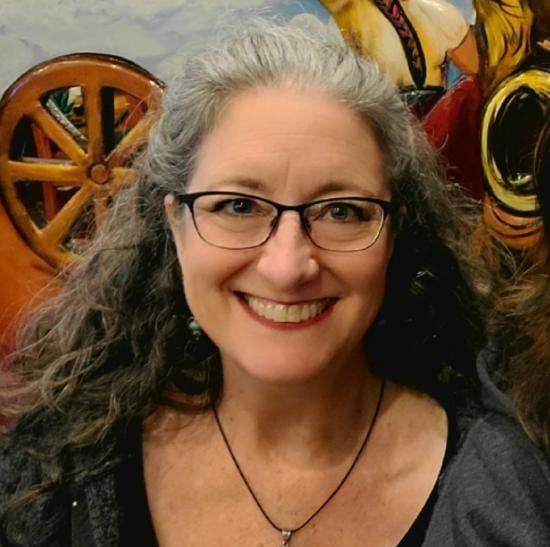
Lauri Ann Lumby, educator, author, mentor.