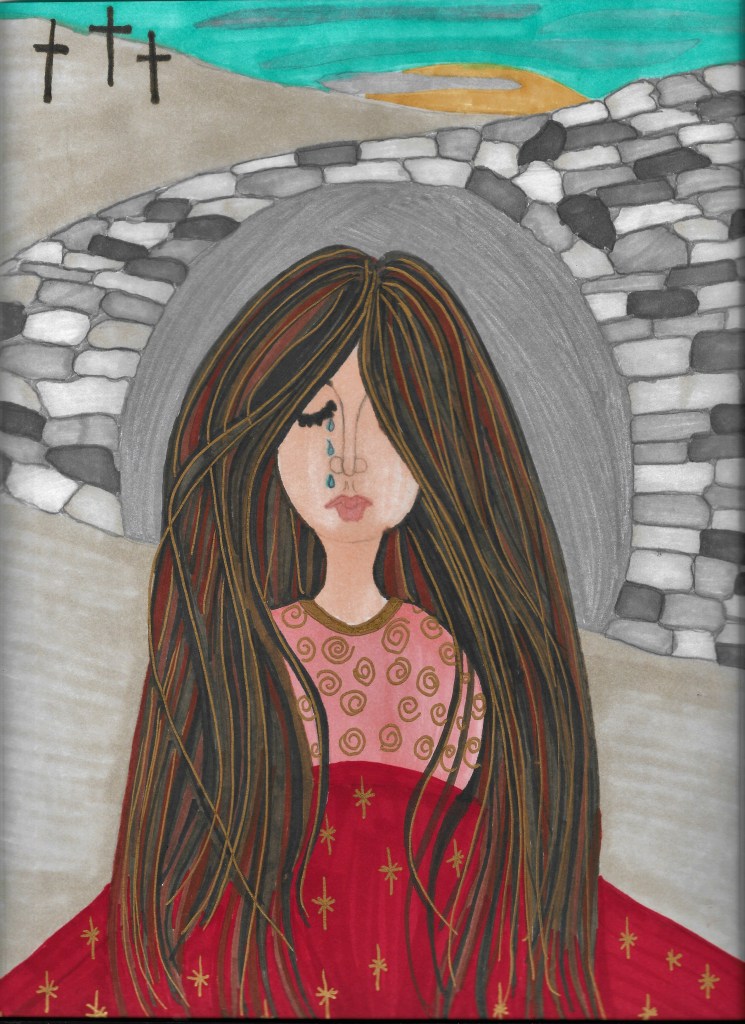
What Privilege Taught Me to Believe

and how those beliefs were undone

I didn’t grow up wealthy, but I did grow up privileged. I was born white to middle class parents, raised in a predominantly white third-generation neighborhood of white-collar professionals and tradesmen. In most of the homes around us, the men worked, and the mothers stayed home. The children were feral and unsupervised, only because everyone believed we were safe. We had a roof over our head, three square homecooked meals a day, new clothing (unless you were a younger sibling), and a basement full of toys. We enjoyed piano and dance lessons. Our parents sent us to private school.

Life was good and in that state of perceived safety and abundance, we believed in the promise of “The American Dream” – a good education and hard work was the path to success and the harder you worked, the more successful you would become. We were also taught that welfare was for lazy people and we should judge them and treat them accordingly. There was a clear dividing line between us (hard workers) and them.  And a not-so-subtle dividing line between us (white people) and them (people of color).

All of this happened along side a devout Catholic upbringing. God was the old man in the sky. We were undeserving of God’s love. God’s love had to be earned and could be taken away. And abortion was a mortal sin. We were even invited to join the school’s “Pro-Life” club from whom we would get a bright shiny silver bracelet marking us as “soldiers of Christ” in the war against abortion (this was all on the heels of Roe vs. Wade). As a young adult, I volunteered at a pro-life “clinic” for women facing unexpected pregnancies.

In addition to all of this: we were raised Republican. We were told Republicans were good and were looking out for the good of the people and that Democrats were communists – and that was bad! I remember knock down drag ‘em out fights between certain family members who (gasp) belonged on different ends of the political spectrum. The Democrats were good people, but clearly delusional – at least that’s what we were led to believe.

In college (YES!  I attended university, which was mostly paid for by my parents – another privilege), I joined a sorority (more privilege), continued attending mass and attended adult faith formation classes. I voted for Ronald Reagan, and later, for George H. W. Bush.

Other than being a brunette, I was the stereotypical white girl of privilege.

But then, life happened.

My previous stance on abortion was the first thing to go. In the volunteer position, I witnessed first-hand the violent tactics often used by the Pro-life movement in dissuading women from seeking an abortion. There was no compassion shown, only judgment, accompanied by violent and graphic images of late-term abortions. There was a reason I wasn’t allowed into the “counseling” room at the clinic. Additionally, with over 40% of pregnancies being unplanned, I was bound to eventually meet a young woman, likely a friend, who would have to face a sometimes-difficult choice. As statistics would have it – I did – come to know of several friends who at one time had to face an unplanned pregnancy. Further, I knew of several who had no choice but to seek the termination of the pregnancy for medical issues related to either the baby, or their own survival. Abortion, it turned out, wasn’t so black and white.  How could I judge a woman (or a couple) who was having to face the most difficult decision of their life – one that would stay with them their whole life. The decision to terminate a pregnancy (no matter what the circumstances) is a wound that does not heal.  It changes, but the pain will always be there on some level. Compassion told me to put myself in the others’ shoes and support them through a very difficult decision. And to understand that at any point, I could find myself in a similar position forced to make a similar difficult choice.

The second thing that went was my belief in the American Dream. The first of this leaving happened in my own professional journey. Sheepskin in hand, I went out looking for work. And this is a FACT – not once in my 40 years of being in the post-college workforce have I made more than $26,000 per year.  NEVER.  Not once.  This was not for lack of effort, work, skills, or abilities. Now at a ripe almost 60, it is not for lack of education, experience, or expertise. The universe has imposed some sort of invisible ceiling between myself and money – never even surpassing (which was also the big privileged promise) the salary of my father.

Hard work and a college education, as it turns out, is NOT a guaranteed path to wealth.

No matter how much someone else wants to tell you otherwise.

Then I experienced poverty. Thankfully not poverty of the sort that far too many suffer, but I have faced an enduring period of financial struggle – the likes of which has had me utilizing some of those so-called “communist” programs. I have received rental assistance and energy assistance. I qualified for Food Stamps and could have been using the Food Pantry (I chose to use neither, but at a grave consequence to me financially – eventually leading to bankruptcy). I have enjoyed the profound benefits of the Affordable Healthcare Act – in fact, my life depends on it. Finally, I am on an income-based repayment plan for my graduate school student loans (if anyone wants to argue with me about student loan forgiveness, DON’T!!!!!  I will direct you straight to Matt Taibbi and his expose’ on the criminal nature of the student loan industry!!!!!) 

Beyond my own personal experience, I have witnessed hundreds, if not thousands struggling with similar or much worse circumstances. I have seen, through clear eyes, that the so-called “American Dream” is a lie and that there are, indeed, systemic obstacles to Americans realizing that dream. This fact of reality breaks my heart and inspires me to share my own journey beyond the lies that come with privilege.

As it relates to Catholicism.  This may be the biggest irony of them all. I have always been a woman of faith (whatever that means). I was a devout Catholic until the local Church made it clear I was no longer welcome. Jesus is my teacher and Mary Magdalene has become a guide. I sometimes pray the rosary and turn to Michael the Archangel in times of anxiety. I cherish my Catholic upbringing – for good and bad – but mostly, for what I learned about social justice:

Jesus calls us to love.  Period. And he was quite clear about what love looked like:

  • Judge not lest ye be judged.
  • Love your neighbor as yourself.
  • Everyone is your neighbor.
  • Welcome immigrants and foreigners.
  • Feed the hungry.
  • Set prisoners and captives free.
  • Clothe the naked.
  • Heal the sick.
  • Give sight to the blind.
  • Welcome “the other” to your table.
  • If someone asks for your cloak, give them your shirt as well.
  • Love one another.  Period.

As it turns out, it is my faith that has called me to depart from the politics in which I was once immersed and toward a political stance that supports the needs of the all. As my own life has shown me, even privilege does not guarantee that life will provide us with what we need. It has also shown me that by our own efforts, our own needs may not necessarily be met. There’s a little story in scripture that seems to provide a solution to this quandary:

All who believed were together and had all things in common; they would sell their possessions and goods and distribute the proceeds to all, as any had need. (Acts 2: 44-45)

If a sharing among the common good was good enough for Jesus and his earliest disciples, then it’s good enough for me. This is what love has taught me.

Impeccability

In a world filled with false prophets, impostors, self-appointed gurus, charlatans, snake-oil salespeople, and millionaire pastors, it is imperative that we become ever-more vigilant with our own impeccability. Millions of people are starving for guidance and direction, answers to life’s unanswerable questions, and comfort from the terrors of this world. There are equally many who are happy to provide people with what they want. Many of these are of integrity, educated and trained in what they provide, responsible and careful in that provision, and accountable to the established ethics of their field. Some are not.

Impeccability is about more than just our word. It is about what we say, how we say it, what we mean by it, the authority behind it, our education and training, to whom we are accountable, and on what we base our word. Let me provide an example from the world of the Magdalene.

Since the early 90’s, literally hundreds of so-called authorities on The Magdalene have made themselves known. Some are academic scholars providing the findings of research that has been examined under the rigors of peer-review. Some are historians who have embarked on a treasure hunt seeking out clues to the Magdalene legends as they were handed down through folklore, art, cultural traditions, and monuments created in her name. Some are the holders of oral traditions that have been handed down for thousands of years. Some receive their knowledge through dreams, visions, intuitive guidance, and their creative imaginations. Others are just making shit up.

The Magdalene field has become as vast as it is deep. There is something in this field for everyone. Something for those simply seeking entertainment. Something for the scholars and academics. Something for the new age community. Something for the witches and goddess worshippers. Something for those looking for an outside perceived authority to tell them what is true and what to believe. Something for those who simply want someone to blow smoke up their ass, telling them what they want to hear. There is now a Magdalene for everyone. This does NOT mean that every Magdalene is authentic or true. As I posted on Facebook the other day:

Someone, apparently didn’t like what I posted, thinking I was throwing shade. Well….maybe I was throwing a little shade….but here’s my come-from as it relates to the Magdalene and by association, impeccability:

In my Magdalene work, for example, I do my best to be clear. “This is based on scholarship….this is a work of fiction…this came through my intuition/creative imagination…I completely made this up but I would love for it to be true.” I’m also careful to identify my resources, remaining as close to authentic scholarship where possible and explaining where these resources reside in the spectrum of verifiable fact, theory, or simply oral tradition or legend. I’m admittedly a stickler for scholarship that is soundly rooted in the scientific method.

When we are clear about our come-from, then people know how to take the resources, guidance, and support we provide for them and apply them (or not) in their lives. This is true whether it be about the Magdalene, spiritual direction, counseling, healing, or just giving advice as it relates to our mutual fields of expertise. I believe this is especially important, critical even, when we present ourselves as teachers, guides, or healers for others.

We must be impeccable about what we are offering and how it is to be used and received. If we aren’t doing this, people could actually be harmed. As I said before, there are millions of vulnerable people looking for comfort and guidance and our job is not to enable them or take advantage of their vulnerability.  Our job is to empower them.  We can’t do this if we aren’t impeccable with our words, our motivations, our source of knowledge, and our actions.

Living Monastic

As an unmarried adult woman of a certain age, living monastic looks a lot differently than how one might imagine. I’m not living in a convent. I haven’t taken vows of chastity, celibacy, or poverty. I don’t wear a habit. I sometimes wear sensible shoes, but only as a matter of comfort, not because it’s dictated by my order. Instead, I’m free to date (if I ever find anyone worthy). I dress as I choose. I earn less than the median income for where I live, but that’s a matter of choice not imposition. I live in a comfortable apartment by myself that I have turned into my personal sanctuary.

Monastic living for me is less about the externals (how things appear from the outside) and more about the ways in which I choose to spend my time and how I choose to be in the world.

Time, for me, is a precious commodity, and one I use wisely. I don’t waste my time on meaningless interactions or the expectations of our culture. Instead, my time is spent in the way in which I want to spend it which starts and ends with silence. As an introvert, I thrive in silence. Silence is my practice. It’s how I tune into myself and Source. Silence is my prayer, my meditation, and my life-blood. Silence is the place I begin each day and to what I return when I find myself disturbed by the world or by my own unhealed wounds. It is in silence that I find comfort, guidance, and healing and often how I share my own gifts like the times I feel called to send healing and love to our broken world. My entire day revolves around this silence and I guard it with my life.

Everything else revolves around that silence including all the doing that must be done in order to exist in this world – managing a household, taking care of chores, grocery shopping, cooking, working to earn a living, (this is the chop wood and carry water part of monastic living), and all the things I do for my own growth and enjoyment – reading, watching TV, writing, spending one on one time with friends, hanging out with my children, doing yoga, and being out in nature.

Also surrounding this silence are all the ways in which I show up in service to humanity – as a spiritual counselor and mentor to others, facilitating classes or groups, officiating at a funeral, and executing my office manager duties at a local ballet studio.  These are just the things that look official – you know, a vehicle for sharing my gifts and for making a living (chop wood carry water).

Beyond these obvious ways of doing is an even deeper showing up for me. This showing up is not about what I DO, but about how I BE. This being includes – being generous, being kind, being thoughtful, being welcoming, being friendly, being gentle, and sometimes being fierce. If I were to give a word to all this being, it would be LOVE – the kind of Love that isn’t all rainbows and unicorns but is sometimes like a shield or a sword – cutting through the bullshit, setting and maintaining boundaries, saying no, and being really really real with the challenges, difficulties, and evils in our world. Sometimes love is delivered in hard truths that some just don’t want to hear, at other times it’s delivered gently, but it is forever and always about love.

Living monastically in the modern world is a personal and counter-cultural choice that I know is not for everyone, but it is 100% for me. Arriving here has been almost sixty years in the making and I’m grateful for all of the experiences that have led me here.

The Evolution of God

Straight Talk About God Part II

Since the beginning of time, human beings have been creating God in their own image, not the other way around. In the earliest times, when humans lived close to the earth and whose survival depended on the whims of nature, it made sense that the first gods represented the movements of nature: storm gods, fire gods, water gods, all whose approval needed to be earned in order that humankind might survive. From this the evolution from nature gods to anthropomorphic deities resembling human beings in form and behavior was a natural progression.

Initially, these anthropomorphic beings were both male and female in form. At times they were primarily female as primitive human recognized that it was from woman that all humans come into being. Eventually, through events that can only be theorized, the feminine gods were supplanted by the male-only, all-powerful, warlike patriarchal god. This god, much like the nature gods, was one whose approval needed to be earned so that human beings might survive. For each human tribe, this man-god was given different names, but the qualities remained the same. Like human beings themselves, this god was jealous, vengeful, punitive, fickle, played favorites, and sometimes loved his creations. Mostly, however, this god needed to be worshiped, honored, and required sacrifice. Through “his” priests, this god delivered laws that required obedience. Straying from these laws elicited punishment, banishment from the tribe, and sometimes death.

These human-made gods have not evolved much in the last ten thousand years – at least not in the way these gods are articulated in the context of institutional religion. “The Old Man in the Sky” god still holds sway. AND YET – while this is the god created by man, this is NOT the god experienced by the mystics, and certainly not the God that Jesus came to know and tried to describe to his companions. The god of the institution is one born out of the mind. The God experienced by mystics is one born of the heart. This is the God that Jesus said “dwelled within us” and the one we can come to know by “going into our inner room.” And yet, this God was not of Jesus’ experience alone. Mystics, contemplative, and holy people since the beginning of time have described the experience of knowing versus knowing the Divine, the emphasis placed on the former.

Through the mystics, humanity has been introduced to a God beyond the anthropomorphic god of humankind’s creation. The God that the mystics experienced was one that transcended material form and human behavior. There are no real words to describe this experience of God, though attempts have been made through such words as: Presence, Being, Essence, Transcendence, Enlightenment, Nirvana, Bliss, Ecstasy, Spirit, The Void, The No-Thing.  The author of the epistles accredited to John, called this God Love.

In the Catholic church in which I was raised, the old man in the sky God was (and continues to be) the favored image of God, specifically, God the Father.  God the Father is the source of all creation, the architect of the universe, omnipotent, omniscient, loving like a father, but also one whose judgment we were taught to fear. For the majority of Catholics this father-god (specifically male) is their sole image of God, and one they will defend in spite of the fullness of Church teaching.

But the Church itself teaches that God is not exclusively male. In fact, the official teaching of the Catholic church is that God has no gender and in no way resembles humankind:

 “In no way is God in man’s image. He is neither man nor woman. God is pure spirit in which there is no place for the difference between sexes. (Paragraph 370 Catechism of the Catholic Church).”

I’m just going to leave that here for those raised Catholic to read again, and again, and again, as they/we attempt to reconcile this official teaching from what we were taught by our pastors, nuns, teachers, and parents.

A Magdalene Easter Reflection

Early on the first day of the week, while it was still dark, Mary Magdalene went to the tomb and saw that the stone had been removed from the entrance.

Now Mary stood outside the tomb crying. As she wept, she bent over to look into the tomb and saw two angels in white, seated where Jesus’ body had been, one at the head and the other at the foot.

They asked her, “Woman, why are you crying?”

“They have taken my Lord away,” she said, “and I don’t know where they have put him.” At this, she turned around and saw Jesus standing there, but she did not realize that it was Jesus.

He asked her, “Woman, why are you crying? Who is it you are looking for?”

Thinking he was the gardener, she said, “Sir, if you have carried him away, tell me where you have put him, and I will get him.”

Jesus said to her, “Mary.”

She turned toward him and cried out in Aramaic, “Rabboni!” (which means “Teacher”).

Jesus said, “Do not hold on to me, for I have not yet ascended to the Father. Go instead to my brothers and tell them, ‘I am ascending to my Father and your Father, to my God and your God.’”

Mary Magdalene went to the disciples with the news: “I have seen the Lord!” And she told them that he had said these things to her.

John 20: 1, 11-18

(below is an excerpt from my online course Resurrecting the Magdalene)

Beyond our own personal reflections on the gospels, there are a few things we may be able to surmise from the texts, especially for our current purpose of understanding what might really have taken place during the events surrounding Jesus’ resurrection.

  • In each and every gospel account, Mary Magdalene is named as one who is witness to the resurrection.  The same cannot be said of any other “named” witness.
  • Scripture scholars further highlight this point in noting that Mary is named.  Scholarly consensus holds that for a woman to have been named, she must have had a central and critical role in the story of Jesus (remember, women had no personal value within the culture of first-century Palestine).  Mary is named in every gospel account of the resurrection, including that portrayed in the Gospel of Mary Magdalene (one of those that didn’t make the cut).   
  • Beyond being named in scripture as witness to the resurrection, Tradition has always honored Mary Magdalene as first witness to the resurrection, so much so that in the very early Church, Mary was identified as “Apostle to the Apostles,” for this is what she was.

“But what about Peter?” we might ask.  He is named in both the gospel of Luke and the gospel of John.  There is an easy explanation for Peter being named in Luke’s gospel.  Scripture scholars tell us it is unlikely that the author of Luke was a direct follower of Jesus.  Instead, Luke was most likely a follower of St. Paul, who actually never met Jesus personally.  Paul (as Saul of Tarsus) was initially a persecutor of the followers of Jesus, himself ordering the stoning of St. Stephen, the first martyr.  Paul later had some sort of mystical experience through which he encountered the risen Christ and then became a champion for the Jesus cause.  Paul likely gained his knowledge of the Jesus story from Peter and the other male disciples who presided over the first Christian community in Jerusalem, long after Mary Magdalene left the scene (more on that in the next lesson).  By this time, it is likely that the Petrine (Peter) agenda had already been cemented within the Jerusalem community.  Because Mary played such an integral part in the resurrection experience, she could not be omitted altogether, but her role was easily downplayed by having Peter, himself, witness to the empty tomb.   

Then there is the gospel of John.  John’s gospel is markedly different from any of the other gospels and seems to be of a genre unto itself – a gospel that is a theological reflection on the first 100 years of the Jesus movement and on some of the traditions, rituals, and practices that had already become part of the emerging Christian tradition.  While one of the later gospels written, John’s gospel also possesses parts of the Mary Magdalene tradition that are not present (or are downplayed) in the other gospels including the Wedding at Cana, the story of the Samaritan Woman at the Well and the Anointing at Bethany.  In regards to the story of the resurrection, John’s gospel presents a study in contrasts.  First, Mary goes to the tomb.  She then runs to tell Peter, who comes to the tomb to see that it is empty.  After Peter (and the unnamed disciple) departs Mary sticks around and has a direct and personal encounter with Jesus, who then tells her to go tell the other disciples. 

The conflicting information in this gospel has confounded me for years, until I brought this reading into deep prayer and meditation.  Through this approach, the answer became glaringly obvious.  The gospel of John contains two separate stories of the resurrection account – one in which Mary is the witness, another where Peter is given privilege.  It is my personal belief that the passage regarding Peter was inserted into the Mary story to suit the later Christian Church (second – third century) who sought to put forth a decidedly patriarchal and hierarchical agenda and who had already designated Peter (in tradition if not in fact) leader of the early Church and the first Pope (Historically, Peter never acted in any role similar to that of Pope.  There is also doubt as to whether or not he actually made it as far as Rome).  Within this agenda, there can be no room for a woman who was obviously commissioned to a leadership role by none other than Jesus, himself.  But, don’t take my word for it.  Go back and re-read the resurrection account from John and then decide for yourself.