Living Against the Grain

Monastic Living in the Modern World is ultimately about living against the grain. In every way, shape, and form, choosing to live monastically requires us to step away, disconnect, and decondition ourselves from all that society has set out as its values and goals.

Living monastically has nothing to do with capitalistic definitions of success including the search for fame, wealth, and power. Living monastically is not about driving, striving, or achieving. Monastic living is not about working hard, and it has nothing to do with society’s constant pressure to do. Living monastically is not about being seen, heard, or known. Choosing to live monastically is not the path if we wish to be considered valuable or appreciated by those outside of us.

The monastic calling is one that honors a certain type of soul with a unique kind of temperament. Those called to this way of life often have a deep connection with Mystery – otherwise known as: God/Transcendence/Spirit/Presence/The Source of All that Is. They are often people of learning – driven to explore the knowledge of others so as to find their own truth. Those called to a monastic kind of life are sometimes extroverts but are more likely to be inclined toward introversion. They are deep thinkers and even deeper feelers. They are often creatives with a penchant toward self-expression through writing, drawing, painting, sculpting, etc. They see wonder in all things, especially nature and art. They may be single or coupled while treasuring their solitude. They seek after quiet and long to move gently upon this human plane. They thrive equally in the company of beauty and simplicity.

There is a reason why those called to monastic living have historically separated themselves from society. Whether a hermit in the desert, a witch in the woods, or a nun in a monastery, monastics have never fit in with the status quo. They have never fit in with the surrounding or presiding culture. They have always been called to live their lives against the grain. Moreover, their sensitive nature made it near impossible for them to live among the chaos of the everyday world. As such, they sought or created their abodes elsewhere. Even if the monastery was in the midst of a bustling city, their homes were sequestered with ample time and space for prayer, quietude, silence, and a gentle way of living. Unless cloistered, direct service to others arose out of the service they were doing first to “God,” and secondly to themselves.

In our modern and increasingly pluralistic world where many monastics are no longer called to live out their calling within the confines of a religious institution, the expression of that calling requires ingenuity. How do we carve out a place for our calling in a world that expects us to be everything but what our soul wants? The answer is both simple and complicated. We first have to acknowledge the calling. Then, we must free ourselves from every single shred of societal, cultural, and familial conditioning that would hinder us from living out that calling. We have to learn to say yes to our soul’s longings and NO to what culture expects of us – including our culture’s expectations around work and provision. Yes, we still have to “chop wood and carry water,” but maybe a 40-hour, 9-5 work week doesn’t work for us. Perhaps we don’t have to make a six-figure salary. Maybe we can find creative ways to provide for ourselves while creating ample space in which our soul might thrive. Who knows, we just might find peace living below the mean. Finally, we have to exorcise ourselves from our attachment to other people’s approval and get comfortable with the questioning looks, raised eyebrows, and blank stares from those who just cannot comprehend our decision to live against the grain. Believe me, your soul will thank you!

Illness and the Monastic Call

In Shamanic traditions, a sudden, dramatic, or enduring illness is often recognized as a sign of an individual having a shamanic calling.

“In indigenous cultures a shaman was a person who had some kind of deep initiation experience, whether it was a life-threatening illness, a near-death experience, a psychotic break . . . (R. Inge-Heinze)”

The same seems to be true of those in our modern world called to monastic living. This, at least, has been true for me and for many of those I know who find themselves living a monastic kind of life.

Notice I didn’t say we chose a monastic life. Instead, it seems to be forced upon us – often kicking and screaming. Upon reflection, this isn’t surprising considering that our culture wants and expects us to be anything BUT monastic.

Western culture is completely lacking in examples, models, or paradigms of non-vowed individuals living monasticism as a lifestyle. There are no educational or formative paths for individuals choosing monastic living except for those entering into religious life. Instead, our culture presents us only with examples of how to be a productive, contributing member of society – typically “work” that makes other people money. Nowhere does our culture invite us to explore the possibility of an inward, solitary, meditative life defined by being. Instead, our life choices are all directed outwardly, defined by what we do, how much and how hard we do it, our value defined by this doing.

In a world where we are valued and defined by our doing, and our personal goals are built around this doing, it is no surprise that a true monastic calling has to force its way past all of this in order to get our attention. We have to be awakened out of the fog of everything we’ve been told and all the expectations we have set for ourselves in order to hear this calling. Most often, it seems, we have to be brought to our knees or to the very edge of death before we hear the true calling of our soul – one that has absolutely nothing to do with doing, and everything to do with being.

As it relates to illness specifically, my calling to monastic living began in my childhood where I was plagued by illness, but no one would have recognized it as such. It wasn’t until midlife when this calling caught up with me, specifically through first an anxiety disorder, and then through a debilitating virus that caused permanent damage to my vestibular (inner ear) nerve leaving me with intermittent symptoms that impede my mobility – especially as it relates to driving, and that makes me sensitive to crowds, noise, and movement, and which on some days can cause me acute physical pain. In close proximity to this virus, I also became acutely aware of my empathic abilities (I’d always had them, I just now became aware of them). These abilities make it difficult, if not painful, for me to be “out in the world.” With all of this, I’ve been forced out of the constant activity that was familiar to me. Instead, I have turned inward and been made to embrace a quieter, more gentle, reflective existence.

My experience with illness related to making a choice for monastic living is not unique to me. Every single person I know who has found their way into this kind of existence has suffered a similar kind of fate. Whether it be a debilitating accident, a physical medical condition, chronic illness or what might be diagnosed as a mental health issue, there always seems to be something that forces us out of the “regular” world and into a world of our own.

Arriving at this new way of being is one thing – accepting it as a new way of life is something else entirely. In order to do so, we have to 1) decide we’re not crazy or that there’s something wrong with us. 2) grieve the loss of the former life with which we had become familiar. 3) detach from other people’s judgement of us and our new life. 4) unravel from all the conditioning that tells us we can’t spend our lives just being. 5) let go of our own compulsive need to be filling up all our time with doing when all we really need to do is be. And 6) find pleasure and grace with simplicity and peace.

A Day in the Life

Yesterday, while working with a client, the topic of monastic living came up. One question that emerged in the conversation was “What does living monastically look like?”  It’s a practical question – and the answer is “it depends.” I can only speak for myself, but in conversations with other friends who have embraced a similar calling/lifestyle, I imagine the answers are somewhat similar. But first, we have to define the question.

The question “what does monastic living look like,” is really a question that means “what do you do all day?”  As we live in an action-oriented world where our perceived value is defined by what we do, this is the most frequent inquiry about monastic living. Again, the answer is “it depends.” On some days there is a lot of doing. On other days, there is little to no doing. Let me give you an example from this very week.

Monday of this week was a day defined by doing. My day looked somewhat like this:

6am wake up.

6-7 am meditation practice

7-8 am check emails, finish some work tasks.

8- 8:20am get ready for yoga class

8:20 leave for yoga.

8:45 – 9:45 yoga class

10 am – shower, etc.

11am lunch

1130 am – 7pm work. Strapped to my computer doing office manager tasks for the ballet studio I work for with a dinner break squeezed in.

7-9 pm – enjoyment.  Reading. Sitting in quiet. Watching TV.

9pm. Bed

Monday was a day of a lot of doing. Tuesday, in contrast, what an entire day of NOTHING. I did my normal morning routine (minus the yoga). I put in a couple hours of admin work. I had brunch with my son. I took a nap. I read a little.  I sat in silence. I may have watched a bit of TV.  But, essentially nothing. After all the energy output on Monday, I didn’t have anything to put into Tuesday, so I didn’t.

Then Wednesday came and it was a busy day with clients, admin work, and then more nothing.

In my experience, monastic living is less about what we do and how we be. For me, the center of it all is my daily practice, and the rest unfolds from there. On some days I have things planned/scheduled, but beyond that, I take each day as it shows up with the energy that I have available to me in that moment. As a recovering compulsive planner and over-doer, my life is now more about allowing what needs to present itself to present, and then stepping into what is asked of me. When nothing is presenting, I remain with the no-thing, not pushing or forcing some sort of doing (aka productivity) out of the no-thing. Much of monastic living is about learning to live in this now moment and allowing ease. The rest seems to take care of itself.

The Practical Reality of Monastic Living

Living monastically in the modern world begins with an understanding of the practical realities of making this choice. Of course, others may have a different experience of this, but this is how it’s worked out for me (often times kicking and screaming).

Living Really Really Simply

Let’s start with the dollars and cents of it – and here I’m going to be really really transparent.  

In 2023, I made $26,000. $13,560 of that went to rent.  Out of that balance I have to pay my regular living expenses (heat, electric, phone, internet, water, groceries, car insurance, gas, renter’s insurance, health insurance,) along with the expenses related to running a business. That leaves me with very little extra. I have just enough for entertainment via a few streaming channels that I share with my children, a few simple meals out, purchasing a few books on Amazon, and that’s about it. I’m not complaining.  This is a choice I have made and my personal needs are quite low. That being said, many of the things that many Americans take for granted – vacations, new furniture, designer clothes, etc. are not available to me. Nearly everything I own is either thrifted or found deeply discounted. These are the choices I’ve made because I choose peace over the stress other choices would cause me. Not that I’ve really had a choice.

A Choice We Don’t Really Choose

Monastic living is not a choice we make. It is chosen for us – often kicking and screaming. No matter how hard we try to fit into a traditional (Institutional) model, we cannot. These models elude us – making it impossible for us to get a “real job” or live a “normal life.” Every attempt we make at creating a life that fits any sort of traditional western paradigm fails. Every time we try to pursue traditional western definitions of success (money, power, fame) we end up bloody from beating our head against the wall. Remember that story of Jesus being tempted in the desert by Satan and the temptations he is offered?  SAME!  We may be tempted with these but no matter how hard we try, we cannot have them. It’s almost like monasticism is forced upon us.  Yeah, we could go against “God,” but that never goes well does it? Instead we learn to SURRENDER to what is and let our Soul carry us.

Submission and Obedience

Talk about defying western logic!  Monastic living requires that we set aside our personal wants, desires, hopes, dreams, and ego-attachments. To fulfill this calling, we have to surrender our entire selves to some sort of creative intelligence that is not our own (that which some might call “God.”). We have to submit to the guidance of this inner force – even when we believe we aren’t receiving a single shred of guidance. And we have to obey it. What about “free will” you might ask?  I’m not sure as it relates to a monastic calling we have free will. Yes, we could defy the nature and movement of our Soul, but I’ve learned it’s not worth it. It’s so much easier to submit to this calling than to fight the “will of God” – or as one friend calls it, “Universal Intent.”

At the end of the day, living monastically in the modern world is not a choice anyone in their right mind would make – that is why to those who are free to live a regular life, we and our choices appear insane. But for us, the only way we can remain sane is to live the life of a monastic no matter how countercultural that might be.

Exactly Where I Wanted to Be

This morning I find myself feeling a little bit like the fairytale heroine who went out looking for her soul’s longing only to wake up one day to realize she already had it and has had it for quite some time.

This is exactly where I find myself with the realization that has been a long-time coming in the midst of me already living it. Who knew?

My soul knew!  The longing has been there for as long as I can remember – even without my young self being able to give it words. Based on the models in which I was raised, the words I can now give to what my soul has longed for (and as it turns out has already been living) is: MONASTIC LIVING – in the modern world.

As it turns out, my home is my “monastery.” My practice is my “church.” My showing up in the world is my way of being of service to humanity. 

These things I have always known, but not in a way that allowed me to fully embrace it. Instead, I’ve been wiggling and writhing through the conditioned ego-attachments of our culture which dictate our understandings of success as defined by material wealth, notoriety, and power.

Additionally, I’ve had to wage an inner battle with pop culture spirituality that tells us the only work that matters is that which bears a certain appearance and comes in a particular package. Nowhere in this model are we told that EVERYTHING we do has the potential to be a kind of service to humanity – everything from my office manager work at the ballet studio to my frequent visits to my favorite coffee shop, to showing up to yoga class, posting on social media, or grocery shopping. True service is not about what we do, but how we are showing up as Love (compassion, joy, peace, gentleness, insight, counsel, companionship, care, etc.) in the world.

Monastic living in the modern world is exactly what I’ve been doing and increasingly so since being given an opportunity to fully immerse myself during the Covid-19 shutdown in 2020. The Covid-19 shutdown fulfilled my longing and I was one of those screaming “NOOOOOOOO” when the shutdown was brought to an end and I had to return to the “real world.” As it turns out, the real world is just as monastic as being locked in my home for three months – I just needed to find my way through the tangled forest of ego attachments and cultural conditioning to realize it.

As it turns out I’ve not only been creating, but actually living my monastic life all along!  I’m already exactly where I’ve long said I wanted to be.

Free Range Plain Clothes Nun

Guest blog by Elspeth R.

On my university halls door, I added to the general random scribbles with a startling statement: that here resided the free range plain clothes nun!

It was a surprising description for an evangelical nonconformist whose ilk was very much about going into the world and gathering with others to meet with God – perhaps quite noisily. Our only silence was between petitioners at prayer meetings; our nearest to quiet reflection was the personal prayer and Bible study we were exhorted to have each day. We disapproved of those who had taken the unbiblical step of withdrawing from the world and found their strange garb – which I now encountered personally for the first time – an anathema. I knew of free range from chicken descriptions, and I’d heard of plain clothes police patrolling shopping centres. But why nun? And why at 19 had I identified something hitherto unknown to me which I have remembered 30 years later?

Because the description was apt and prescient. As I suspect it is for others in Lauri’s circle – hence I’ve been invited to share this.

I’d quickly discovered that the life of an arts student was cloistered. We spent much of our day in solo self guided study with few points of our week in organised teaching. We lived in quadrangles of little rooms with communal areas, like monks and nuns. But I was surrounded by booming basslines and drunken squeals that went on past tierce, and those who did not keep to the early rising and regular habits of my moniker.

For the first time, I had a room of my own and the opportunity to plan much of my day. I took meals when and if they suited me – I was not summoned to a dining table or expected to do chores at a particular time. I was not forced into a pattern, even when I had a timetable. I was not watched over or necessarily missed, except by friends, and more distantly now, family.

I can see that I did fall into a pattern – partly about not having one – but the way I lived then has recurred. Unlike an unemployed friend, I didn’t trace the patterns of my carpet in boredom – I like filling my own day without outside demands. I did not like the jobs where I was told where to be, and even when to pee and have tea. I didn’t like the stipulations that my essay must be in Now (although I’m proud of keeping deadlines) and that book must be read by…thus taking the pleasure out of my reading. Worse still was when I couldn’t read a book which I wanted to because it wasn’t on the syllabus and my academic workload was such that I didn’t have time to deviate.

As I started to forge my adult self, away from home and the school church life I had hitherto known, I felt a sensation which has oft been part of my life: loneliness. My friends were less organised so whereas I made time for relaxation, especially keeping Sundays as a day of rest, they were scrabbling over seminar preparation, or rushing to see their long distance boyfriends. Thus they couldn’t come out for a drink, they claimed, or barely even study with me. I lived feet away from others, hundreds and thousands of people all working towards a common goal – our degree; and yet I often felt disconnected… a nun without a nunnery.

For my church also changed each year, and I scrunched to fit into the Christian Union on campus too.

There are many times of my life where I could describe it thus, and I’m feeling sad as I didn’t realise this as I sat down to write. Perhaps it’s no wonder that I saw affinity in Karen Armstrong’s Spiral Staircase, even during a time of non-nun life. She came to embrace her space, not as a nun – she tells us how she left that life in her first autobiography – but in her writing researching years after. She was also single for many of those years; and although she’s now well known (unlike me yet, and perhaps, you too?) it seems that having her output and gifts acknowledged by the world hasn’t really narrowed all that space.

It was a future I feared and couldn’t imagine myself reconciling to. The law of attraction proponents would say that I attracted to myself more of that which I didn’t want; the ‘realists’ would tell me to make peace with a Karen Armstrong life, or go and get a day job.

I reject both tenets and believe that there are other options, but I do feel more at peace with my life of studying, writing, creating, thinking. I feel that peace because through Lauri, I have met others who do this too.

As one who hates institutions (chain churches especially) and rules, and being deprived of important things (such as the cinema), who needs travel and variety, I cannot see how I will ever be an actual nun. I also know that loneliness and abuse and pettiness occur in those walls. But I was intrigued by a medieval Low Counties phenomenon which came to my city of Norwich. In a much photographed street (you may have seen Clare Danes run to the Slaughtered Prince in Stardust) is a three storey thatched building of c1500. Known today as the Briton’s Arms, its dragon beams allegedly once contained a community of this unusual type of nuns from Flanders. In French they’re beguines, in Dutch, begijns. Their homes are found in Leuven, Brussels and Amsterdam, but perhaps nowhere else in Britain. These were the free range plain clothes nuns of my undergraduate days: they didn’t take permanent vows and remained free to leave or marry. They didn’t wear a uniform.

Beguines seemed a wonderful way to remain an independent woman at a time where your choices were limited and your automony curtailed. I’d like to think that these were communities of companionship and deepening spirituality as well as service.

I was intrigued enough by these begijns/beguines to put one centrally in my first novel, Parallel Spirals, and gave her an imagined friendship with the other chief choice for a single woman: a courtesan. I decided that they may not be as diametrically opposed as they may seem: “‘Are all courtesans as soulless as nuns are passionless?'”

I found in York a group of Catholic women who are as close to living plain clothes free range nuns as I’ve yet discovered. Hiding behind a Georgian secular facade just beyond a city gate, I received a baked potato and a not entirely voluntary tour. By the latter, I mean that I was whisked up the stairs by Sister Agatha Leach, who was clearly not used to visitors saying no…although I kind of did! As she was about to launch into her spiel, I felt God say, “I’m going to bless you through this woman”. And he did. But then she offered to show me their infamous relic…and I felt it was time to leave.

Nun (or indeed monk) hood is not easy, especially when you’re existing outside of the chain and in a time where the monastic life is less prevalent. A modern contemplative can not feel valued or understood. But I think we’re needed – and we don’t need to take on vow which are really about institutional power rather than holiness and commitment to God.

At this time, I’m thinking about another kind of Norwich contemplative – Julian, whose special anniversary is coming up (I’m going to do a service on her on Sun May 7th, 8pm BST – you’re all invited – email me if you’d like to come live). I’m seeing her as the antithesis of my fictional beguine, or even those lively ladies of York. Julian’s vows were permanent and shocking, and utterly unnecessary.

I think that like those beguines, we can also be free to choose a different life; we’re not debarred from partners or families, or the things that give us joy. We don’t need to change our name. But I am seeing this as a calling and a service, and one that still is open for love of all kinds and fellowship and fun; and I know that I am not alone in having that calling, and I know others who find it valuable.

I do wonder if there is a nun or monk wound to heal too – and I am going to offer a special prayer for that; but that our healing can be in our acceptance and in finding and encouraging one another.

Choosing? Poverty?

an excerpt from Whispers from the Cave. Learn more HERE.

For my entire professional career, I have lived off less than $30,000 per year – most years closer to $25,000.  Back in 1987 when I graduated from college, a single person could live off of $25,000 per year, especially when rent (in the Midwest) for a really nice one-bedroom brownstone was around $350.00 per mo. Fast forward to 2023, and $26,000 is a little (A LOT!) harder to stretch to make ends meet. By some miracle of the universe, I have managed to do it, but I really don’t recommend trying this at home!

People could come up with all kinds of reasons for why I’ve NEVER made an income commensurate with my education or experience. Some might judge me as lazy, or not trying hard enough. Others have suggested I’m “ahead of my time.” Conditioning suggests there must be something wrong with me. Some think it’s simply a matter of me living in the wrong market where people aren’t yet ready for me. The reality is that the answer lies in none of the above. For the entirety of my professional career, I have worked my ass off, done everything the so-called experts say will guarantee my success, and if I thought any more “right thoughts” about money, I’d be wealthier than Mr. Musk.

I sure as hell don’t know why with 14 years of post-secondary education, a pile of certifications, and 30 years of experience, I’m still living far below the federal poverty level, I just know I am. I also know I’m NOT ALONE IN THIS! With a very few exceptions, nearly everyone I know that is called to a more contemplative, self-aware, perhaps creative lifestyle, struggles with money. Either they aren’t getting paid what they’re worth, they’re forced to work a job they hate, or, in my case, they can’t find a well-paying job for their life!

Case in point. In the several (many) times I’ve tried to go against my Soul’s calling to seek out and secure a “real job,” my efforts have blown up in my face. Rather, my efforts simply die a slow and painful (or quick and explosive) death.  Just this morning, after a night of sleeplessness, I got up for an interview I had scheduled with a local service organization (I gotta pay my rent!).  I got up at 6, took a shower, got dressed up, put on my makeup, had breakfast and coffee, completed my morning meditation. At 9 am I checked my email for a second time and the interviewer had emailed me to say the position had been filled.  I wasn’t sure if I should be frustrated and angry (you couldn’t have emailed me on Friday?????) or elated. Truth be told, I’m a little bit of both. I have to believe this was Divine Intervention, but now I’m all dressed up and have nowhere to go!

What happened this morning is the perfect summation of what happens EVERY SINGLE TIME I try to find a job that is other than what my heart knows I’m supposed to be (and am already) doing. EVERY SINGLE TIME. It doesn’t matter how many applications I submit, interviews I have, or promises that are made to me about certain opportunities, the results are always the same. Zilch. Nadda. Nothing.

Again, I’m not alone in this!  I cannot possibly count the number of (mostly) women I know who find themselves in a very similar, or even more desperate situation. It’s definitely NOT because any of us have chosen poverty or taken some worn out vow.  Neither is it some past-life karmic agreement or vow (well, maybe it is?). The fact remains, many of us doing “this” kind of work, committing ourselves to being of service to Love and living a somewhat-mostly contemplative life find ourselves on poverty’s door. Not because we chose it, but simply because it is. I don’t understand it. I don’t get it. It’s not fun. I don’t enjoy it. But it seems that no matter how hard I try or through what means, it is the fate I/we’ve been dealt. There’s really nothing else I can say or do but accept it……while desperately clinging to the words gifted to me by a dear friend today in response to the cancelled interview:

I KNOW YOU as a member of GOD’s army.

If it ain’t aligned it ain’t happening.

YOU are carrying precious cargo.

I absolutely believe this to be true!  Now if everyone else would just figure it out!  😊


Modern Monasticism and Contemplative Living

Whispers from the Cave features limited edition, exclusive content examining the daily life and reflections of a modern monk living in a “cave” surrounded by ghosts.

 • 4+ episodes per month (written and recorded)

• Exclusive content (not available anywhere else)

• Interactive discussion (bring your burning questions)

• Educational and Informative

• Inspiring and Supportive

• Special pricing for the first 100 subscribers

Unconditioning

Below is an excerpt from a recent post in my Whispers from the Cave interactive web series. Learn more about Whispers from the Cave below.

I woke up to twelve inches of snow this morning with likely another twelve coming. None of the roads have been plowed.  Why should they bother when the snow keeps on coming?

I don’t need a reason or an excuse to stay home in the comfort of my cave, but this weather eases the conditioned and not-yet healed guilt that sometimes surfaces in the face of just staying home.

We’re conditioned to believe we have to leave the comfort of our home to be a contributing member of society.  Work.  Family.  Friends. Social activities. All stand out as pressure to comply.  We’re accused of being lazy or anti-social for simply wanting to be home.

Being called to contemplative/monastic living presents another option – a counter-cultural option. A big part of embracing this calling is all the work we must do around unconditioning. Coming to understand it’s ok to simply be.  There’s nothing we have to do (except that which springs forth from our hearts) and there’s nowhere we have to be.

We find support for this unconditioning through community – through others embracing a similar calling.  Without the benefit of community, we must find this conditioning on our own.  Part of this unconditioning comes in simply choosing what’s right for ourselves. When the voices of guilt, shame, or self-doubt com in, however, that is when we must return AGAIN to our practice.  Through our practice, we turn inward toward ourselves where we can heal and transform those conditioned voices. 

How and where have you found support in unconditioning?

What spiritual practices have you found helpful in your journey of unconditioning?


Whispers from the Cave

Whispers from the Cave features limited edition, exclusive content examining the daily life and reflections of a modern monk living in a “cave” surrounded by ghosts.

 • 4+ episodes per month (written and recorded)

• Exclusive content (not available anywhere else)

• Interactive discussion (bring your burning questions)

• Educational and Informative

• Inspiring and Supportive

• Special pricing for the first 100 subscribers

Grab your morning cup, your favorite blanket, and snuggle in as you prepare to meet:

The Monk.

The Cave.

The Ghosts.

and their stories.

Click on the image above to learn more and join!

Chronic Illness and Modern Monasticism

There is an interesting correlation between the modern monastic calling and chronic illness.  When I look at the community of women (and a few men) who have found their way to my offerings, it is uncanny how many of them are struggling with some sort of chronic, often debilitating, condition. It is also curious how many of these chronic conditions defy modern medicine – either eluding diagnosis or resisting treatment.  

Case in point. I have a long list of chronic conditions:  polycystic kidney disease, Epstein Barr, a form of PTSD, chronic vestibular neuritis, migraines, anxiety, depression, and panic disorder. This smorgasbord of intermittent symptoms has forced me to prioritize self-care and has removed me from “regular” employment. The capitalistic model of drive, strive, and achieve are no longer options for me. Neither is the 80 (or even 40) hour work week.

Privileging self-care confronts the western cultural paradigm, especially when the reason for self-care falls into the stigmatized category of chronic illness.

Our conditioned way of being (work hard and make money) no longer works for many who struggle with chronic illness (if it ever really did) and forces us to explore other ways of being..

The capitalistic model of drive, strive, achieve, and cajole, where success is measured by money, status, and power, simply does not work for those called to the contemplative life.  Furthermore, our world has become too loud, too bright, too violent, too divisive, too……everything…..for the sensitive, empathetic, and compassionate nature for those called to modern monastic living.

In this age, the monastic calling doesn’t present itself directly. Instead, it becomes apparent because all other options have failed.

There is nothing in our upbringing that prepares us for the possibility of a contemplative calling. Instead, we are forced to flail about in the darkness until we find what our souls have been seeking all along. Chronic illness is one of those conditions that helps us find our way. I have often wondered if the chronic conditions that many of us face are simply for the purpose of leading and supporting us in choosing the contemplative life and that this calling has become necessary in a world that has simply become too violent. It cannot be an accident that many of us who are called to a more monastic way of being are empaths, highly sensitive people, intuitives, and introverts. Perhaps we are here to show the world another way.

When the world has become out of harmony with itself, Love sends gentle and contemplative souls to bring the world back into alignment.

Perhaps we are those souls – sent to find a way to live in greater alignment with the truth of our Souls, while showing the world there is another way.

Excerpt from the Whispers from the Cave interactive web series. Learn more HERE.

Questions for Reflection:

  • How has the “modern” world contributed to or caused your chronic illness?
  • How has self-care become more of a priority in your life?
  • How has chronic illness supported you in finding a gentler, more easeful way of living in the world?
  • What inner resources have awakened in you through your experience with chronic illness?

Whispers from the Cave features limited edition, exclusive content examining the daily life and reflections of a modern monk living in a “cave” surrounded by ghosts.

 • 4+ episodes per month (written and recorded)

• Exclusive content (not available anywhere else)

• Interactive discussion (bring your burning questions)

• Educational and Informative

• Inspiring and Supportive

• Special pricing for the first 100 subscribers

Whispers from the Cave

Interactive Web Series

Whispers from the Cave tells the true story of an 800 year old monk (I’m actually not quite sixty, but I feel like I’m 800!) living in a 150 year old school house that just happens to be haunted!

  • Part old-time radio show.
  • Part history.
  • Part investigative journalism.
  • Part penny dreadful.
  • Part autobiography.

Whispers from the Cave features limited edition, exclusive content examining the daily life and reflections of a modern monk living in a “cave” surrounded by ghosts.

  • 4+ episodes per month (written and recorded)
  • Exclusive content (not available anywhere else)
  • Interactive discussion (bring your burning questions)
  • Educational and Informative
  • Inspiring and Supportive
  • Special pricing for the first 100 subscribers

Grab your morning cup, your favorite blanket, and snuggle in as you prepare to meet:

The Monk.

The Cave.

The Ghosts.

and their stories.

Learn more and subscribe by clicking the image above.

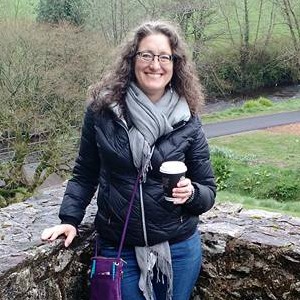
The Monk: Lauri Ann Lumby

I’m what one might call a modern monastic. No, I haven’t joined a convent, or taken up the habit and I have no interest in a vow of celibacy (though having celibacy imposed upon me these past many years, I can’t say celibacy is a bad thing….just leaving my options open!).  However, I have increasingly found myself living a monastic kind of life. 

Having stepped away from the trappings of the material world, I live a quiet, simple life. Most of my days are spent in solitude, immersed in meditation and prayer, simple chores, writing, creating, and seeing an occasional client or teaching an occasional online course. I have no interest in the things “of this world,” especially those things imposed upon us by the capitalistic “ideal.”  I spent my earlier life driving, striving, and trying to achieve, finding myself with nothing but a bloody forehead. Now I prefer a life free from sacrifice, the pressure to perform, and the desire to be seen.

Oh yeah, I forgot to mention, I’m a somewhat of a prophet. I see and know what is happening and about to happen in our world. Rather than participate in the impending collapse of the empire, I’m choosing to get out of the way while quietly building a whole new world. Perhaps you’d like to join me?


The Cave

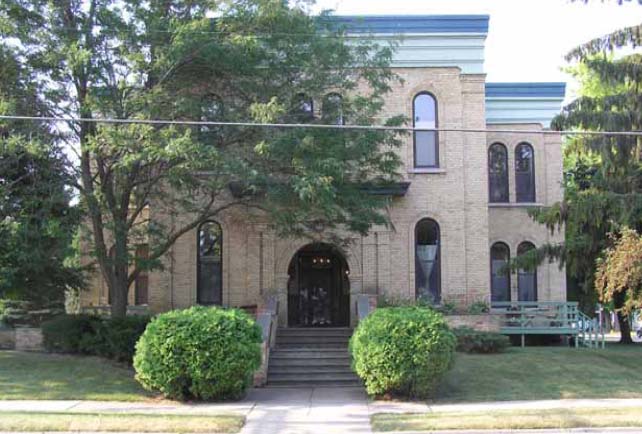
Dale School is an Italianate style brick school building designed by William Waters and constructed in three stages: 1870, 1889, and 1908. It was last used as a school in 1981 after which it was converted into character loft apartments. There are now sixteen units in the building famous for their soaring ceilings, nature hardwood floors, three-foot thick walls, and twelve-foot windows.

Dale School has been my home since 2019, where I have carved out a quiet, solitary life, increasingly so after my adult children moved out and into their own homes. My apartment has become my cave, my temple, and my sanctuary. Those I love are welcome here, including those few special clients who come for counsel and healing.

Oh yeah, and the ghosts who also live here!


The Ghosts

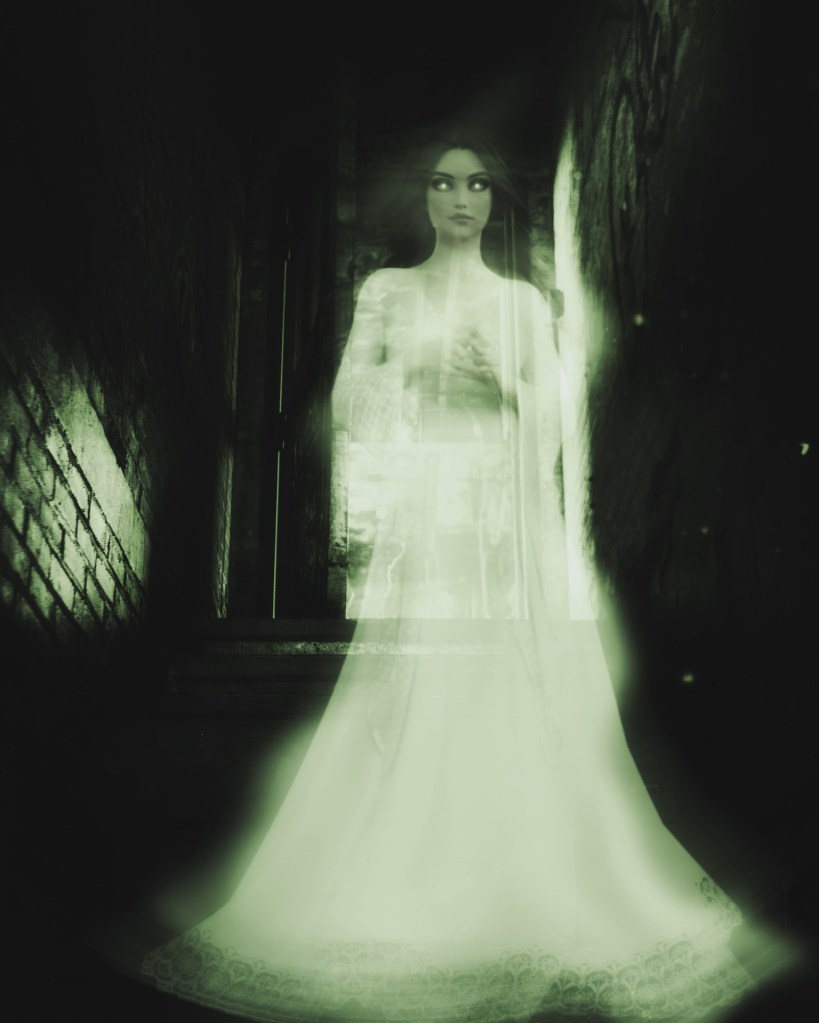
I’m not kidding when I say “I see dead people.” I don’t see them in the way others might, but I do see them. Strangely, I first became aware of this gift after moving to this strange swamp town where I’ve lived since 1992.  In fact, every apartment or house that I’ve lived in these past thirty years has been otherwise occupied (by ghosts!). I’ve always found myself sharing my accommodations with those who lived there before me and have since gone on from this physical life. For whatever reason, they have chosen to remain on this plane in ghostly form. Some have asked for my assistance in moving on from this plane, but many have chosen to stay.

Dale School, I quickly learned, is no different. Since moving in, I have become intimately acquainted with the four ghosts who have chosen to remain here:

The School Teacher

The Custodian

The Little Boy

The Hall Monitor

When asked if they would like help moving on, their emphatic answer is NO.  For their own reasons they have all chosen to stay. I welcome the Teacher when she visits my room (I’m pretty sure my apartment was once her classroom). I greet the Custodian and the Little Boy as they putter about their chores in the lower level. I ask the Hall Monitor for permission to pass when I need to visit the second floor. They all have their own stories and I’m happy to share my home with them.

The Unsettled Spirits of Dale School live elsewhere.  They’re in the nooks and crannies of the cobweb infested basement, in the bowels of the ancient boiler, and in the sewers of abandoned lavatories.  They are also in the attic with the guano and air conditioning vents. I stay away from those dark and unsettled spaces, but for the sake of this series, I will bravely go where only HVAC and phone system technicians have dared to go.