Humanity’s Enlightenment is NOT my Responsibility!

Of the friends that I have who have chosen a Buddhist path, several have shared their decision to take the “Bodhisattva Vow.”  With this vow (part of the Mahayana Buddhist path), they promise (among other things) to work for the sake of humanity’s enlightenment to the point of forsaking their own liberation from the wheel of life until all sentient beings have achieved enlightenment. In short, they are promising to return to the human experience – life after life after life – until all of humanity is enlightened.

I’m not Buddhist, and I’m sure there are many layers to this vow and ways to understand it, and I’m only understanding it on a very surface level… but to promise to return to the human experience until all beings are enlightened?

HELL NO!

Don’t get me wrong, I have a deep love of humanity and deeply desire for all of humanity to know peace, love, and joy, and to experience the freedom of liberation. BUT, it sure as hell isn’t MY job to enlighten them. Neither do I plan on waiting around until all humans across all time finally decide to wake up and learn how to be loving and kind to each other. Based on my experience of some humans, I could be waiting around for an eternity.

No thank you!  When I’m done with this life, I’m outta here, hopefully never to return!

Beyond the faith in which I was raised that tells us we’ve already been liberated, and that death is the final liberation, humanity’s enlightenment is not my responsibility. Regarding enlightenment, I can hardly take care of myself!  Besides, if humanity’s enlightenment was my responsibility, a hell of a lot more people would be listening to me. (ha ha ha…thump)

I leave Buddhists to their beliefs, but as one actively recovering from a Messiah Complex, the Boddhisatva vow sounds a little co-dependent – suggesting it’s our job to take care of others to the point of personal sacrifice, and that there is some sort of “award” for doing so. This strikes me as not much different than the Catholic practice of indulgences as a way of earning our way into heaven. If Jesus did his job properly (and we’ve been taught that he did), then we don’t need to do shit to get into heaven. The payment’s already been made (if you subscribe to atonement theology).

I don’t subscribe to atonement theology. Neither do I ascribe to the belief that Jesus died for our sins. Instead, I believe he died for speaking in ways that empowered people on a path that might free them from the ruling institutions of the time. These institutions felt threatened by the “enlightenment” that Jesus offered and killed him for it. That being said, I don’t believe that Jesus was responsible for the enlightenment of those he taught. Neither is he the source of salvation in the way we have been taught by institutional religion. Instead, he found his own enlightenment and simply shared with others how to do the same. His listeners could choose to accept what he offered, or not.

The Bodhisattva vow, along with atonement theology seem to be placing responsibility for enlightenment in the wrong hands. Enlightenment, as I understand it today, is purely the responsibility of the individual. In fact, it may not even be up to the individual to decide as enlightenment may simply be a matter of fate (more on that later).

Arriving at this understanding of enlightenment as being the individual’s responsibility, however, has been an arduous journey. Based on conditioning, life experiences, trauma, and woundedness, I came to believe it was my job to save the world. It stood to reason, if I could convince human beings to be loving and kind, and later, teach them how to get there, the world might finally feel safe.  Right?

WRONG! Instead, I have learned that I cannot convince anyone of anything they do not want to do for themselves, and I certainly can’t do it for them (no matter how hard I tried). Human beings are stubborn and willful and cling tightly to what they know – no matter how harmful that knowing might be to and for them. Jesus spoke of this often! 

What I have come to understand is that the only human I can save is myself – and even that is debatable! This begs the question – from what do I/we need saving anyway?

In the simplest of terms, we are each a unique and individual expression of Source, here to have a human experience. From this perspective, there are an infinite number of ways in which Source might choose to express itself. Within those infinite expressions are infinite choices. In a single life not every human will choose enlightenment. Across many lifetimes, some might never choose enlightenment.

What good is enlightenment anyway if the cycle of the human experience is that we come from Source and when we are done being human we return to Source? We’re here. We have a life. We die. We return to Source. No judgment. No right or wrong. Simply Source expressing itself. In this we have to allow that Source is just as likely to express itself as an oligarch or serial killer as it is to express itself as Buddha or Christ. So what difference does enlightenment make anyway?

To some, enlightenment (as I understand it) is a way to heal and transform from non-loving conditioning, woundedness, and trauma, so that they might experience life as a little more peaceful, kind, and loving and in this they might find contentment. To others, they may have simply come here to be human and experience the fullness of the human experience as it is right here and right now, simply and without judgement or the need to change it.  This, in fact, may be its own kind of enlightenment!

Enlightenment is a personal choice. If you choose it, cool.  If not, that’s ok too.  For my part, I can’t say that I’ve been seeking enlightenment, simply a way to feel at home within myself and to know some measure of peace in this life. If by my choosing and sharing, others feel inspired to cultivate their own kind of enlightenment, then so be it. If not, that’s their business.  It’s not my job to make them do it or try to do it for them.  And I’m certainly not waiting around for the collective of humanity to choose love and kindness over the hatred and cruelty that so many seem to enjoy. I’ve done for myself what I have felt called to do and humanity is on its own. Their enlightenment is not my responsibility.


For over thirty years, I have been on a deeply transformational journey to uncover my truest nature so that I might live the life that most reflects that. This journey has brought me face to face with my own woundedness and non-supportive societal conditioning and led me to tools to help support my inner transformation. This journey has empowered me to find the answer to these three questions and to then live out those answers:

  • Who am I?
  • Whose am I?
  • What are my unique gifts and how am I called to share them in the world?

Out of this journey, I have created a full curriculum of online courses and trainings through which I am able to share the knowledge, insights, wisdom, and tools that I gained so that you too might discover the fulfillment of living the life you were meant to enjoy. These online courses provide for all levels of personal and spiritual development with a focus on embodied learning – that which transcends the mind and reaches into the heart. All classes support you in your journey of self-actualization and are rooted in scholarship, mindfulness practices, and psychology.

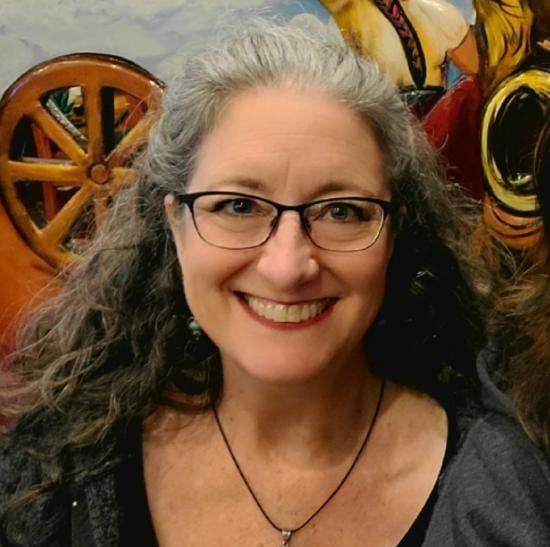
Lauri Ann Lumby, educator, author, mentor.

Being Salvation

In the Apocrapha of James (Nag Hammadi Library), Jesus makes a distinction between those who accompany him and those who pursue (follow) him:

“Instead of accompanying me, you pursued me.” – Jesus

Those who pursue (follow) are those Jesus identifies as:

  • Listening but not hearing.
  • Preaching but not living it out.
  • Memorizing but not embodying.
  • Chasing after Jesus as the cause of salvation without first being saved within themselves.

In this Jesus is calling out a kind of co-dependency among those who pursue rather than accompany – looking for an outside perceived authority to do the work of salvation for them.

In contrast, those who accompany Jesus, are known for:

  • Coming to know the Love that they are in Union with Source – as Jesus himself did.
  • Hearing Jesus’ teachings and applying them in their everyday lives.
  • Applying these teachings and in doing so, being transformed through the healing of separation and the return to Oneness.
  • Embodying Jesus’ teachings such that they understand that they are their own source of salvation.
  • Achieving the salvation that can only come from within, as Jesus taught.
  • Being that salvation in the world through the embodiment of Love such that others are inspired to discover and deepen that love within themselves.
  • Understanding that salvation is only the beginning of the journey. It is being salvation that the purpose of our lives is fulfilled.

We are all pursuers at some point in our journey, but the ultimate goal, as it relates to Jesus, is to accompany him on that journey of inner salvation, and then being that salvation in the world so that others too might know the fullness of Love that they are and be that Love in the world.

PS: We don’t have to call ourselves Christian or proclaim Jesus Christ as “our personal Lord and savior” to apply his teachings, thus embodying our original nature as Love. The Love about which Jesus spoke is universal and meant for everyone regardless of their race, religion, sexual orientation, gender, or nationality.