Returning to Mundane

A long, long time ago, in a galaxy far, far away…..there was an author who dared to suggest that at the end of our spiritual journey, is a return to the mundane. This author is Richard Bach and the books is Illusions – the Adventures of a Reluctant Messiah. In this story, Donald, a messiah, quits his messiah business and becomes a pilot. He then travels the wilds, giving people rides in his three-passenger plane. As the story demonstrates, being a messiah is a tricky, stressful business that has even been shown to get people killed. This, among other reasons, is why Donald quits his spiritual business and returns to the everyday, mundane world.

I first read this book in my twenties, and several times more in my thirties (it’s a short book and can be read in a day). I got the moral of the story then, but as I’m approaching sixty, I relate to this story even more. Not because I consider myself a messiah (one sometimes suffering with a messiah complex maybe), but because I now understand that after we have completed our spiritual journey (it’s never really complete – but we do eventually arrive at a place of “enough”), life takes on a whole different feeling and flavor.

In technical terms, the spiritual journey, as it has been articulated by the ancient mystics, is comprised of four stages – spirit entering form, awakening and ascension, the great descent, and then ending in spirit leaving form and returning to source – Death. Each tradition gives these stages their own names, but the general descriptions are much the same.

Western pop-culture spirituality gives a lot of attention to the awakening/ascension stage of the journey, so with this you may be familiar. The great descent, however, is most often ignored as it is rife with challenge, struggle, ego-death, and suffering. It is the stage of the journey where after finding union with Source/God, we are plunged into the depths of our own inner hell – made up of our unhealed wounds, past traumas, spiritual fears, cultural conditioning, ego-attachments and more.  This is a hell made up of all those things within us that have forgotten our original nature as Love resulting in non-loving beliefs or behaviors about ourselves or others. It is here where we must come face to face (for example) with all our desires to be famous, rich, powerful, desirable, admired, respected, special, and needed rear their ugly face. This is also where we must confront every single lie we’ve been told and illusion we’ve created about life needing to have meaning and purpose in a way that is tangible, visible, and seen. Finally, during this descent, every illusion and need for control will be pried from the grip of our cold, dead, fingers.

There’s a reason few speak of this stage of our spiritual journey. Having been thrown into this stage somewhere around the year 2000, I know it well and can say not one single person chooses descent to make up nearly thirty years of their life!  I am also here to attest that the descent does eventually come to an end of sorts. Perhaps there are still ego attachments to confront, and pain still to be endured, but with these we have become familiar and accustomed and now we have tools for moving through these subtle layers of deepening in the important journey of ego-death.

The great descent frees us from all which imprisons us in insecurity, fear, ego-attachment, etc. While being freed, our truest nature of Love in Union with Source is increasingly liberated. Each moment we give to this transformation, we come to more and more fully live as Love, embracing all we are as Love (including our humanness) while finding the simple joy of being in the human experience. Here we are no longer bothered by life’s pursuit of meaning or purpose. Neither are we plagued by our imperfections. We are now able to return to the innocence we knew as children when we could simply enjoy the wonder of discovery, curiosity, and unbothered play. (YES, I know not every child’s childhood was great, but there was an innocence there among the pain.)

It is at this stage of our spiritual journey where many-a-messiah leave behind their work of saving the world and get on with simply living, which for those like the character in Illusions means returning to the mundane.


Beyond Ascension

online course

Learn what comes after ascension. The journey from unity consciousness to embodiment.

Jesus: a Model of Self-Actualization

Today’s blog explores Jesus and his teachings as a model of psychological and spiritual development through which we are empowered to become self-actualized and through which we are able to be freed of the obstacles which prevent us from reaching our full potential as human beings.

Has Jesus Become Irrelevant?

It saddens me that in our quest for intellectualism and individuation, Jesus and his teachings seem to have become irrelevant. When we pierce through the veil of dogma, however, what we can see is that Jesus provides a model for psychological and spiritual development which supports the self-actualization of those following his example.  What Jesus taught rivals the currently popular paths toward enlightenment and might even be more befitting those who were raised in the Christian tradition. While I acknowledge all these paths as holy and sacred and as valid means through which we can develop and grow as human beings, I contend that we are missing a HUGE opportunity by ignoring or worse yet, demonizing, Jesus and the gifts that he brings to the journey of self-actualization.

Jesus as the model

When we read scripture without the threads of dogma obscuring our view, what we see in Jesus is a man who came to understand the fullness of his human potential and who lived that out as freely as was possible. Examining Jesus’ life through the lens of psychological and spiritual development, we see:

  • A man committed to his spiritual practice.
  • Who came to develop a deeply intimate and personal relationship with that which he called “Abwoon” (God).
  • Who found healing, comfort, restoration, inspiration and guidance through this connection with his higher self.
  • Who, through a process of formation and discernment came to understand his unique giftedness and how he was called to live that out.
  • Who overcame the inner obstacles, temptations and fears which might prevent him from living this path with humility
  • Who learned and practiced the gift of spiritual obedience.
  • Who learned to surrender to and trust the Source that was guiding him.
  • Who was able to stand freely and without compromise in his truth, even to the point of death.
  • Who was a force for change and a voice for justice – ministering to and speaking out on behalf of those who had been ostracized by society.
  • Who challenged the laws that provided privilege to some while infringing on the rights of others.

From the perspective of psychology, Jesus was a man who became self-actualized, who reached the fullness of his human potential and who left behind a collection of stories and teachings which show us how to do the same.

Jesus as the teacher

Jesus did not go up on a mountain, become self- actualized, and then stay there. Instead, Jesus lived his self-actualization in the midst of the human race and taught others how to reach the fullness of their own potential.  Jesus accomplished this through his example, and through his teachings. We owe a huge debt of gratitude to those writers who attempted to capture Jesus’ model and message in the scriptures that have been handed down to us, as well as those that did not quite make the cut (many for obvious political reasons!).  Again, looking past the Institution’s attempt to doctrinize Jesus’ model of psychological and spiritual formation, these are some of the tools Jesus left behind to help us in our own journey toward self-actualization:

  • practices of meditation and prayer which help us to quiet our minds so that we can be open to the higher intelligence that speaks to us in the silence, that guides us, moves us, inspires us, comforts us, heals us.
  • stories which teach us about the call to justice, that speak to us of the importance of compassion and forgiveness, that heal us from our own fears and woundedness, that remind us of our own unique giftedness and the call to share those gifts in the world.
  • The beatitudes – pithy statements that demonstrate for us the natural results of our potential – as we grow toward our human potential, we are naturally poor in spirit, merciful, working for justice, etc.
  • Stories that remind us that first and foremost….we are loved….more than that….we ARE love and that the purpose of the human journey is to remember that love.

Reclaiming Jesus’ path to self-actualization

I am inviting us to set aside the wounds we may have experienced at the hands of religious institutions, to look beyond the veil of dogma and to restore Jesus to his rightful place as psychologist, spiritual director, healer, teacher, and guru.  Let us give ourselves permission to know Jesus anew and to look at his example and teachings through new eyes.  And my prayer is that through this willingness to be open that we might see the truth beyond the words and in Jesus find our own path to self-actualization.

Reconsidering Jesus

This article explores a critically important part of our journey toward self-actualization – the searching stage of spiritual development and how for many Westerners, Jesus has gotten lost along the way and why we don’t need to set him aside in our quest for spiritual fulfillment.

Questioning, Asking, Challenging our Childhood Beliefs

The searching stage of spiritual development is absolutely critical to becoming spiritually and emotionally mature adults.   The searching stage of spiritual development is when we start asking questions:  challenging dogma, doctrine, rules; wanting to find reason in mystery; and wanting to claim our own beliefs over those imposed on us by an outside perceived authority. The searching stage is when we start looking both within and outside the religions of our youth for that which speaks to our heart, that which nourishes and feeds us, and that which might have a bit of reason added to it.  Searching is healthy, necessary and exciting – eventually leading us to spiritual fulfillment and ultimately to our life purpose and mission.  If we don’t search, we are doomed to being a pew potato, doing what we are told and believing what we believe because someone told us to. 

Ripe with Opportunity, Ripe with Dangers

As the symbol of the ouroboros suggests, this time of searching is ripe with opportunities and ripe with dangers.  The opportunities are there to learn and to grow, to mature and evolve.  The dangers, however, require a stout and courageous heart.  Sometimes in the searching, we find that the religion of our youth no longer fits who we truly are.  This is only a danger, however, if we are unduly attached to our childhood religion or to the approval of our tribe (parents, clergy, members of the community, etc.).  The greatest danger in this searching phase of spiritual growth, however, is really the danger to the religious institutions to which we had been affiliated.  It is for this reason that most religious institutions DO NOT provide the tools, the permission, or the processes by which members can effectively searched.  Religious institutions are afraid that if their members search, they will no longer be obedient, and that they might leave.  And people have and continue to leave……in droves.  For men and women raised in Christian traditions, however, there is an even more catastrophic danger of not being supported during this searching stage of spiritual development.  

How Jesus Got Dumped

The catastrophic danger and resulting casualty that I am referring to is the loss of Jesus.  During the searching stage of spiritual development many raised in Christian traditions find fulfillment and meaning in practices from the East (yoga, zen meditation, tai chi, etc.) or in the rituals of Wicca or Native American spirituality, and decide that Jesus is no longer relevant and might even be ridiculous.  Even though the religion of their youth may no longer speak to them or they have found fulfillment in other traditions and practices, that doesn’t mean that Jesus wasn’t a profound teacher, healer and spiritual leader.  Just because our religions have often twisted Jesus’ teachings to further their power agendas doesn’t mean his teachings are not relevant to our spiritual growth and development. We do not need to throw Jesus out with the bathwater.

Reconsidering Jesus

It may be time to reconsider Jesus as a powerful teacher, healer, prophet, spiritual leader, way-shower.  Reconsidering Jesus’ relevance does not mean we have to believe he’s the messiah, was raised from the dead, or even the Son of God…..it just means that we can look beyond the constructs of doctrine and institutional manipulations and see the man for who he really was – a man of purpose who tried to teach us how to love. 

The Devil at Your Door

The Devil at Your Door

The Irish are correct in their habit of holding good news loosely and for being always alert to the shoe that’s sure to drop. That shoe always drops, and good news is often followed by bad.  It seems to be the law of the universe.  This law has even been given a name – an Irish name at that: Murphy’s Law.

This universal law is also rooted in an often-forgotten spiritual reality.

When we are actively pursuing our spiritual growth and development, there will always be a “devil” knocking on our door.  There is truth in the religious saying that “a quiet mind is the devil’s playground,” but not in the way that the religious warn, and definitely not in the way they often prohibit spiritual practices for “fear of the devil.”  The devil who is knocking at our door is none other than ourselves – our ego attachments, false perceptions, unhealed wounds, non-loving conditioning, habitual behaviors, fears, and our attachment to the status quo.

Spiritual growth leads to change. The “devil” hates change.

Instead, the “devil” wants us to stay where we are. “He” wants us to remain small and imprisoned by our habits, our attachment to approval, our wounds, and our victimhood. The devil wants us to stay chained to the bars of the cell in which we are living that has been created by our past.

Our Soul, on the other hand, wants us to be FREE.

The Soul drives us to pursue opportunities for healing and growth. The Soul leads us toward the resources and tools we need to transform the pain of our past and to break free of it so we can know our original nature of LOVE and live out of that LOVE. The Soul guides us to those who will help us in this healing and drops gifts into our laps that will assist us along the way.

Every time we say YES to our Soul, the “devil” comes knocking at our door.

The devil shows up with all the weapons of our past wounding. In his arsenal are all the words, experiences, and thoughts that are sure to trigger our past pain and cast us into the hell of confusion, doubt, fear, depression, anxiety, panic, and self-loathing. Self-doubt is the devil’s best work. And yet, there is a gift in this.  The devil doesn’t come to cause harm, he comes for the purpose of asking us,

“Are you really sure you want to take this step toward your liberation?”

He then continues with reminders:  “Aren’t you really comfortable where you are? Isn’t the known far better than taking the risk toward something you don’t yet know? Aren’t you getting attention and other benefits from staying small?  What about the relationships that might have to end because they are solely dependent on you obeying the rules, keeping the peace, and maintaining the status quo? Won’t you miss that familiar pain and self-loathing? Why would you give all that up for the small chance that things could be better?  ….  And so on….

I have found that many, if not most, give into the devil’s pleadings. They forsake the opportunity for spiritual growth because a) they’re afraid, b) because they don’t have the tools or resources to recognize the true designs of the devil and then do something about it.  Freedom from the devil is possible – but only when we have the proper tools to meet him where he is at.

The devil is at home in our fears and unhealed wounds.

When we do the deep inner work of healing and transforming these wounds, the devil no longer has a place to live within us so he moves on in search of others he might torment.

What tools do you have for when the devil comes knocking on your door?


Authentic Freedom is a protocol and practice developed by Lauri Ann Lumby which supports you in identifying and then healing the fears that have kept you imprisoned by your past wounding and cultural conditioning.  

Through recorded lessons, reading, discussion, mindfulness and creativity practices, you will be given the tools to identify, heal and transform the fears that:

  • There is not enough.
  • You are insignificant and have nothing of value to offer the world.
  • You cannot live as our most authentic selves.
  • You are not loved (or that love has to be earned or can be taken away).
  • You  are not free to express our truth.
  • You do not know the truth.
  • You are alone.

At the end of this course, you will have the tools to support you in the continued liberation from your fears and the conditioning that has placed them there.


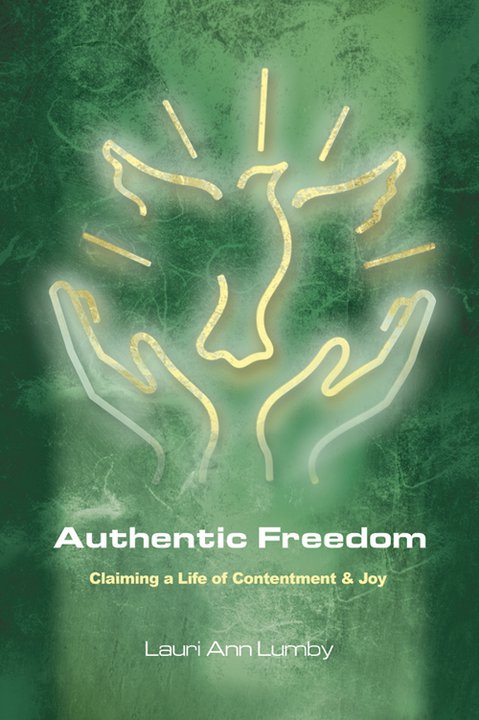
Authentic Freedom, by Lauri Ann Lumby, transcends centuries of dogma to reveal the powerful and life-changing message at the heart of Jesus’ teachings and the universal truths at the core of every religion. The book’s unique approach offers an opportunity for the reader to heal the separation they feel within themselves, with God and with each other, ultimately revealing the truth of Oneness. Built upon the compelling integration of Eastern Energy Medicine and the 2000-year-old tradition of Christian, contemplative spiritual practices, Authentic Freedom revels a Dynamic and unifying path of spiritual transformation that speaks to people of all traditions and beliefs.