Jesus Never Promised Utopia

Jesus NEVER spoke about or promised utopia.  He never said that heaven would be brought to earth.  He never promised the golden age in which there would be peace on earth and that humans would live in peace.  In fact, he said quite the opposite, “there will always be poor among you,” “render unto Caesar what is Caesar’s.”  Not once did he bother himself with the politics of humanity.  He never challenged or even mentioned the Roman rulers of the culture in which he lived.  And if he did bother himself with religion, it was to remind the religious leaders of the love that was at the core of their beliefs.  No, Jesus did not promise peace on earth and good will toward men and he did not work to make the world anew.  Instead, he made one promise, and one promise only:

The kingdom of God is within you.

THIS was the good news that Jesus preached – that the kingdom of God – the experience of peace, love, joy, harmony and contentment is right here, right now, when we take the time to go within and remember.  Jesus then demonstrated how remembering this truth of our original nature, brings forth all kinds of miracles in our lives.  In and through this connection, we come to know ourselves, we come to know our unique giftedness and we come to understand and then become empowered in how we are called to use these gifts for the sake of our own fulfillment and in service to others.

As Jesus taught his disciples, achieving this peace is an inside job and has absolutely nothing to do with what is going on in the outside world.  Nothing.  As Jesus himself demonstrated, we can be experiencing the most unspeakable form of torture (death on a cross) and still find this peace. 

Jesus taught his disciples how to remember the kingdom of God that was already there within them.  The word Jesus used to remind them of how to access this peace has been translated repent.  In the original Greek, however, this word has nothing to do with sin or punishment.  Metanoia (repent), means turning again and again and again and again to the place within where we know love, peace and joy, that which some might call God.  Period.  It is as simple as that. 

When the world out there disturbs us and causes us to fear, turn within.  When we are distracted by the events of the world that speak of violent, hatred, suffering, war, turn within.  When someone betrays us or breaks our heart, turn within.  When we experience loss, disappointment, condemnation, ridicule, turn within.  HERE is where utopia lies – not in some time or place light years away, not in some perfect alignment of the stars or when we finally think the right thoughts.  Heaven on earth is right here in the core of who we are when we take Jesus’ advice and remember. 

Jesus: a Model of Self-Actualization

Today’s blog explores Jesus and his teachings as a model of psychological and spiritual development through which we are empowered to become self-actualized and through which we are able to be freed of the obstacles which prevent us from reaching our full potential as human beings.

Has Jesus Become Irrelevant?

It saddens me that in our quest for intellectualism and individuation, Jesus and his teachings seem to have become irrelevant. When we pierce through the veil of dogma, however, what we can see is that Jesus provides a model for psychological and spiritual development which supports the self-actualization of those following his example.  What Jesus taught rivals the currently popular paths toward enlightenment and might even be more befitting those who were raised in the Christian tradition. While I acknowledge all these paths as holy and sacred and as valid means through which we can develop and grow as human beings, I contend that we are missing a HUGE opportunity by ignoring or worse yet, demonizing, Jesus and the gifts that he brings to the journey of self-actualization.

Jesus as the model

When we read scripture without the threads of dogma obscuring our view, what we see in Jesus is a man who came to understand the fullness of his human potential and who lived that out as freely as was possible. Examining Jesus’ life through the lens of psychological and spiritual development, we see:

  • A man committed to his spiritual practice.
  • Who came to develop a deeply intimate and personal relationship with that which he called “Abwoon” (God).
  • Who found healing, comfort, restoration, inspiration and guidance through this connection with his higher self.
  • Who, through a process of formation and discernment came to understand his unique giftedness and how he was called to live that out.
  • Who overcame the inner obstacles, temptations and fears which might prevent him from living this path with humility
  • Who learned and practiced the gift of spiritual obedience.
  • Who learned to surrender to and trust the Source that was guiding him.
  • Who was able to stand freely and without compromise in his truth, even to the point of death.
  • Who was a force for change and a voice for justice – ministering to and speaking out on behalf of those who had been ostracized by society.
  • Who challenged the laws that provided privilege to some while infringing on the rights of others.

From the perspective of psychology, Jesus was a man who became self-actualized, who reached the fullness of his human potential and who left behind a collection of stories and teachings which show us how to do the same.

Jesus as the teacher

Jesus did not go up on a mountain, become self- actualized, and then stay there. Instead, Jesus lived his self-actualization in the midst of the human race and taught others how to reach the fullness of their own potential.  Jesus accomplished this through his example, and through his teachings. We owe a huge debt of gratitude to those writers who attempted to capture Jesus’ model and message in the scriptures that have been handed down to us, as well as those that did not quite make the cut (many for obvious political reasons!).  Again, looking past the Institution’s attempt to doctrinize Jesus’ model of psychological and spiritual formation, these are some of the tools Jesus left behind to help us in our own journey toward self-actualization:

  • practices of meditation and prayer which help us to quiet our minds so that we can be open to the higher intelligence that speaks to us in the silence, that guides us, moves us, inspires us, comforts us, heals us.
  • stories which teach us about the call to justice, that speak to us of the importance of compassion and forgiveness, that heal us from our own fears and woundedness, that remind us of our own unique giftedness and the call to share those gifts in the world.
  • The beatitudes – pithy statements that demonstrate for us the natural results of our potential – as we grow toward our human potential, we are naturally poor in spirit, merciful, working for justice, etc.
  • Stories that remind us that first and foremost….we are loved….more than that….we ARE love and that the purpose of the human journey is to remember that love.

Reclaiming Jesus’ path to self-actualization

I am inviting us to set aside the wounds we may have experienced at the hands of religious institutions, to look beyond the veil of dogma and to restore Jesus to his rightful place as psychologist, spiritual director, healer, teacher, and guru.  Let us give ourselves permission to know Jesus anew and to look at his example and teachings through new eyes.  And my prayer is that through this willingness to be open that we might see the truth beyond the words and in Jesus find our own path to self-actualization.

There is No Sin

Below is an excerpt from my book Authentic Freedom – Claiming a Life of Contentment and Joy. Visit my Amazon bookstore to learn more.

If we look carefully at the life and teachings of Jesus, we see that he is inviting us to embrace an image of God that is a departure from the traditional image of the Hebrew religious authorities of his time.  Jesus was constantly being challenged by the religious authorities who believed in a God whose approval needed to be earned.  God’s love was thought to be conditional, at best, and only attainable through strict adherence to the law.  If you were disobedient to the law, you were known to have lost favor with God and were considered to be a “sinner.” 

Jesus invited those “who had ears to hear,” to consider another possibility.  He set forth not only a new image of God, but an entirely new paradigm – a paradigm based on personal relationship and compassion.  Having grown in the knowledge of God’s love and his Oneness with God, Jesus was able to lead us to his understanding as the truth which sets us free.  The God that Jesus knew was a God of unconditional love, compassion and forgiveness.  This is the God that Jesus invites us to embrace.  When we know God in this way, sin is no longer “that which separates us from God,” but merely a symptom of our own false perception of separation.  Jesus explains it this way in the noncanonical gospel of Mary Magdalene:

Peter said to Jesus: “Since you have become the interpreter of the elements and the events of the world, tell us:  What is the sin of the world?”

The Teacher (Jesus) answered, “There is no sin.  It is you who make sin exist, when you act according to the habits of your corrupted nature; this is where sin lies.”

Gospel of Mary Magdalene 7: 11-19

Sin, when viewed in this way, is no longer subject to judgment, but instead invites us into the greater depths of compassion.  “Love the sinner and not the sin,” becomes our mantra.  When sin is looked upon as a symptom of the fears that come about as a result of an unhealed core wound, then all sin becomes an invitation to healing. 

From this perspective, we can now look upon even the Jeffrey Daumers and Charles Mansons of our society with compassion.  This compassion does not excuse their behavior, but it allows us to see the deeper fears within them that drove them to such heinous acts of violence.  In our own journeys, it allows us to let go of the blame, shame and guilt that so often plague our lives.  Our compulsive behaviors (sins) are no longer something to look upon in anguish, but something to treat as a wake-up call to a deeper healing being called forth.  The compulsive behavior becomes the trigger that alerts us to our false sense of separation, to the need for healing, and invites us to name the fear and allow God to heal us of these fears so that we may once again live in the knowledge that we are loved.  In this knowledge of God’s love, we know peace, we know joy and we are able to openly and freely share our gifts in the world.  It is to this place of Oneness that Jesus invites us when he proclaims, “Repent, for the kingdom of God is at hand.”  (Matthew 4:17)


Learn Authentic Freedom

Authentic Freedom is a protocol and practice developed by Lauri Ann Lumby which supports you in identifying and then healing the fears that have kept you imprisoned by your past wounding and cultural conditioning.

Through recorded lessons, reading, discussion, mindfulness and creativity practices, you will be given the tools to identify, heal and transform the fears that:

There is not enough.
You are insignificant and have nothing of value to offer the world.
You cannot live as our most authentic selves.
You are not loved (or that love has to be earned or can be taken away).
You are not free to express our truth.
You do not know the truth.
You are alone.

At the end of this course, you will have the tools to support you in the continued liberation from your fears and the conditioning that has placed them there.

Reconsidering Jesus

This article explores a critically important part of our journey toward self-actualization – the searching stage of spiritual development and how for many Westerners, Jesus has gotten lost along the way and why we don’t need to set him aside in our quest for spiritual fulfillment.

Questioning, Asking, Challenging our Childhood Beliefs

The searching stage of spiritual development is absolutely critical to becoming spiritually and emotionally mature adults.   The searching stage of spiritual development is when we start asking questions:  challenging dogma, doctrine, rules; wanting to find reason in mystery; and wanting to claim our own beliefs over those imposed on us by an outside perceived authority. The searching stage is when we start looking both within and outside the religions of our youth for that which speaks to our heart, that which nourishes and feeds us, and that which might have a bit of reason added to it.  Searching is healthy, necessary and exciting – eventually leading us to spiritual fulfillment and ultimately to our life purpose and mission.  If we don’t search, we are doomed to being a pew potato, doing what we are told and believing what we believe because someone told us to. 

Ripe with Opportunity, Ripe with Dangers

As the symbol of the ouroboros suggests, this time of searching is ripe with opportunities and ripe with dangers.  The opportunities are there to learn and to grow, to mature and evolve.  The dangers, however, require a stout and courageous heart.  Sometimes in the searching, we find that the religion of our youth no longer fits who we truly are.  This is only a danger, however, if we are unduly attached to our childhood religion or to the approval of our tribe (parents, clergy, members of the community, etc.).  The greatest danger in this searching phase of spiritual growth, however, is really the danger to the religious institutions to which we had been affiliated.  It is for this reason that most religious institutions DO NOT provide the tools, the permission, or the processes by which members can effectively searched.  Religious institutions are afraid that if their members search, they will no longer be obedient, and that they might leave.  And people have and continue to leave……in droves.  For men and women raised in Christian traditions, however, there is an even more catastrophic danger of not being supported during this searching stage of spiritual development.  

How Jesus Got Dumped

The catastrophic danger and resulting casualty that I am referring to is the loss of Jesus.  During the searching stage of spiritual development many raised in Christian traditions find fulfillment and meaning in practices from the East (yoga, zen meditation, tai chi, etc.) or in the rituals of Wicca or Native American spirituality, and decide that Jesus is no longer relevant and might even be ridiculous.  Even though the religion of their youth may no longer speak to them or they have found fulfillment in other traditions and practices, that doesn’t mean that Jesus wasn’t a profound teacher, healer and spiritual leader.  Just because our religions have often twisted Jesus’ teachings to further their power agendas doesn’t mean his teachings are not relevant to our spiritual growth and development. We do not need to throw Jesus out with the bathwater.

Reconsidering Jesus

It may be time to reconsider Jesus as a powerful teacher, healer, prophet, spiritual leader, way-shower.  Reconsidering Jesus’ relevance does not mean we have to believe he’s the messiah, was raised from the dead, or even the Son of God…..it just means that we can look beyond the constructs of doctrine and institutional manipulations and see the man for who he really was – a man of purpose who tried to teach us how to love. 

The Magdalene Taught Them

In honor of today’s Easter celebration, I’m sharing an excerpt from the Gospel of Mary (Magdalene). In Mary’s gospel we see the full extent of how she counselled and taught the other disciples. She was their teacher after Jesus’ death.

  1. “Impose no law
  2. other than that which I have witnessed.
  3. Do not add more laws to those given in the Torah,
  4. lest you become bound by them.”
  5. Having said all this, he (Jesus) departed.
  6. The disciples were in sorrow,
  7. shedding many tears, and saying:
  8. “How are we to go among the unbelievers
  9. and announce the gospel of the Kingdom of the Son of Man?
  10. They did not spare his life,
  11. so why should they spare ours?”
  12. Then Mary arose,
  13. embraced them all, and began to speak to her brothers:
  14. “Do not remain in sorrow and doubt,
  15. for his Grace will guide you and comfort you.
  16. Instead, let us praise his greatness,
  17. for he has prepared us for this.
  18. He is calling upon us to become fully human (Anthropos).”
  19. Thus Mary turned their hearts toward the Good,
  20. and they began to discuss the meaning of the Teacher’s words.

The Gospel of Mary Chapter 9


Magdalene Course Offerings:

Mary Magdalene Raising Jesus from the Dead

We cannot look to Mary Magdalene as an example of Divine Feminine power without giving honor to Jesus – the man who supported her in becoming self-actualized and who then ordained her to share her gifts in the world.  Jesus became self-actualized and sought to teach others how to achieve self-actualization. Moving beyond doctrine, Jesus and his teachings provide a model of psychological and spiritual development through which we are empowered to become self-actualized and through which we are able to be freed of the obstacles which prevent us from reaching our full potential as human beings.

Two thousand years ago Jesus died and rose from the dead.  Just as quickly as he rose, the patriarchy killed him again.  The patriarchy killed Jesus when they:

Changed his message –

  • From love to fear.
  • From Oneness to separation.
  • From an unconditionally loving God to one who condemns.
  • From peace and harmony to conflict and war (in his name!)
  • From a community that treats all human beings as equal, governed by collaboration and cooperation to one rooted in white, male privilege; governed by fear, power and control.
  • From welcoming all to the table to only those who believe as we want them to believe and who are “in good standing.”
  • From a movement within Judaism to a new and separate religion.

2000 years ago, Jesus died and rose from the dead.  And 2000 years ago, the patriarchy killed him.  I now want to share my part in supporting the movement of reclaiming Jesus, and Mary Magdalene with him, as authentic models for self-actualization and teachers of the means of getting there by offering you this excerpt from my novel,  Song of the Beloved – the Gospel According to Mary Magdalene: 

On the morning after the Sabbath, I awoke before dawn in the same way that I had every day after Jesus healed me and raised me from the death in which I had existed.  Upon waking, I expected to feel nothing but the numbness of the days past.  I expected to desire nothing but to roll over and return to the world of sleep.  Instead, I felt the urge to resume my ordinary routine of morning meditation in the garden.  I arose and proceeded into the garden to the bench I had shared with Jesus every morning for the past three years.  I approached the bench and lovingly ran my hand over its marble seat recalling what Jesus and I had shared in this sacred space.  The grief of this loss suddenly overtook me and I collapsed on the ground as my tears splattered over our bench. 

As I knelt beside the bench weeping with head in hands, I felt a faint shift in the air around me.  I lifted my head slightly to see if perhaps Lazarus had come out to join me. As I looked up, my heart leaped into my throat and ceased beating.  My beloved Jesus stood there before me.  I rubbed my eyes to make sure it was not some trick of the rising sun, but there he was as real as he had been all those past times in prayer and even more so, he stood before me in flesh and blood. 

I stood and reached out to embrace him, to feel his skin on my cheek, and he opened his arms to return my embrace.  We had held each other for but a moment, when Jesus gently pulled away.  He took my face in his hands, lightly kissed me on the lips and said, “Mary, I am with you always, even until the end of time and it is time for you to come into your own power, to embrace your own Christhood.  In this, I must ascend. And, you must not cling to me so that you too may rise.  You must go to my brothers in Jerusalem to let them know I have risen and you must explain to them its meaning.”  With that he kissed me again on the mouth. “Mary, be empowered in the flame of the Shekinah, God’s Holy Spirit.”  He departed from my sight as quickly and as silently as he had arrived.

I stood there in silent wonder.  Even death had no power over my beloved.  As sure as he had been here just one week ago, he stood before me again.  I felt his touch, the brush of his lips on mine, the comfort of his embrace.  Just as suddenly, he was gone.  I inhaled deeply in the hopes of comprehending this experience and the cock crowed.  I remembered Simon’s denial of Jesus and was provoked by Jesus’ words, “Go to my brothers in Jerusalem.”  I ran into the house to be greeted by Martha, Salome and Lazarus’ sleepy faces.  “I have seen the Lord.  He is risen just as he said he would.”  I ran to each of them in turn, took their hands in mine, and looked into their eyes, “It is true.  He has conquered death. He came to me in the garden.  He is risen!”  As I relayed the message to their open minds and hearts, they were able to see the truth as I had witnessed it.  As a group we embraced in celebration.  “We must go to Jerusalem!  Jesus instructed me to tell his brothers there that he has been raised from the dead.”  We immediately departed for Jerusalem where we knew the Galilean disciples stayed in hiding.

Guilt and Shame in Christianity

Exploring the role of guilt and shame in the formation of the Christian religion

Since the time of its inception, Christianity has been a religion rife with conflict.  One such conflict is the 2000 year old battle between the two sides of the Christian message – that which is based in fear and the other which is rooted in love.  Understanding the experiences out of which Christianity emerged, one has to wonder, is the religion of Christianity merely an expression of the unresolved guilt and shame experienced by the disciples who denied and abandoned Jesus at his greatest hour of need? When we look at the long dalliance between Christianity and guilt, one has to wonder.

What follows is a “fictional” account of what may have happened:

Once upon a time, there was a bunch of fishermen who met this dude named Jesus.  They thought this Jesus was pretty cool.  First he taught them a better way to fish, and then he showed them how to walk on water.  After the theatrics he taught them how to love. These fishermen thought Jesus was the next best thing after leavened bread – something that was a luxury for fishermen – because which one among them had time to wait for bread to rise?

Things were really cool with this Jesus guy.  They got to travel.  Meet new people.  Hear amazing stories.  They got invited into the homes of those they never thought they’d be able to dine with.  They saw amazing things happen and miracles performed.  The sick were healed.  The blind were able to see.  And Jesus spoke in a way that made their heart feel warm and their soul feel at peace.

But then one day, people started to become angry over Jesus’ words.  Angry words were exchanged and the next thing the fishermen knew, their buddy Jesus was hauled off to prison and brought before the Roman governor where he was tried for treason.  Treason?  (They also heard words like blasphemy….and other scary words).  Jesus was just trying to teach people how to love.  The fishermen were surprised, but mostly they were afraid.  If people came to know that Jesus was their friend, would they be imprisoned and tried too?  So they hid.

And they kept hiding.  They heard that Jesus’ trial didn’t go well and that he had been sentenced to death.  Now they were really afraid.  So they kept hiding.  They hid all the while the women knocked on their door saying, “Come out.  Come with us.  We need to support our friend.  We need to be with him.  We need to offer our love and support.”  But the women’s pleas could not break through the fishermen’s fears.  So they continued to hide. 

They hid after the women came and told them Jesus had been crucified and that he had died.  They hid after the women came to tell them Jesus had been buried.  And they continued to hide until three days later, on the morning after the Sabbath when Mary Magdalene (Jesus’ favorite) knocked on the door and proclaimed that Jesus lived.  But even then, they only opened the door a crack, and then swiftly slammed it in Mary’s face.  “She must have lost her mind.  Jesus cannot have survived a crucifixion.  And ‘he has risen?’  What does that even mean?”

But then, Jesus himself showed up.  He walked right through the closed and bolted door and showed them.  “See.  I have not died so as never to be seen or known again.  I am now with you, always, along with the Spirit who is with and in me.” Only then did the fishermen open the door to Mary Magdalene who stood there tapping her feet with her arms across her chest…saying with her eyes, “I told you so!” For a brief moment, the disciples hung their head in shame – first because they had not listened to the Magdalene, the one Jesus favored above them all; and secondly, because they had abandoned their friend at the time of his greatest need.  But just as quickly as the guilt and shame surfaced, they began to make their excuses.

Jesus listened to their bargaining and then began to remind them of all he had taught them about peace and love and how they could experience the kingdom of God right here in the midst of the human experience.  Jesus continued to teach them, empowering them with the light of his Spirit so they might go forth and share the good news he had proclaimed:  “Turn your gaze only toward the Divine within, for here is where you will find the kingdom of God.”  (While the disciples were being tutored for the umpteenth time, Mary Magdalene and the other women were already about their mission of teaching people how to love.) Then Jesus told the disciples, “I must ascend,” and took off for good.  Now the disciples were on their own, so they did what Jesus told them to do, “go out and preach the good news.” 

This would have been all fine and good except that the male disciples could not let go of that sense of guilt and shame over having abandoned their friend.  The wound of shame festered and soon, they could only remember Jesus’ message through the lens of their unhealed shame.  As a result, they went forth preaching “the good news,” but soon it took on a new flavor.  This message was not the pure message of love Jesus had proclaimed and which Mary and the other women continued to share in the world.  Instead, the message became tainted by shame.  Instead of the overwhelmingly uplifting message of unconditional love, the love of God became conditional and wrapped in fear.  God was no longer the prodigal father of which Jesus spoke; instead he became a wrathful God making impossible demands on his children with the overarching and overwhelming threat of eternal punishment in a place called hell.  The cause of Jesus’ death became the sin of humanity.  Judas was Jesus’ betrayer and it was the Jews who killed him.  Women and sexual intercourse became the cause of original sin.  As the wound of shame continued to fester, the message of love became eclipsed to the point where it no longer remained. 

But, while the disciples who retained the wound of shame preached a message tainted with fear, those who had no shame, because they had stood by the side of their beloved teacher and friend – Mary Magdalene, Mother Mary, Lazarus, Joseph of Arimathea, Martha, the other Marys, the youngest disciple (and Jesus’ own brother) John, and a few others taught a message of love.  They went out into the world doing what Jesus taught them to do.  They began with showing people how to connect with the Divine within.  Then they supported them in coming to know that this connection – which felt like peace, love, contentment and joy – was their original nature and what Jesus called “the kingdom of God.”  Then they taught them how to connect with their own unique gifts and to hear the voice of the Divine which led them to their truth and to the purpose of their life path.  They gathered in community for meditation, contemplation and prayer.  They broke bread together and shared all things in common for the sake of the common good.  They went out into the world teaching, healing, supporting and empowering people – showing them how to be free by teaching them how to love.  In this expression, God was not to be feared but was instead, the source of unconditional and unmerited love. In this they came to know that there was indeed no separation – only love – and they lived in peace and walked softly upon the earth while diligently praying that their brothers and sisters might find healing and self-forgiveness for the guilt and shame they have been harboring for the past 2000 years.

What role have guilt or shame played in your own religious upbringing?

How do you find yourself STILL plagued by this shame-based conditioning?


LIVE ONLINE COURSE:

Freedom from Shame

Tuesday, January 17, 2023

6:30 – 8:30 pm central time

Enrollment limited to 25. Register now to reserve your seat.

Done with Church? #Metoo

Once upon a time, Lauri Ann Lumby was an enamored, mostly devout Catholic girl.  I attended Catholic school for most of my 12 years of schooling, proudly wore my plaid uniform skirt with starched white blouse and embraced all that post-Vatican II Catholicism had to offer (it really was an exciting time in the Church!).  I continued attending weekly mass during college and into adulthood.  I heard my calling to active ministry somewhere around the age of 27, completed 7 years of training as a pastoral minister and spiritual director and worked in the Church for 10 full years. 

Then it all went bad. The short version is that I dared to take Jesus’ teachings and commands seriously and stepped more and more fully into “doing what Jesus did.” The Church didn’t like that, and neither did the self-appointed inquisition who made it their job to make sure I was obedient to “only that which was handed down by the magisterium,” which I found hilarious because the history of the Catholic Church has always been practice before legislation.

Most likely the real issue was not the work I was doing, but the fact I am a woman and I dared to do what Jesus did – namely, be a source of healing for those who sought it. 

That’s the short of my boring story….but what’s yours?  I bet I can guess some of the primary reasons why you no longer go to Church and maybe have no interest in returning:

  1. The Church’s hypocrisy – teaching one thing but living another. (#priestsexabusescandal)
  2. You’ve been divorced, use birth control, or found yourself having to make the choice to terminate an unplanned pregnancy.
  3. You’re LGTBQ.
  4. You no longer, or never, resonated with the idea of a hellfire and brimstone God or the idea of hell in the first place.
  5. Many of the Church teachings don’t make sense to you.
  6. You have a sense that Jesus may have been a cool dude, but don’t resonate with the Church’s portrayal of him, or don’t believe Jesus is the ONLY WAY to “salvation.”
  7. You’re not sure “salvation” is even anything to strive after.
  8. You are a woman and wonder if you even have a place in a patriarchal/hierarchical/clerical institution.
  9. You take issue with clericalism.

Ringing any bells? This is just a handful of the infinite number reasons I have heard from others for why they left the Church and have no plan of returning. Good for them. I agree with them. It is for this very reason that Authentic Freedom Academy and the Temple of the Magdalene came about in the first place. And here’s why:

  1. I personally have no problem with Jesus. When we look beyond Church dogma and man’s interpretation of Jesus’ message, we only find a message of compassion and love. I think this is a good and timely message – one the world really needs!
  2. I also accept the truth present within every other world spiritual tradition.  I have found in my own exploration that every tradition holds a piece of the truth – why not embrace them all?
  3. I have to say the same about scripture. Scripture and sacred writings of all sorts hold kernels of the truth – we just have to find them.  Dogma and doctrine get in the way. Let’s study the texts with naked eyes and an open heart.
  4. In my experience working in the Church, the greatest thing I found missing were tools for authentic psycho-spiritual development. These tools are readily available in the Church, but the Church refuses to share them.  I have studied, applied, practiced, and now share these tools with those who attend my classes and partake in the services I provide.
  5. I also found the Church lacking in authentic empowerment. The Church begs for people to serve the betterment of the world but provides no formation that would support people in doing this. I provide that formation.
  6. There is a place for women!  Not only is there a place, Jesus’ closest disciple, the one to whom he revealed the resurrection and who he ordained to continue his mission was a woman herself – Mary, called Magdalene.
  7. All are welcome!!!!!!!!!   Authentic Freedom Academy and the Temple of the Magdalene welcome all people from all walks of life, orientation, beliefs, etc.  The space we have created is big enough for all of it. 
  8. Salvation?  Jesus never spoke of salvation being in a heaven light years away.  Instead, he showed his disciples how to find peace, contentment, and joy in the midst of the human experience. This is what I teach, along with the tools for experiencing this.
  9. Love.  Only Love.  Compassion and Love. That is all.

Authentic Freedom™ is Lauri Ann Lumby’s trademarked protocol for transforming the fears that keep you from knowing your true self and living that out freely.  Authentic Freedom™ integrates specific tools and practices of Western Psychology with those of Western Spirituality, resulting in a powerful process through which YOU are supported in becoming self-actualized.

Self-actualized individuals know:

  • Who they are.
  • What their unique gifts are.
  • How they are called to use those gifts for the sake of their own fulfillment and in service to the betterment of the world.

Learn more HERE.

Our online community is made up exclusively of women and men who have completed the Magdalene and/or Melchizedek Trainings, patrons of Authentic Freedom Academy and those who have joined through personal invite. Learn more and become a member HERE.

The Temple of the Magdalene reclaims the ancient order of priestess through:

Temple Membership is made up of fully ordained members, associates and patrons. Learn more HERE.

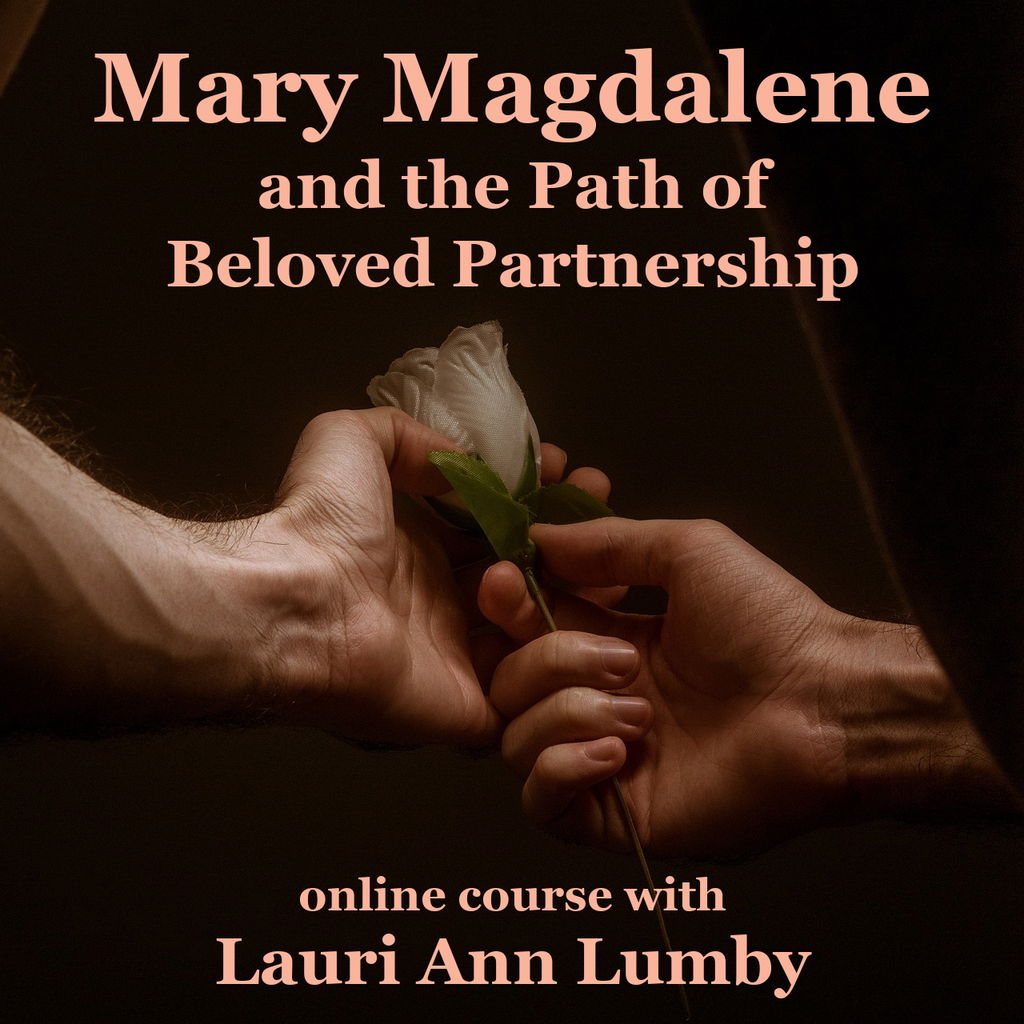
Mary Magdalene and the Path of Beloved Partnership

Live/online course

created and facilitated by

Lauri Ann Lumby, OM, OPM, MATS

Twelve Live Sessions 

Mondays via ZOOM

January 17, 2022 – April 4, 2022

6:30 – 8:30 pm central time 

(Content portion will be recorded for later viewing  by those who are unable to attend live gathering.) 

Beloved Partnership is a term that has been alternatively associated with concepts such as soulmate or twin flame.  Beloved Partnership is neither of these.  Beloved Partnership has nothing to do with the human pursuit of external love. 

Instead, the longing for Beloved Partnership and its resulting pursuit can only be satisfied from within.

The journey of Beloved Partnership has been portrayed throughout history in legend, myth, and fairytale.  The story of Jesus and Mary Magdalene is one such tale – one that institutional religion would like to ignore, and which popular culture has turned into a romance. Whether Mary Magdalene and Jesus of Nazareth enjoyed a romantic partnership is immaterial to the Beloved Partnership that they both embodied within themselves. 

This course explores Beloved Partnership as the process of human self-realization reflected in the embodiment of the Beloved within as it was achieved through both Mary, called Magdalene, and Jesus, called Christ.   

Beloved Partnership is nothing short of the embodiment of that which some might call God.

Lauri Ann Lumby, OM, OPM, MATS

is a Priestess of the Magdalene and the founder of both the Order of the Magdalene and the Temple of the Magdalene.  Lauri has been a dedicated student of the Magdalene since first experiencing her portrayal in the rock opera, Jesus Christ Superstar in 1978.  Lauri has since studied every scholarly work that has been made available on the Magdalene, and many works of fiction.  Lauri has come to believe that Mary Magdalene was indeed Jesus’ closest disciple, possibly his wife, and that it was Mary who was ordained to continue Jesus’ mission of transforming the world from fear into love.  Rejected by the patriarchy, the Magdalene influence has flourished in the mystical traditions of Christianity, though few would acknowledge this. The Magdalene has been a profound influence in Lauri’s own mission and has been the inspiration for Lauri’s writings, books, teachings and online courses all available through Authentic Freedom Academy.

Lauri Ann Lumby has her BBA in Marketing, a master’s degree in Transpersonal Psychology and has certificates in Pastoral Ministry and Spiritual Direction.  She is a Reiki Master in both the Usui and Karuna traditions and is an ordained interfaith minister.

Learn more at www.lauriannlumby.com.