No. I Can’t Help You

Confession:  I’m a fixer. Part of being a fixer is a gift. The other part is a defense mechanism and a curse.

The gift part of being a fixer is the ability to see what could be improved in an environment so that it might more successfully thrive. It is also the ability to see what could cause a situation, environment, relationship, etc. to fail and to offer course-corrections that would help to prevent that failure. This improvement-oriented gift has been further developed in me through years of education and experience in a wide range of professional fields. Those who have sought me out for these gifts and applied my guidance have benefitted greatly. I have benefitted by applying these gifts to myself.

The fixer defense mechanism, on the other hand, rises up in me when I feel unsafe in an environment thereby triggering my own survival instinct to seek out ways to restore my feelings of safety. With the energy of hyper-vigilance, I seek out the “wrong” in the environment and then I attempt to fix that wrong. These efforts almost always blow up in my face.

The challenge of being a fixer is that there is no clear line between gift and defense mechanism. Often, these bleed into each other, usually resulting in catastrophe – if not for “the other” then most definitely for me. As a fixer, it is sheer torture watching institutions, individuals, humanity, making the same mistakes over and over and over while refusing to apply the actions that could help them.  Many don’t really want to be helped. Even when they ask for help, they may not really want that help. Most often, they are unwilling to take the necessary actions that would help them.

In the past several years, my “fixer” tendencies have come up for review. Where and how are they helpful? When are they problematic? The answer is complicated, but to put it simply:

  1. When someone invites my professional support and guidance, offer it, but with no attachment to outcome. They may apply it.  They might not.
  2. Identify those who continually ask for support but who really don’t apply it and learn how to disengage. It’s ok to say, “No, I cannot help you.”
  3. If they haven’t asked for my professional support, KEEP MY MOUTH SHUT.

The reality is that there are three kinds of people:

  1. those who want help and will do the work to help themselves,
  2. those who say they want help but really don’t,
  3. and those who definitely do not want help.

For my own mental and emotional wellbeing, I have had to learn (and relearn, and learn again) how to tell the difference while also caring for myself when overcome by the frustration and grief that surfaces when witnessing humans walk the path of their own destruction.

(PS: Being a fixer is also a form of co-dependency. Alanon, ACA, and AA principles have proven helpful in healing myself of this pattern. “God, grant me the serenity to accept the things I cannot change….”)

Soul School with Lauri Ann Lumby provides the basics of self-discovery and personal development. Rooted in embodied educational practices, mindfulness, and creativity, you will be supported in discovering your unique giftedness, healing the obstacles to living out those gifts for the sake of your own fulfillment, and empowered to enjoy a life of authentic freedom.

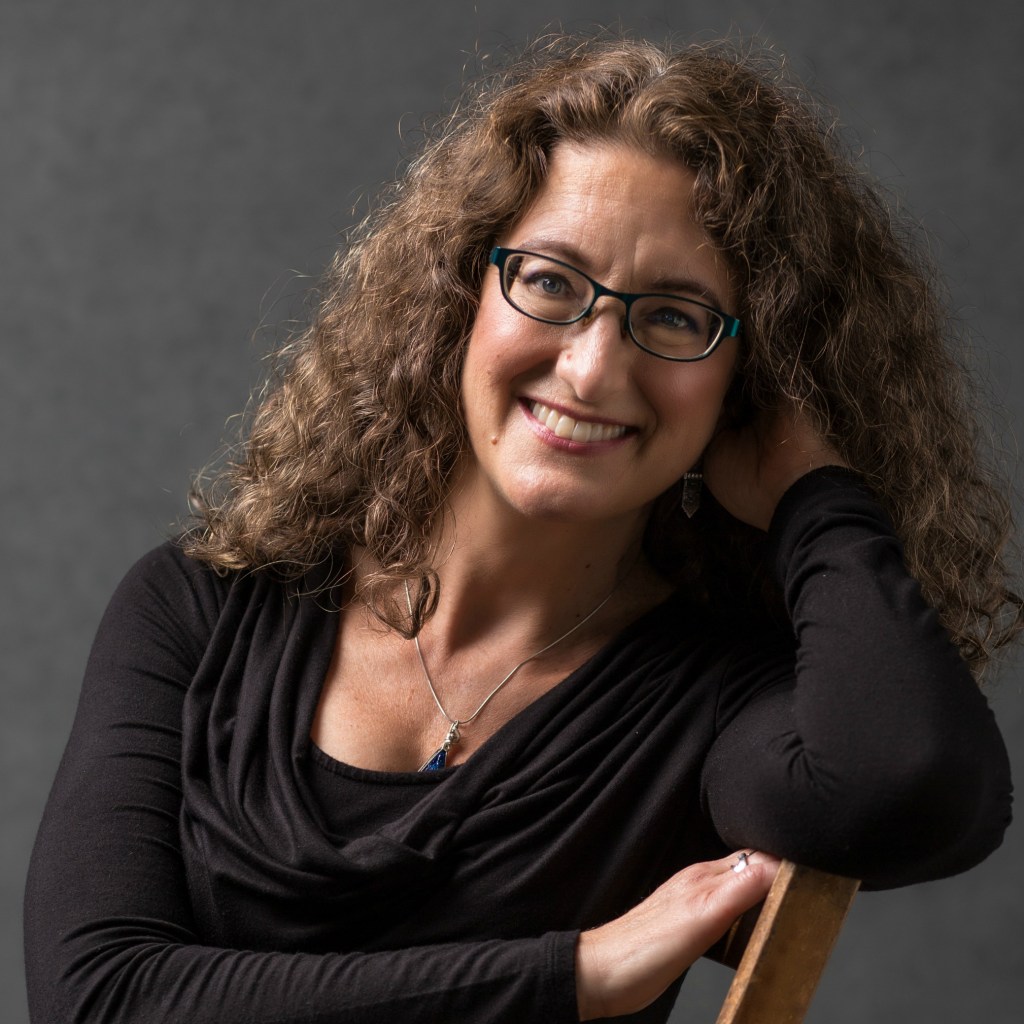
Learning Not to Care

(aka Cultivating the Fine Art of Detachment)

Life is a funny thing. First, we are taught that it is our job to care about EVERYTHING. Caring about EVERYTHING implies that it is our job to do something about it. Heaped on top of this caring is the whispered weight of responsibility. Not only is it our job to do something, it is also likely that the things that appear wrong are also somehow our fault. Blame adds to the pressure to do something about the wrong.

At nearly sixty, however, I’ve learned something new. It is more than likely that NOTHING is our fault. Therefore, it’s not our job to fix it. Furthermore, it’s not even our responsibility to care.

Wait! What? It’s not our job to care?

Yes, we have a human responsibility to care about ourselves, our loved ones, humanity, and the world. If we have a loving heart, we want the best for everyone. We want people to be happy, healthy, fed, clothed, safely sheltered, educated, and their medical needs provided for. We want people to have liberty, dignity, respect, and peace.

The sad reality, however, is that more often than not, there is not a damn thing we can do to guarantee any of this for anyone. Neither can we necessarily fix the wrong that prevents people from having all that is stated above. This is especially true when the individual is capable but unwilling to care for themselves. Furthermore, 99% of what we care about is completely out of our sphere of influence, and even if it is, it still may be out of our control.

As a Type 1 (Perfectionist/Reformer) on the Enneagram, this has been a truth that has been very difficult for me to come to. Not only have I had conditioning working against me, but I have also had the gift/curse of my unique temperament which gave me the lens through which I am hard-wired to ask “How could this be better.” Indeed, this gift makes me a fantastic trouble-shooter, source of counsel and guidance. This lens also left me with a seething resentment over all the things in the world that I can’t fix and all those who could utilize my gifts, but have refused my counsel.

Compounding the frustrated fulfillment of my gift and its resulting resentment, is the reality of emotional addiction. As it turns out, we can become addicted to negative emotional states in the same way that we can be addicted to alcohol or drugs. Spending time in, or even cultivating these negative emotional states have a similar impact on our brain chemistry as other addictions. Resentment, frustration, impatience, even rage were negative states to which I had become addicted, and I would even seek out situations to get upset about so that I could experience the “power” of these emotions.

Feeling these emotions, however, never fixed the frustration. Getting twisted up about someone else’s behavior, an injustice in the world, or the ignorance of humanity never gave me peace – only more resentment. Eventually I had to make a choice – remain in the ever-twisted world of seething resentment or find some way to experience peace. I chose peace.

The first step in choosing peace was to acknowledge I had an addiction. The second step was to recognize what all those inner feelings were actually saying to me.  They weren’t saying, “Go fix this thing.  It’s your job to fix it.  You know better than anyone else.”  Instead, they were showing me one of two things: a) a need of my own that wasn’t being met that I then had the responsibility to get met (if it was within my realm of control). b) all the things in the world over which I have ZERO control. Admittedly, a) was easier to accept than b).

When we feel powerless over something we cannot control, we will find anyway to find that power, until we can accept that it is really not within our control. One of the tactics I have found helpful (or mantras I’ve embraced) is to force myself NOT TO CARE.

I know this sounds harsh, but I am naturally a loving and caring person – especially as it relates to those I love and have care for. I want the best for them. I want them to be safe, cared for, healthy, happy, etc. But the reality is that no matter my efforts to share my gifts in a way that might be supportive, some/many are unable to receive these gifts. I can beg and plead all I want but until an individual (or a group, or a Church, or a political party, or a nation) wants to make a change, my words are dust in the wind.

To survive the frustration and angst over a) my gifts not being received and b) my complete lack of control over a situation, I have had to learn not to care. In the recovery world, this is called detachment. Detachment allows me to be an objective witness of what is unfolding around me without the compulsion to step in and offer my wisdom, expertise, advice, suggestions, etc. Detachment allows me to move beyond the frustration, irritation, or anger I might feel in the face of what I perceive as wrong and accept things the way they are. And OH MY GOD, my inner perfectionist/reformer HATES THIS!  But, it’s the only way I can experience peace. At this point in my life, I’m far more concerned about peace than thinking I have any influence over the state of our world, and I’ve discovered that this peace is a choice.

I can continue to allow myself to care so much about the world that I suffer the consequences of ongoing seething resentment and frustration, or I can learn not to care (cultivate the fine art of detachment) and live my life in peace. I choose peace.

Not a Life Coach

It is easy for many to assume that the mentoring work I do is a sort of life coaching.  It is not.

There is an appropriate time and place for the kind of behavioral change and strategic planning favored in life coaching, cognitive behavioral therapy, and recovery programs. There are times in all our lives where we must make a concerted effort to change certain behavior or thought patterns, for our own wellbeing and the wellbeing of others. There are also times when it is helpful to have a strategy and accountability in making that change.  

Whereas Life coaching, cognitive behavioral therapy (without process work) and recovery programs tend to place their focus on the externals, the services, and programs I provide focus on the internals.

The work that I support clients and students in accomplishing focuses its attention and work on the internal wounds, false perceptions and conditioning that created the unhealthy thoughts and external behaviors in the first place. When we heal these wounds, the unhealthy thoughts and behaviors simply become no longer necessary. The transformational work in which I support my clients and students creates enduring, long-term healing, thereby eliminating the effort required when we are otherwise trying to change.  

Here we no longer need to try because our being itself has changed.

That does not mean that the support I offer doesn’t require work.  In fact, it might be the most difficult work one might accomplish in one’s life. It is for this reason that few find themselves drawn into this work and fewer remain.  To stare down the barrel of our deepest wounds, past traumas, false perceptions, and patriarchal/hierarchical conditioning requires an enormous amount of courage. It then takes persistence, tenacity, discipline, and support to stay with the deep process work that liberates us from these wounds so that we can really and truly be free.

This work might be compared to the fire of a forge that releases metal of its impurities while bringing forth what is precious within.  Through my support, those who do this work discover the truth of who they have always been – beautifully unique and precious in their own way, and confidently empowered to be their truest self in the world for the sake of their own fulfillment and in service to the betterment of the world.  

While the work requires effort, the outcome proves to be effortless.

Lauri Ann Lumby is a trained Spiritual Director with a Master’s Degree in Transpersonal Psychology who has been mentoring individuals in their journey of self-actualization for over 25 years. Lauri further supports self-actualization as a Reiki Master Practitioner and through ancestral shamanic practices.

Lauri primarily works remotely over the phone or via ZOOM.

Schedule your appointment by emailing:

lauri@lauriannlumby.com

or calling:

(920) 230-1313

Transformation vs. Modification

toward enduring recovery

Psycho/spiritual transformation: the process by which one identifies, heals, and is freed of the wounds, false-perceptions, traumas, and societal conditioning that prevent them from living a joyful and contented life.

Behavioral Modification: using effort to change one’s behavior, thoughts, or beliefs. Behavioral modification might include: therapeutic treatment, addiction and recovery programs, affirmations, and positive self-talk.

Photo by Adonyi Gu00e1bor on Pexels.com

Whereas there is a value to and an appropriate time for employing behavioral modification for the eradication of non-loving behaviors towards oneself and others, unless these programs employ additional techniques for healing and eliminating the wounds that created these behaviors in the first place, recovery will always prove effortful.

Transformational practices, on the other hand, get at the core of our non-loving behaviors, thoughts, and beliefs by providing effective tools for identifying, healing, and transforming these wounds. Transformation creates the environment in which non-loving behaviors prove no longer necessary. With attention and over time, it is found that refraining from these non-loving behaviors no longer requires effort because through transformational practices, we have literally been changed from the inside out.

The transformational approach understands non-loving behaviors (what some might call sin) to be symptoms of something deeper out of alignment with our original nature. When we approach non-loving behaviors as symptoms rather judging them as wrong, sinful, or as a character flaw, our recovery hastens because we are no longer suffering the judgment (from self or others) that would otherwise impede our healing.  Like “gold that is tested in fire,” transformational work burns away that which is preventing us from being our most magnificent self – shining with joy, and content in the life we’ve created for ourselves.

Lauri Ann Lumby provides transformational support using her trademarked Authentic Freedom™ protocol through one-on-one mentoring, Reiki, and her Magdalene Priesthood and Order of Melchizedek training programs.